




They say ‘no rest for the wicked’ and that’s certainly true for the tech industry as gadget makers and journalists congregate in Las Vegas, often for their first day back at work after Christmas.

CES (the Consumer Electronics Show) is the world’s biggest tech show, so big that the Las Vegas Convention Centre can’t contain it, so it spills out into many of the hotels along the strip.
As usual, we have feet on the ground checking every hall and just about every booth across the show to find the best and most innovative technology coming to market in 2026. And CES has everything you can think of, from the most incredible new TVs to wacky robots you might not even want in your house.
Nevertheless, these are the best products we saw at CES 2026.
Samsung Galaxy Z TriFold
Chris Hall / Foundry
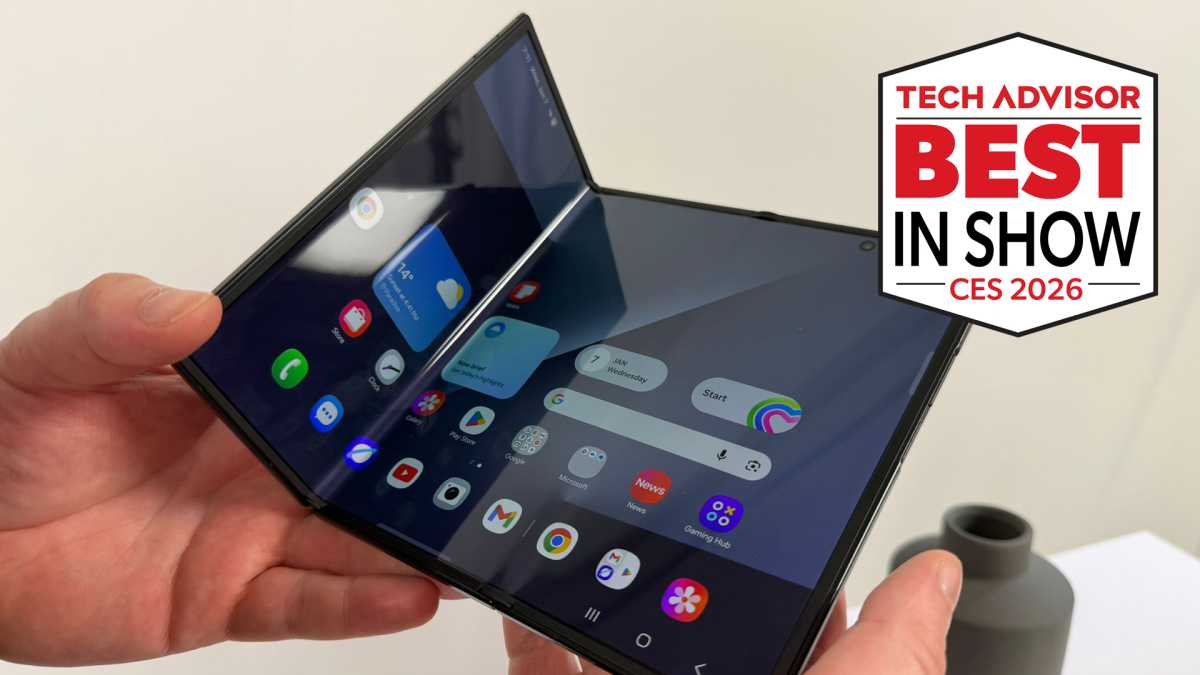
Though announced a little ahead of CES 2026, there’s no doubting that the Samsung Galaxy Z TriFold was one of the stars of the show, and it was the first time we could get our hands on the cutting-edge device. If folding phones are to evolve, then Samsung is the brand to take it mainstream – beyond the offering of the Galaxy Z Fold 7.
While the Huawei Mate XT started this move, Samsung’s wider global reach will be key. The Z TriFold is impressively thin, with a nice crisp action where it snaps open, although interestingly, it’s either open or closed – it can’t sit at an angle like some folding models can. That means you either use the huge 10-inch screen on the inside or the 6.5-inch screen on the outside, you can’t partially unfold it.
Elsewhere, there’s a 200Mp main camera on the back (with ultrawide and telephoto lenses), Snapdragon 8 Elite power and a 5600mAh battery which isn’t as big as you’d expect from a tablet this size – and one of the obvious compromises.
This is a first-gen device, but it’s impressively slim and the displays look great – the question is whether there’s demand for such a large screen in a device where one-handed use is tricky.
That was my lasting impression: one-handed use for a device this size isn’t possible, making it distinctly different to existing foldables. It’s a great piece of technology, though is perhaps slightly ahead of its time for really solid use cases. A potential replacement for your phone, tablet and laptop in one go, maybe.
The Samsung Galaxy Z TriFold is available in South Korea, China, Taiwan, Singapore and UAE, with the US promised for the future. The price is expected to be around $2,500.
Pebble Round 2
Chris Hall / Foundry
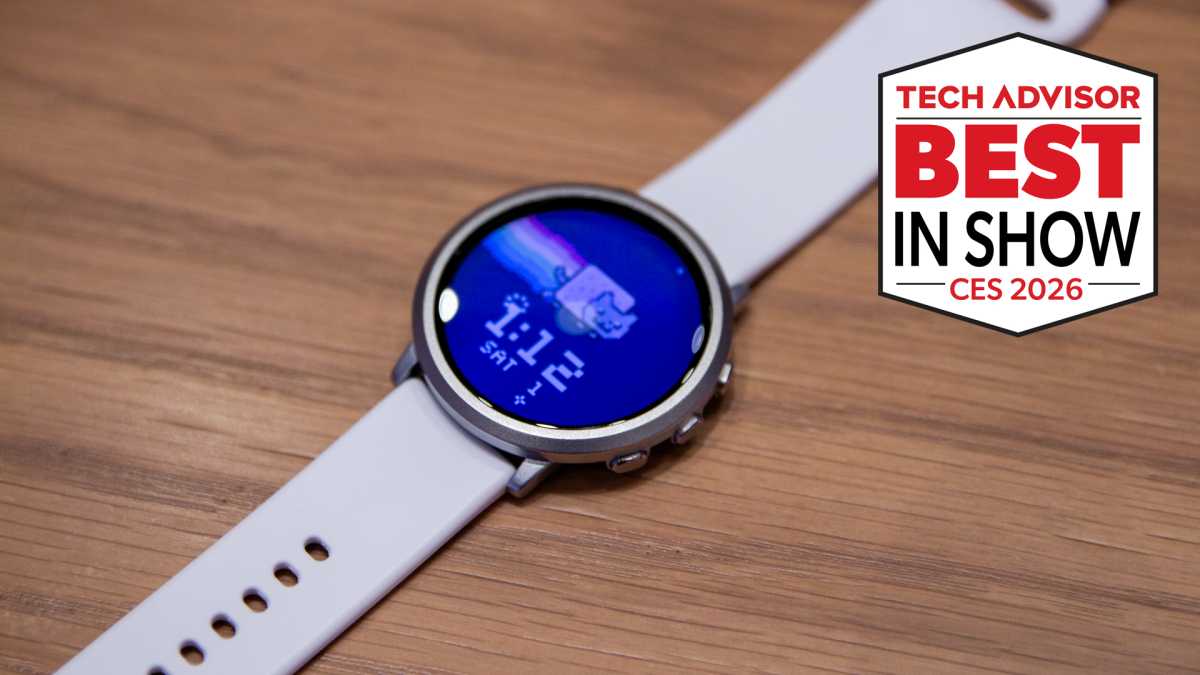
Pebble has made its return after a hiatus of 9 years, with the Pebble Round 2 launching at CES 2026. For reference, the original Pebble Time Round launched in 2015, before Pebble was bought by Fitbit, then acquired by Google. Now, founder Eric Migicovsky is back at the helm, putting Pebble back on its original track.
Simplicity is key here and the Pebble Round 2 is slim, light, and doesn’t overwhelm with complex features. Key to the appeal is the adoption of the original OS from Pebble devices, combined with a colour e-paper display, so for those who remember the original Pebble devices, there’s plenty of retro excitement here.
Alongside the Pebble Round 2, the Pebble Time 2 offers a rectangular face with health functions, while the Pebble Index 01 is a ring designed for voice interaction – an AI note taker that syncs with the Pebble app.
Pebble told me its approach is about bringing back some of that Pebble magic, with long battery life, simple interactions and easy customisation. Unlike huge brands producing smartwatches, the focus is on experience and community building, rather than volume sales.
The Pebble Round 2 is available to pre-order for $199 from Pebble directly and will begin shipping in May.
TCL Note A1

Chris Hall / Foundry
TCL has produced a range of interesting NXTPaper tablets over the past couple of years, but the TCL Note A1 takes the paper-like display in a different direction. The Note A1, rather than being a full tablet full of apps, is instead a digital notepad to rival the Kindle Scribe Colorsoft.
The display kills reflections, presenting a paper-like experience that will allow note-taking, while giving access to docs from services like Dropbox and OneDrive. My initial impression is that the colours are more impactful than the Kindle Scribe Colorsoft.
The advantage over the Kindle is that the LCD technology offers a more instant response than E-Ink, with plenty of vibrancy in the colours that it presents. It’s also got a smooth 120Hz refresh rate. Elsewhere, the Note A1 has eight mics to record meetings, allowing transcription, thanks to the AI skills under the surface.
There’s a big 8000mAh battery, a neat magnetic case and pen for writing, with the ability to clean up your writing, convert to text and more.
For those who want to take notes, make notes and share those notes, the TCL Note A1 has plenty to offer.
The TCL Note A1 is on Kickstarter, with prices from $419.
Motorola Razr Fold

Chris Hall / Foundry
Motorola revived the Razr name in 2019 with the first flip phone of the modern generation, but has now expanded that offering with the Razr Fold. Announced at CES 2026 alongside the new Moto Signature – a flagship device that aims to offer a new level of luxury for Moto phones.
What’s surprising about the Moto Razr Fold introduction is how cagey Motorola has been with sharing the actual specifications. There’s an 8.09-inch folding display, a 6.56-inch external display and a collection of 50-megapixel cameras around the back. That’s about the only official details that have been shared.
I got my hands on the Moto Razr Fold and it has a surprisingly solid feel to it. Having used the Galaxy Z Fold 7 and the Honor Magic V5, the Razr Fold doesn’t quite hit the thin and light trend that others do. I suspect that it’s going to hit the value for money trend, which is where Motorola is really offering, ahem, value.
It’s distinctly Motorola in its design, right up to the square camera array on the back and the textured finish. Motorola obviously sees that there’s life in the folding phone market and while the Razr Fold might not be pushing the envelope, it could be important in opening up this category of devices for buyers wanting to spend less money.
It’s also likely to play its part in pushing Lenovo’s new Qira “personal AI”, which is designed to be an AI that spans devices as a familiar and useful touchpoint on both laptops and smartphones, to help you get things done. I suspect we’ll be hearing more about it at MWC 2026.
Clicks Power Keyboard
Chris Hall / Foundry
Clicks is a startup that offers keyboard cases for iPhone and Android, very much taking inspiration from the full keyboard of BlackBerry phones of the past and making that an accessory for modern touchscreen devices.
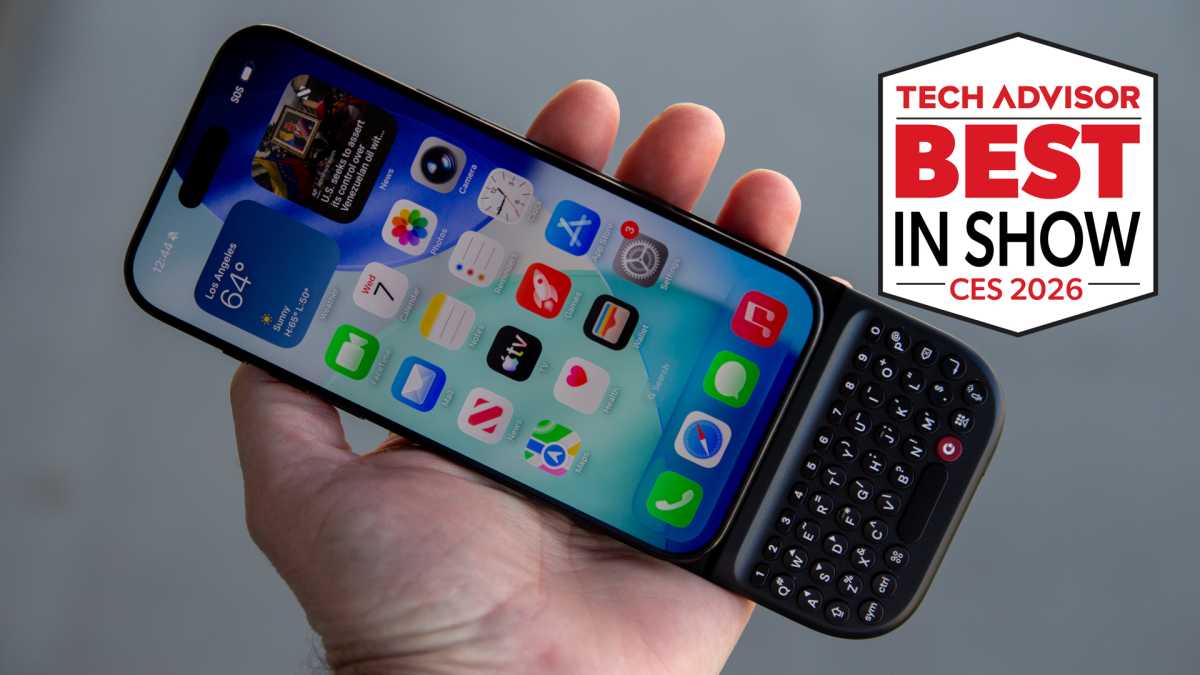
The next evolution of keyboard accessories comes in the form of the Clicks Power Keyboard that takes advantage of the MagSafe or Qi2 magnetic attachment to phones. This has been on iPhone since 2020, but more recently, we’ve seen Qi2 appearing in Android phones like the Pixel 10.
The Power Keyboard connects to your phone via MagSafe and offers a slide-out QWERTY keyboard and battery, which provides the power for the keyboard while topping up your phone battery.
I think it’s better than a case because it’s easier to slip out of your pocket when you want to get on with some serious typing on the move – perhaps writing a report on a train when you can’t get out a laptop. It’s available for pre-order now for £60/$79 as a introductory price, normally retailing at £81/$109. It will ship in spring.
Clicks also launched its own phone – the Clicks Communicator – which is focused on that keyboard and unifying messaging, so rather than carrying two full phones, you’ll have the Communicator for communicating. It offers support for a full range of messaging services from chat apps to email – all based on Android.
I saw a pre-production model at CES 2026 which wasn’t functioning, so I couldn’t judge the experience, but I do think it’s an interesting idea – and one to watch.
Amazfit Active Max
Chris Hall / Foundry
Amazfit is a disruptor brand that offers great fitness devices at a fraction of the price of market leader Garmin. They are known for great battery life and health features, and of course, value for money. At CES 2026, Amazfit added the Active Max to the portfolio.
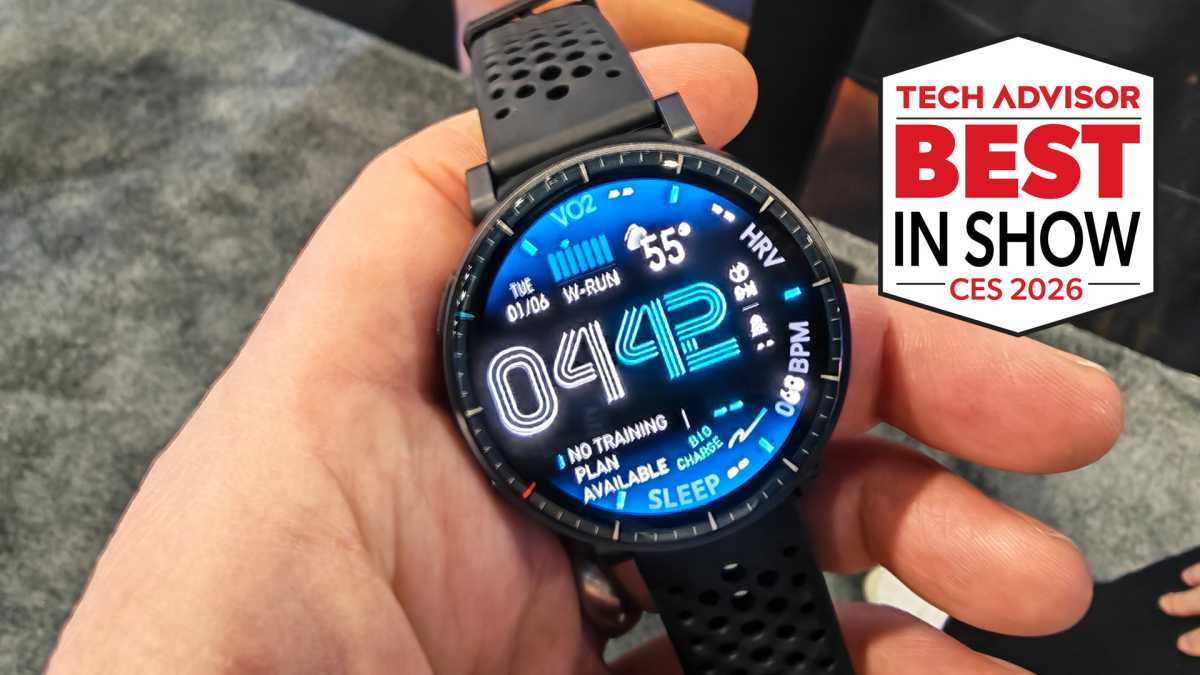
The Amazfit Active Max offers a 1.5-inch AMOLED display with a huge 3000 nits of brightness in a chunky sports watch design. That’s a big display – larger than most Garmin watches – and it really shines.
But what immediately struck me about the Active Max was how light it feels. That’s a double-edged sword in watches: on one hand, lightness is great for a device you’re wearing all day, but on the other, weight imparts the feeling of value.
The Active Max supports over 160 sports, offers training and recovery insights through the Zepp app, tracks sleep and other lifestyle metrics to give a sense of wellbeing through the BioCharge indicator.
It also offers maps and navigation, payments, and houses a microphone and speaker. In short, it’s a lot of watch for not a lot of money, available now with a £169.90 asking price on Amazon, making it quite possibly a much better value option compared to the Ultra watches on the market like the Samsung Galaxy Watch Ultra.
Aqara Thermostat Hub W200
Chris Hall / Foundry
Smart heating isn’t always exciting, but there are a couple of interesting developments that land with the Aqara Thermostat Hub W200. Aqara is known as a smart home brand that offers great compatibility with Apple Home, while also being an early adopter of Matter and Thread.
The W200 is one of the first thermostats to support Apple’s Adaptive Temperature feature that arrived with iOS 26. More Matter thermostats will follow, with the Adaptive Temperature allowing a smarter approach to heating, including occupancy detection and predictive heating, all designed to make sure that rooms aren’t heated unnecessarily and are at the temperature you want when you want it.
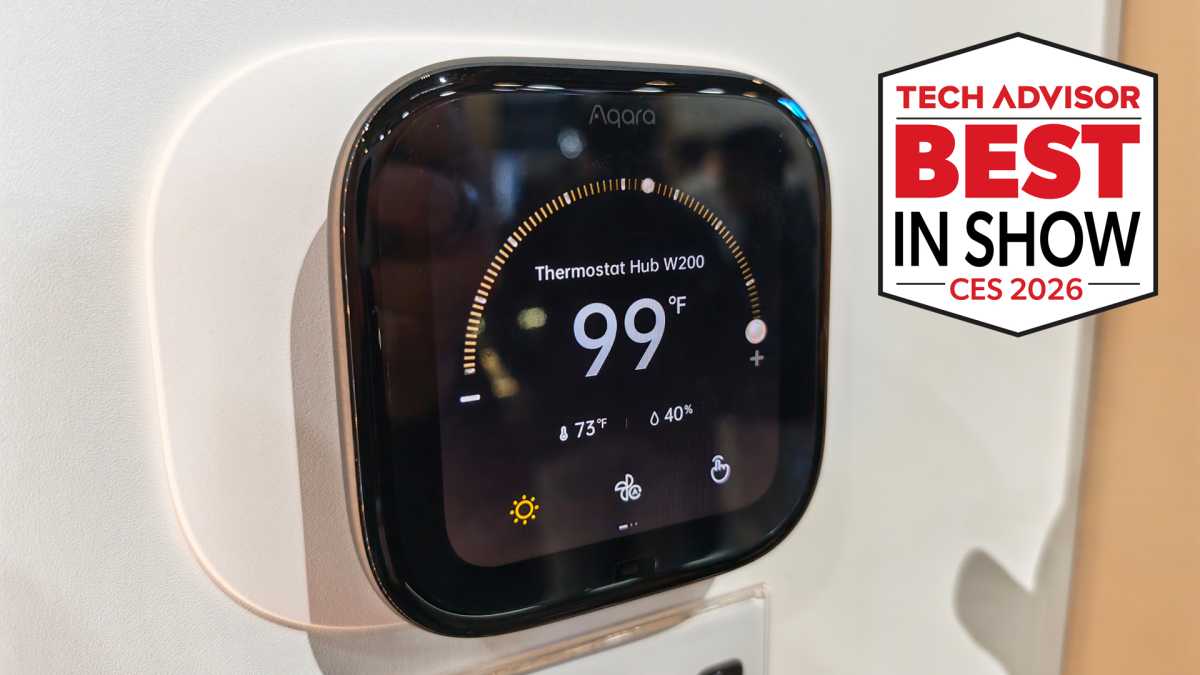
That’s not all this thermostat offers. There’s a 4-inch display on the front, so it has an interface that can do more than just report on and change the temperature, including locking doors and acting as a display for compatible Aqara video doorbells.
That’s a sensible piece of convergence, allowing for cleaner installation in the home without filling the wall with boxes that only have one function.
The Aqara Thermostat Hub W200 will be available in 2026, but the price hasn’t been announced.
Amazon Ember Artline

Chris Hall / Foundry
I didn’t see Amazon’s move into lifestyle TVs coming, but I think this is an important step in seeing televisions move into the mainstream. While Amazon isn’t always a huge participant at CES, it used the opportunity to launch a new TV – the Amazon Ember Artline.
“What no Fire TV?” I hear you ask, but this story is bigger than it seems. While Fire TV is the platform – something that partners like Panasonic talk about – and appears on Fire TV Sticks, having a range of televisions that’s also called Fire TV is confusing. So Amazon has a new family name for its own brand TVs – and that name is Ember.
So the Amazon Ember Artline showcases this new family name while presenting a new type of TV. It follows the lead of Samsung’s iconic The Frame series, offering a design that looks more like a picture frame with 10 different bezels (sold separately) that magnetically attach to match your décor.
It also has a matt display to kill reflections and to help displayed artwork look more like art and less like a screen showing a picture. This builds on the Ambient Experience that Amazon has offered through existing Fire TV models for a number of years.
The Ember Artline will come in 55- and 65-inch sizes. It’s a 4K HDR QLED TV, running Fire TV OS and supporting Dolby Vision, Alexa and everything else you’d expect from a Fire TV.
The Amazon Ember Artline will be available soon from £949.99/$899.99 for the 55-inch version or £1,199.99/$1,099.99 for the 65-inch model.
Asus ProArt PZ14
Chris Hall / Foundry
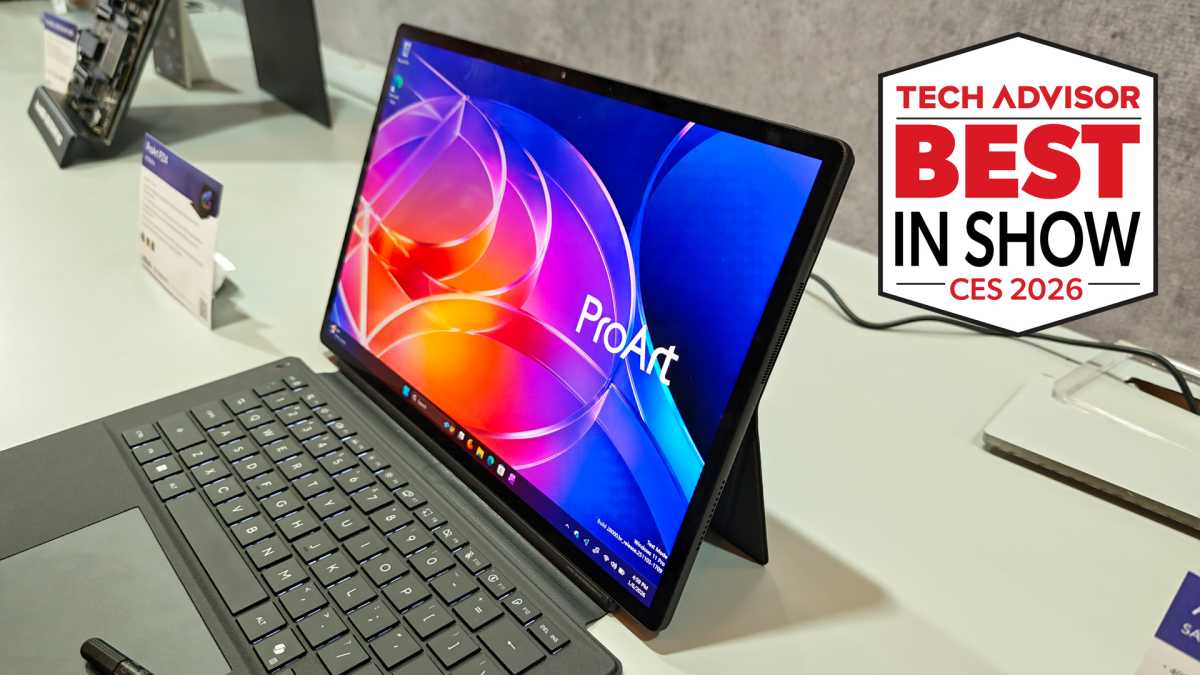
CES 2026 didn’t give us a lot of tablets, but sitting in the high-end here is the Asus ProArt PZ14, which is a portable powerhouse. This is a full Windows 11 Copilot+ PC and technically it’s a detachable, with a Bluetooth keyboard – a rival to the Surface if you like.
There’s a stunning OLED display offering 144Hz, with an anti-reflective surface – and with ProArt pitched at creatives, that makes sense. This display is designed for high accuracy with 1000 nit brightness. First impressions of the display are great – bright and vibrant, it looks luscious and possibly one of the best on any tablet.
Power comes from the new Qualcomm Snapdragon X2 Elite, fan-cooled, while the included stylus allows for precise pen input. The keyboard offers nicely spaced individual keys with enough travel for typing, although I didn’t have enough time with the device to make much of an assessment of how it would work as a laptop.
There’s another neat feature: it offers IP52 ingress protection with military-grade durability. It’s an interesting device, designed for those who want a lightweight device with high performance that’s going to last under the rigours of mobile working.
Currently, there’s no confirmed price or date, but it will be available later in 2026.
Roborock Saros Rover
Chris Hall / Foundry
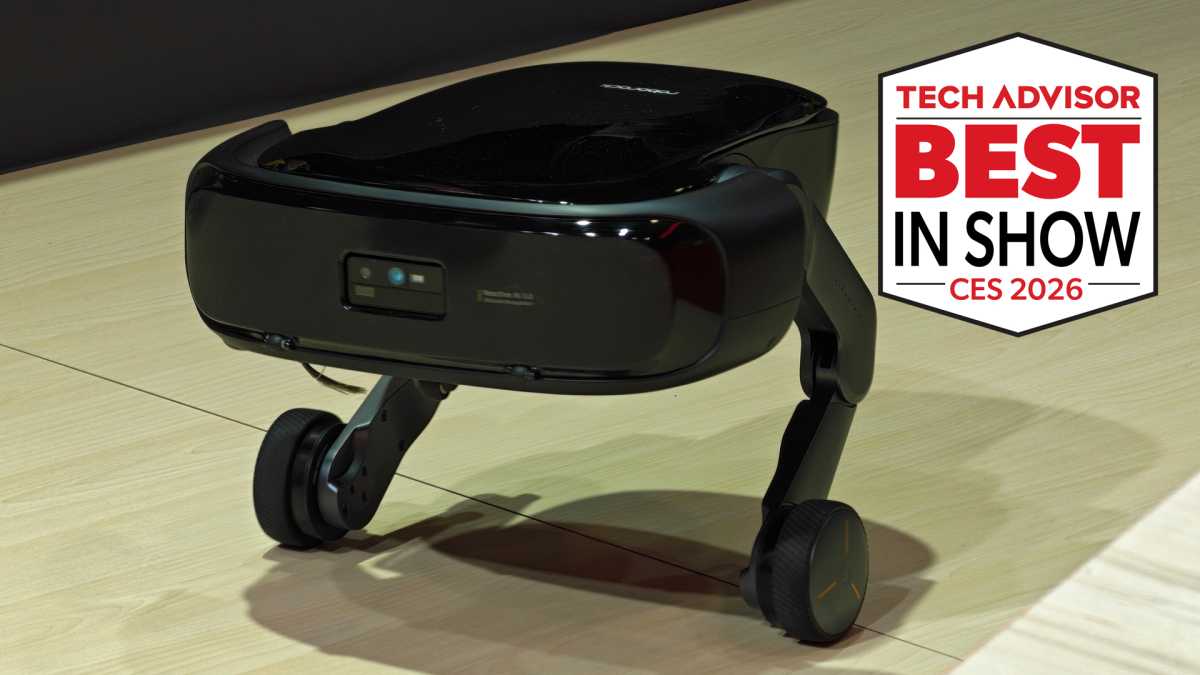
The Roborock Saros Rover was showcased as a concept at CES (like many products at tech shows) and, arguably, it wasn’t quite ready to be shown, with a viral clip of it falling down a flight of stairs, creating some less positive publicity than Roborock must have hoped for.
A swing and a miss, then. But what a swing it was. This is a genuinely phenomenal development in robot vacuum technology and we’d rather see this than boring, samey devices. I witnessed the Saros Rover in action and what’s amazing is how it can balance and keep the body flat with two legs extended – as pictured above.
Many robot vacuums can now extend their legs to some extent to raise their bodies over high thresholds and small steps, but the Saros Rover can move its legs individually and dynamically respond to its surroundings, which is an evolutionary leap for the technology.
All of this allows it to cut down on “no-go zones”, climbing stairs and cleaning them individually, which is something no rival design can yet manage – even in concept form. Most excitingly, this is a product in development and will go on sale at some point in the future, with a price still to be confirmed.
More weird and wonderful news from CES:
- The Moto Watch undercuts Google and Samsung with one major difference
- Lego gets noisy – new Smart Bricks react to play with sound and light
- Always stuck in meetings? Vocci’s new smart ring is here to help
- LG’s new Cloid robot can make you breakfast and fold laundry
- The Garmin Connect app can now track your meals