





At a glance
Expert’s Rating
Pros
- Great performance
- Excellent display
- Superb battery life
- Fast charging
- Long software support
Cons
- Bulky camera module
- Disappointing low-light camera performance
- Fussy software with lots of bloatware
Our Verdict
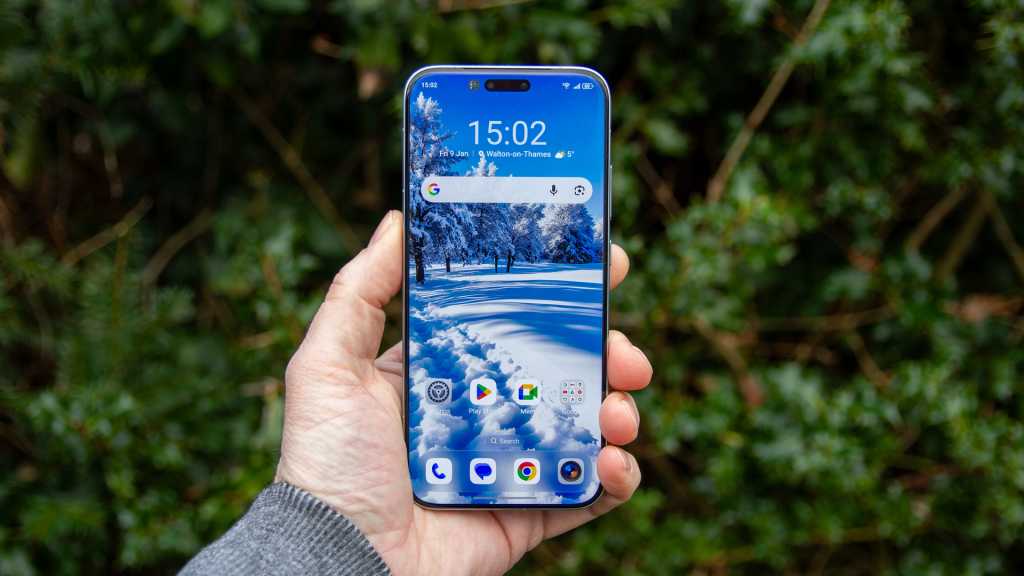
The Honor Magic 8 Pro is packed with impressive features, including top-tier performance, a stunning display and superb battery life. Its comprehensive camera system is great in most conditions – including long zoom – though it struggles in lower light. But with some software struggles and a polarising design, the Magic 8 Pro isn’t a straightforward recommendation

Price When Reviewed
This value will show the geolocated pricing text for product undefined
Best Pricing Today
Best Prices Today: Honor Magic 8 Pro

The Honor Magic 8 Pro picks up where the Magic 7 Pro left off, with much the same design and positioning. It’s a high-end phone packed with a big camera, oodles of AI and ambitions to grow Honor’s position as it competes with big brands like Samsung.
And it seems to be working. According to data from Searchabull, Honor’s search profile was up by nearly 40% year-on-year in Q2 of 2025. Honor also says that new customers aren’t just moving from other Android brands, but also ex-iPhone users.
So there’s something of a buzz around the brand, which, since its separation from Huawei, has shown no lack of ambition. The Honor Magic 8 Pro continues that trend, pushing the camera experience to the next level and adding an AI button that feels a lot like Apple’s Camera Control.
I’ve been using the Honor Magic 8 Pro for a month to get a feel for this new phone. Here are my in-depth thoughts.
Design & Build
- 161.15 x 75 x 8.4 mm, 213g
- Up to IP69K ingress protection
- Huge rear camera
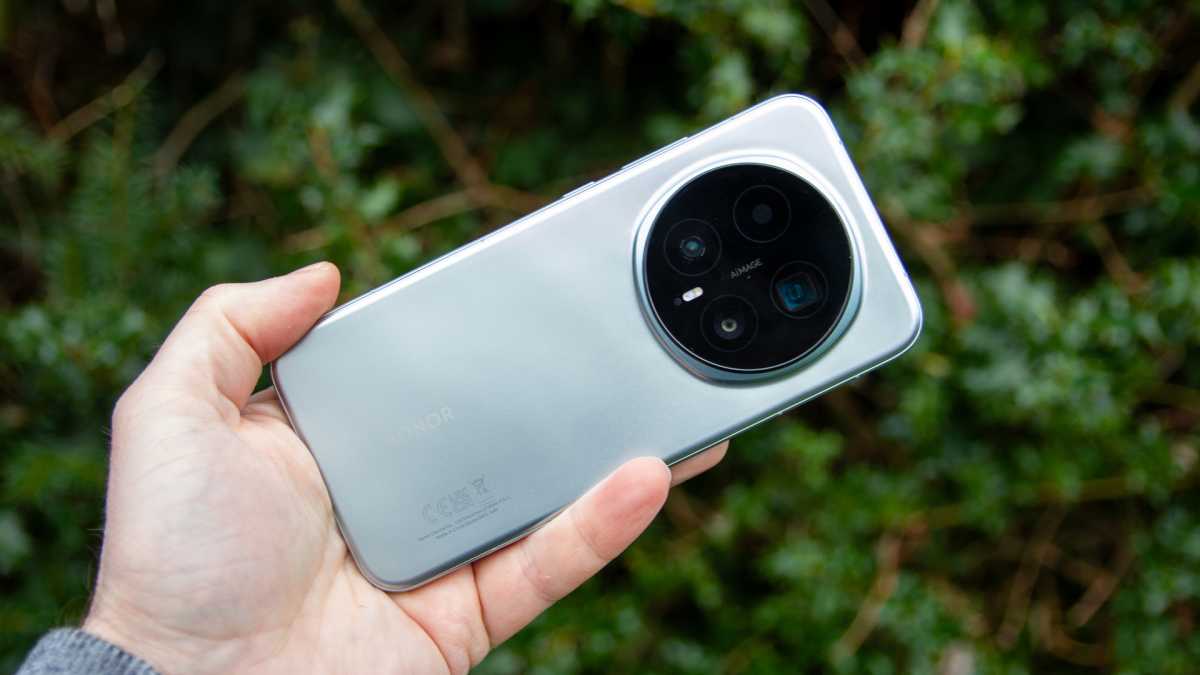
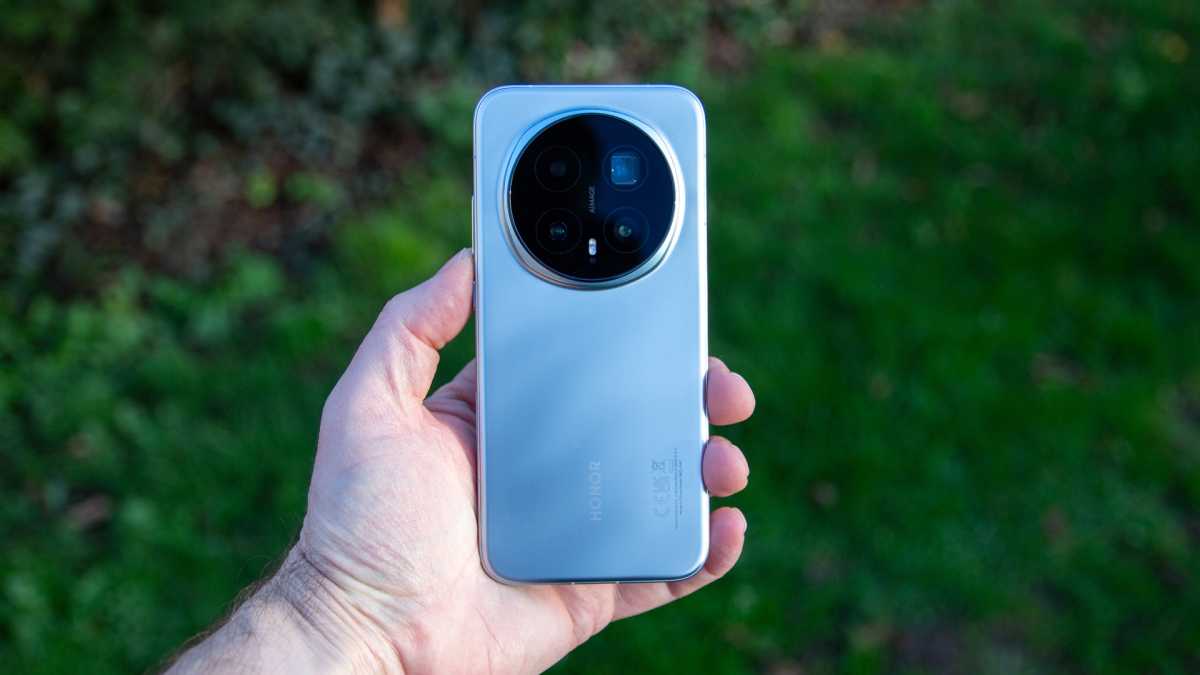
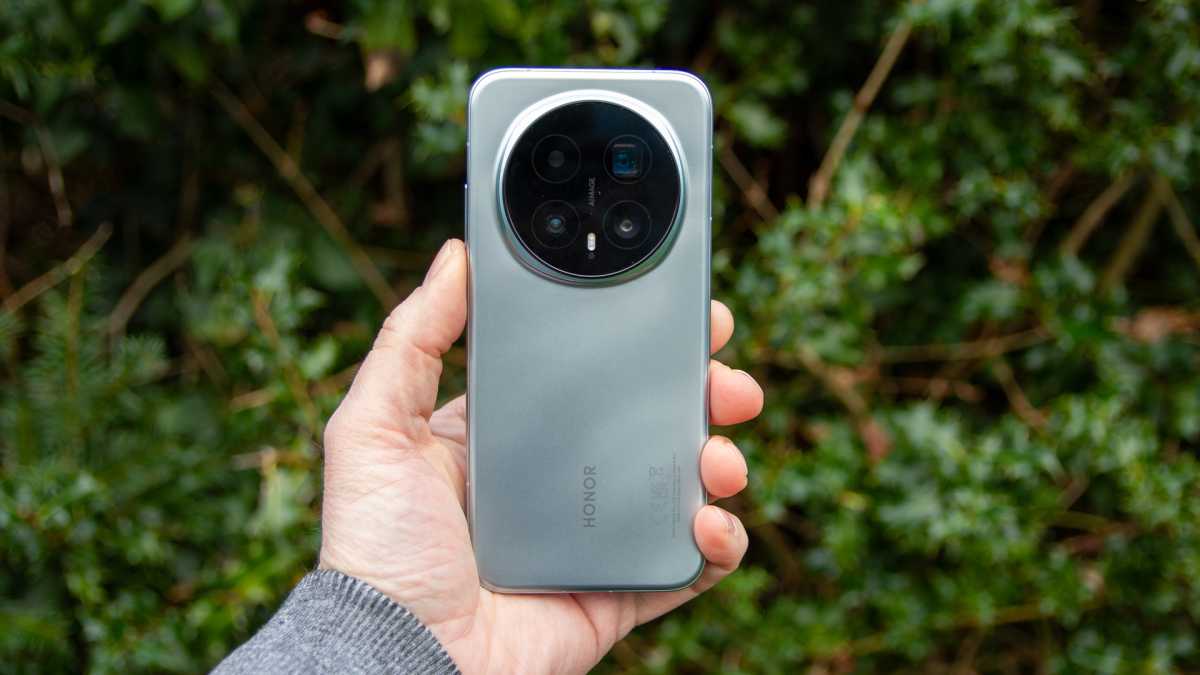
There’s no avoiding the fact that the Magic 8 Pro looks and feels just like the Magic 7 Pro, with a huge camera on the back of the phone. It’s designed to stand out and nearly doubles the thickness of the phone in that area, so it definitely won’t be for everyone.
The rest of the body is 8.4mm thick, and it weighs 213g, which is about the same as the Galaxy S25 Ultra, although Samsung’s camera doesn’t stick out nearly as much. While the edges of the aluminium frame are flat, it’s not as square as some rivals, with curves around the edge of the display. I actually prefer this – it makes the phone easier to hold and use this larger phone one-handed.
There’s no avoiding the fact that the Magic 8 Pro looks and feels just like the Magic 7 Pro
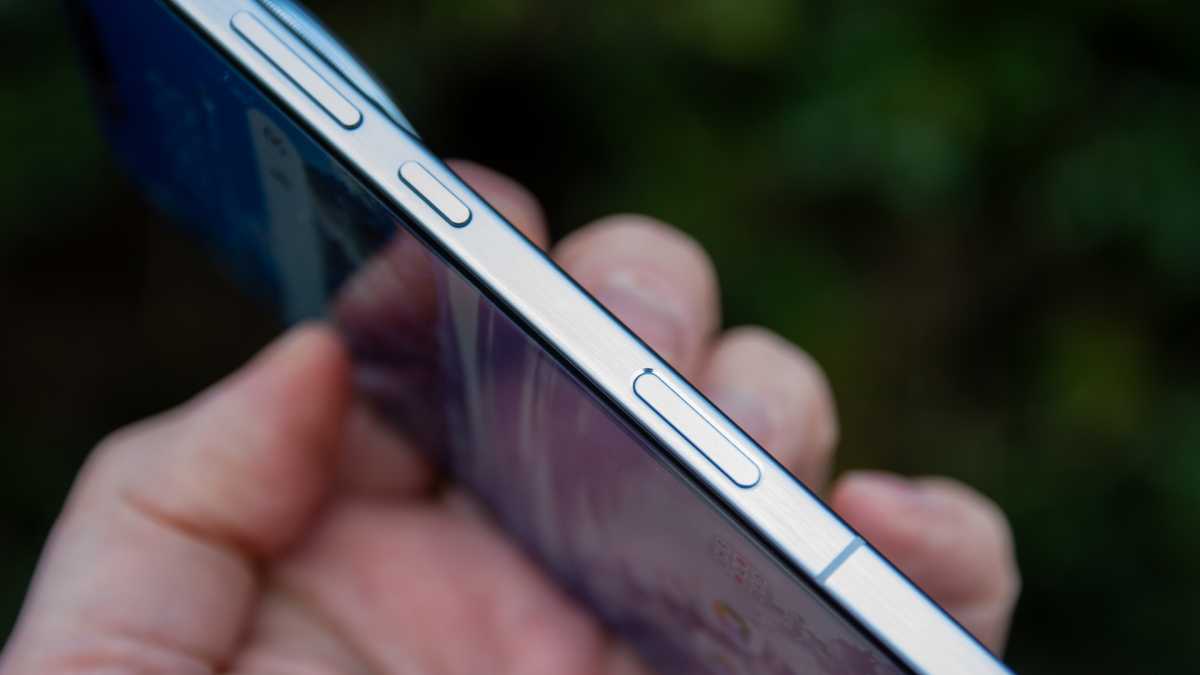
New to the design is an AI button, which is placed in the same location as Apple’s Camera Control on recent iPhone models. This provides new app launch opportunities, alongside the power button, which offers access to Gemini on a double press.
The AI button offers short, long and double press options, covering camera launch, AI screen suggestions, AI settings agent, AI photos agent, Honor AI, AI memories and Google Lens.
Chris Hall / Foundry
There’s a heavy leaning towards Honor’s AI options, but in reality, there’s no good reason to assign some of those things to a quick launch button. It would be great if Honor expanded the options to launch anything, adding more versatility.
I settled on Google Lens and Camera Launch, partly because Honor’s camera doesn’t automatically read QR codes, so having fast access to Google Lens is useful.
The quality of the build is high, with IP69K protection that sees this phone able to withstand high-power water jets and complete submersion. It also comes with a factory-fitted screen protector, which I’ve left in place and haven’t found to hinder use.
Screen & Speakers
- 6.71in 120Hz LTPO OLED display
- 6000 nits brightness
- Stereo speakers
There’s only one thing that I don’t like about the display, and that’s the large cutout for the front cameras. It apes the iPhone experience (with similar Dynamic Island-style features) because it houses not just a camera, but a 3D depth sensor too. That means it offers great face unlocking, but it does take a chunk out of the screen that I’d rather not lose.
As I mentioned in the design section, there are subtle curves to the edge of the display – not like the big curves of yesteryear, but just enough to soften the impact of the square edges.
The display is 6.71 inches with a 2808 x 1256 pixel resolution, resulting in 458ppi, meaning it’s nice and detailed. There are also oodles of accurate colours and great vibrancy. I’ve found the auto brightness to be excellent, while this display is rated to 6000 nits at peak brightness, which is impressive.
Chris Hall / Foundry
That doesn’t mean that the display hits those highs in regular use (where 1800 nits is the global high), but that peak brightness is reserved for delivering HDR punch when called upon. I’ve found this to be most effective while viewing photos, with both Google Photos and Honor’s own Gallery supporting Google’s Ultra HDR, where images get a boost, with brighter highlights coming through for more impact. That also extends to great performance when streaming video content, for example, with Dolby Vision on Netflix.
The excellent display is also backed by superb stereo speakers. There are sound options to boost the bass or have enhanced immersive listening through the speakers. These are definitely worth using, with the “premium bass” offering the richest performance in my experience.
The excellent display is also backed by superb stereo speakers
There’s also support for spatial audio through headphones or just basic stereo – but again, it’s worth testing to see what you prefer the sound of. The stereo and spatial audio options do sound quite different.
There’s also a fingerprint sensor under the display, which is fast to unlock the phone if that front camera hasn’t already spotted you.
Specs & Performance
- Snapdragon 8 Elite Gen 5
- 12GB RAM and 512GB storage
Powering the Honor Magic 8 Pro is the Snapdragon 8 Elite Gen 5, the latest hardware from Qualcomm and marking this out as a true flagship phone. That’s supported by 12GB RAM and 512GB storage. There’s no lack of power on offer here.
The result is a first-class experience, a phone that is smooth and responsive in all situations. I used the phone in demanding conditions while at CES 2026, pushing the device on multi-tasking, using it for long periods of hotspotting, and found that it performed exceptionally.
I used the phone in demanding conditions while at CES 2026…and found that it performed exceptionally
I also noted that app installation and data downloading were nice and fast, so installing big games was less of a chore than on other devices. I put a lot of time into Call of Duty: Mobile on this phone and found it ran really well, allowing me to consistently dominate the games I was playing, picking up plenty of MVP accolades.
There are a couple of things on the software side that look like they are performance problems – unresponsive swipe actions or slow animations. But I believe these to be part of MagicOS 10 rather than due to the phone’s hardware.
Chris Hall / Foundry
Cameras
- 50Mp main, 200Mp 3.7x telephoto, 50Mp ultrawide
- 50Mp selfie camera
Honor’s focus for the Magic 8 Pro is very much on the camera. I’ve mentioned that it’s physically huge, but it’s big in specs too. A pair of 50Mp sensors for the main and ultrawide cameras are joined by the 200Mp 3.7x telephoto, which continues to offer digital zoom out to 100x.
Improvements to the camera over the Magic 7 Pro include increased stabilisation, while there are new sensors to boost low-light performance and new image processing. Video is offered up to 4K 120fps, too.





The performance of the Magic 8 Pro’s cameras is generally very good. It will take some exceptional daylight shots packed with detail and handling HDR nicely. The low-light performance is generally great, too, although it starts to show some flaws in Honor’s setup. Most noticeable was the handling of white balance under artificial lighting, where I took a lot of images with a yellow cast.
Lightening of dark scenes can lead to slightly blotchy results, with a tendency to brighten too much. Often I had to manually pull down the exposure to get the result I wanted and preserve the balance of dark and light. At other times, I found it to produce great results straight out of the camera.




The zoom is generally good, and the impact of the stabilisation on offer is instantly felt. I tested it alongside the Pixel 10 Pro and found it much easier to line up shots at 100x because the stabilisation was so much better. However, both systems now use AI at long range to add textures back in – and both phones lose a lot of detail at the far end of the zoom.
I found good colour consistency across lenses, however. Often, there’s a colour difference between the ultrawide and main cameras, but that’s not the case on the Magic 8 Pro. The transition between lenses is nice and smooth, with options for 0.5x,1x, 2x, 3.7x, 10x and the free digital zoom up to 100x.






Each of the steps produces good results – including the 10x – so this is a versatile setup. I also found that 10x zoom in indoor conditions could get some good results too, helping me get closer to the action for some shots while working the show floor at CES 2026.
The AI Button doubles as a camera control button, allowing you to launch the camera and then scroll through different zoom levels once the camera is open, while a press will take the photo. This is a useful addition, but I found the location a little awkward to smoothly scroll, while so many people are used to pinch zooming and tapping an on-screen button to capture. It’s fighting muscle memory, and doesn’t actually offer anything new, which is a bit of a problem.
On the AI front, there are editing options from Google Photos as standard, but a whole selection in the Honor Gallery app, too. My favourite is the option to remove reflections from photos through glass. It’s pretty good, cleaning up images nicely, as seen below.


While that’s all positive, I feel that Honor’s camera approach is a bit over the top – and the weakness seems to be in processing. Compared to the Pixel 10 Pro (which gives a lot less physical space to the camera), I’d still take the Google phone – it’s more consistent, better in low light and gives more natural shots. We have a full comparison of the Pixel 10 Pro versus Magic 8 Pro cameras if you’d like to learn more.
Battery Life & Charging
- 6270mAh battery
- 100W wired charging
- 80W wireless charging
The 6270mAh battery in the Magic 8 Pro sounds capacious, and it is: compared to a couple of years ago, it’s colossal. It’s not rated quite as high as the OnePlus 15 with a 7300mAh battery, though, so it would be easy to highlight this as a negative.
The Magic 8 Pro still comfortably beats Apple and Samsung on battery capacity, charging speed and endurance – and that’s not to be sniffed at
The Magic 8 Pro has a silicon-carbon battery, offering 100W wired charging and 80W wireless charging with the right adapters. There isn’t one in the box (which is standard for European markets), but most people will have a high-power charger already. I found the charger for my Lenovo laptop was happy to supply the power, allowing for really fast recharging.
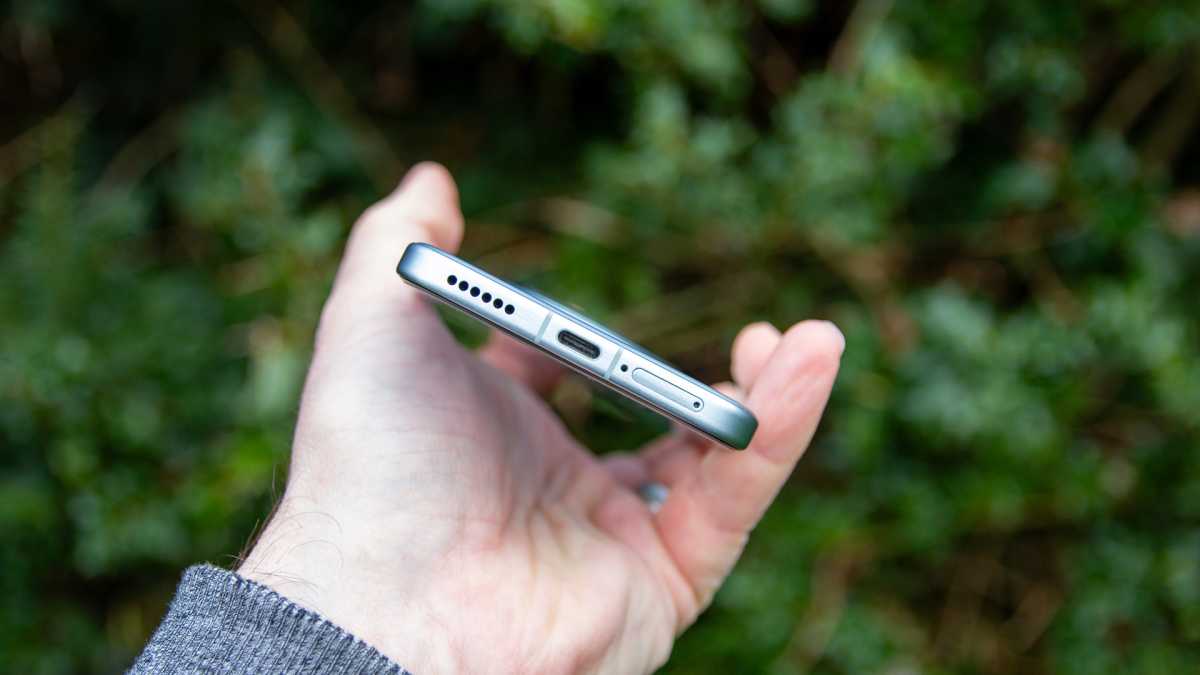
Chris Hall / Foundry
I found the battery life itself to be great, too. I used it for really long days and frequently didn’t charge it overnight – and there was still life in it. Under heavy conditions, still getting through the day is a credit to this phone. Sure, it’s not as capacious as some, but the Magic 8 Pro still comfortably beats Apple and Samsung on battery capacity, charging speed and endurance – and that’s not to be sniffed at.
Certainly, from my point of view, the battery performance is good.
Software & AI
- MagicOS 10 with Android 16
- 7 years of OS and security updates
- Plenty of bloat
If there’s one area that I’d expect the Magic 8 Pro to struggle with, it’s the software. Honor has always been some distance from a clean Android experience, with a lot of additions and changes, as well as duplication through the addition of its own services. In many cases, it’s fine to ignore Honor’s options and stick to Google – in fact, I’d argue it’s advantageous to do so.
Duplication of tools such as a calendar, clock, email, files, documents and more feels like a nod to the world where Honor exists without Google (in China), with these apps bundled in for no good reason. Much of the bloatware can be uninstalled, so it’s annoying rather than ultimately compromised.
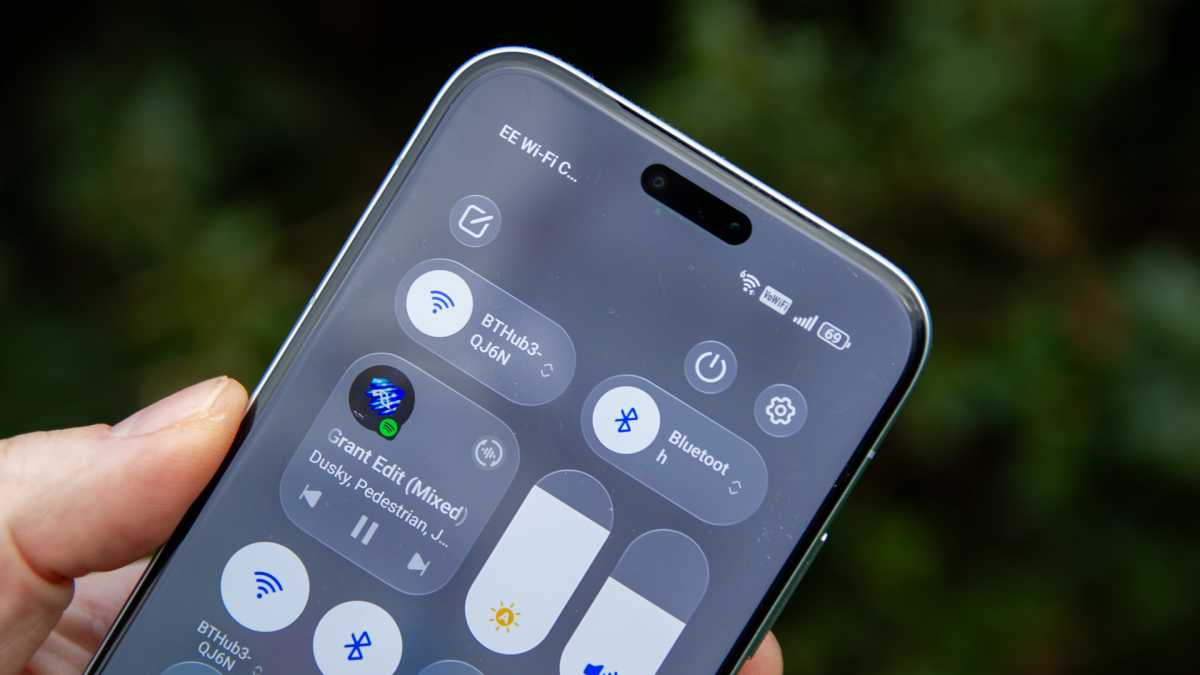
Chris Hall / Foundry
Honor also makes wide-ranging changes to the way Android works, with a lot of options for customisation and other tweaks. That allows you to undo some of the stuff that Honor has changed and make sure that you’re getting the phone experience that you want.
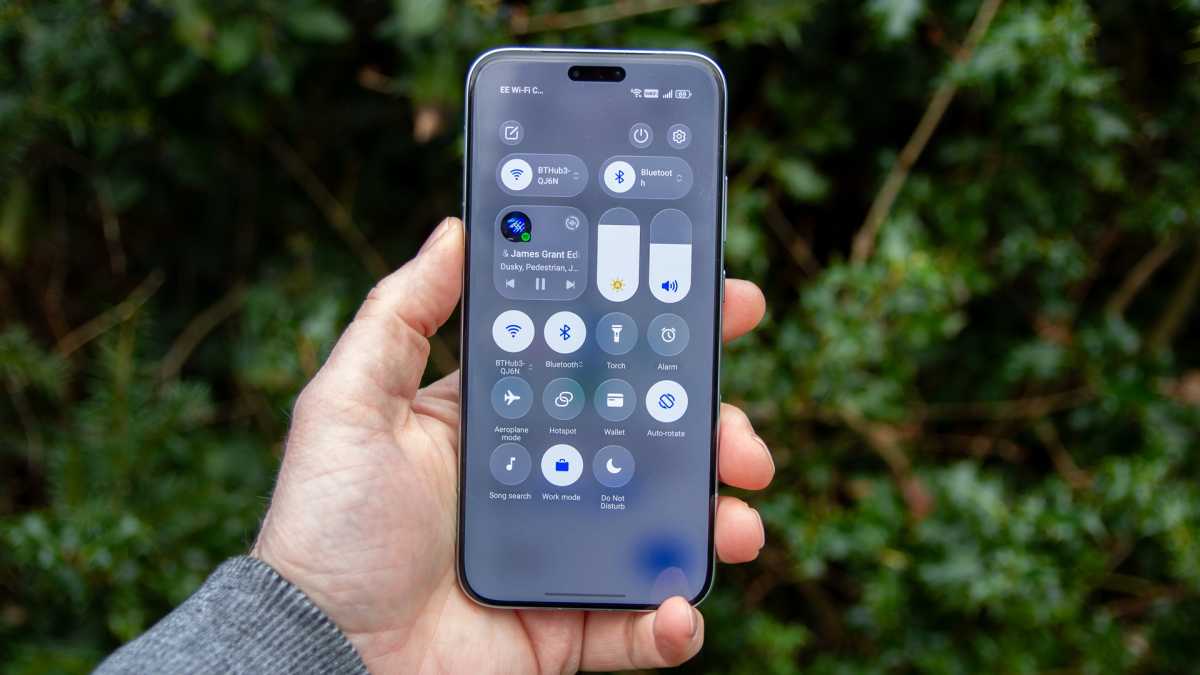
Over the time I’ve been using this phone, I’ve been able to get away from the handful of things which annoyed me, but it seems unnecessarily fiddly at times, with lots of options and interruptions that most people don’t need. Little details, like “Do Not Disturb” not being in the Quick Settings, are just irritating to have to go and fix.
Much of the bloatware can be uninstalled, so it’s annoying rather than ultimately compromised
Then we come to AI, something that every brand is keen to put into its phones these days. Google’s Gemini is present and correct, as is Circle to Search and those photo AI features in Google Photos that I mentioned. Honor then adds Honor AI, which comes with a “Photos Agent” to edit and manipulate images, including transforming into a cartoon style or watercolour, for example. It’s a bit of fun, but not something I can see myself using much.
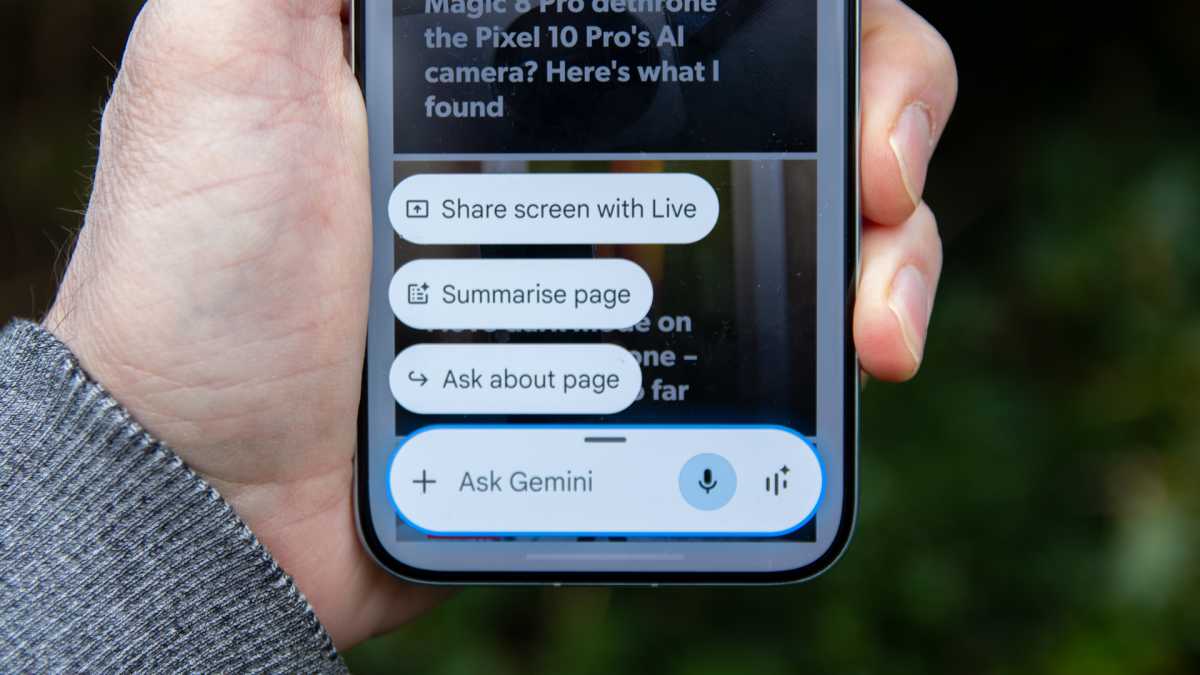
Chris Hall / Foundry
Honor AI also offers the now mandatory “AI memories” area, which you might find chock-full of files that were shared with you. I found it wanted to save files shared on WhatsApp, while it will also collate stuff that you capture using the AI Button – which is basically screenshots. It’s got potential, but feels limited to now.
Then there’s an AI settings agent that basically uses AI to help you with settings on your phone. This can automate some features or take you to the right part of the settings menu, but sometimes, it will just bow out and tell you to do it manually if it doesn’t know what you’re talking about.
So there are changes for the better and changes for the worse on the Magic 8 Pro, but Honor has stepped up the software support to seven years of OS and security updates. This matches flagships from Samsung and Google, which is a good move.
Price & Availability
At launch, the Magic 8 Pro costs £1,099.99, making it cheaper than the £1,249 Samsung Galaxy S25 Ultra, but more expensive than the £979 OnePlus 15 or £999 Pixel 10 Pro. That makes it look a little expensive.
However, Honor has launched the phone with a “coupon” so it’s available for £899 from Honor direct at the time of writing, along with a whole selection of gifts, including a 100W charger. Those are limited, but worth jumping at for those interested in this model. It’s also available at Amazon UK.
As usual, the phone isn’t available in the US. See more alternatives in our full guide to the best phones you can buy right now.
Chris Hall / Foundry
Should you buy the Honor Magic 8 Pro?
Probably not, given the strength of the competition.
The Magic 8 Pro offers a comprehensive flagship phone experience, complete with extensive software customisation, a versatile camera system, a great display, good battery performance (with faster than average charging) and a long update commitment.
However, the likes of the OnePlus 15 and Google Pixel 10 Pro/Pro XL will be better all-around choices for most people. And of course, the Galaxy S26 Ultra is likely to be just around the corner.
Specs
- MagicOS 10, based on Android 16
- 6.71-inch, 1256 x 2808 AMOLED, 120Hz
- Optical fingerprint scanner
- Qualcomm Snapdragon 8 Elite Gen 5 chipset
- 12 GB RAM
- 512 GB storage
- 50Mp, f/1.6 main camera
- 200Mp, f/2.6 telephoto camera. 3.7x
- 50Mp, f/2.0 ultrawide
- 50Mp, f/2.0 selfie
- Up to 4K @ 120fps rear video
- Stereo speakers
- Wi-Fi 7
- Bluetooth 6.0
- 6270mAh battery
- 100W wired charging
- 80W wireless charging
- 161.15 x 75 x 8.4 mm
- IP68/IP69K certified
- 213g
- Colours: Sunrise Gold, Sky Cyan, Black