




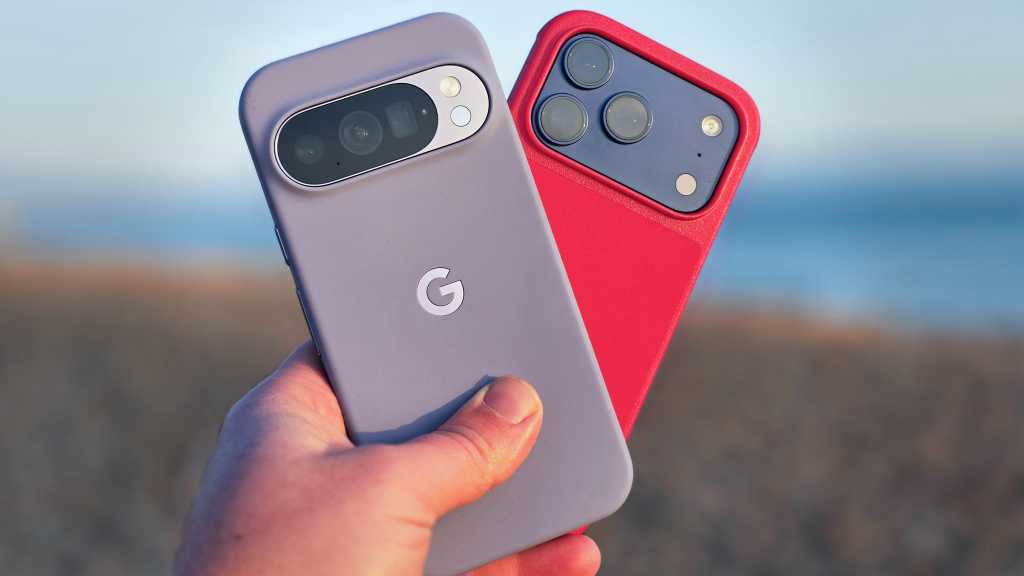

Google’s Pixels and Apple’s iPhones are some of the most highly regarded phones in the business, especially when it comes to camera prowess.

I’ve been lucky enough to use the latest and greatest camera phones from both companies since they launched. In that time, I’ve learnt a lot about each phone’s approach to mobile photography and, now, compared the two to see which might be better for you.
The Pixel 10 Pro line continues Google’s tradition of adding more AI-backed photographic functionality, which this generation is most evident in the addition of (up to) 100x Pro Res Zoom. The iPhone 17 Pro series, meanwhile, embraces resolution parity between its three rear sensors and even adopts professional, industry-standard functionality, like GenLock (more on that in the video section below).
While I’ve used both phones for months at this point, this feature uses a series of comparable shots, so we can see exactly how each phone approaches a given scenario, and more importantly, how they differ. Ultimately, we’ll help you decide which camera phone best suits your needs.
Note: Unless otherwise specified, shots are presented with the Pixel 10 Pro camera samples on the left and the iPhone 17 Pro’s samples on the right.
Main Sensor
It’s often the case that you just pull your phone out and hit the shutter button; no tweaking settings, and perhaps not even zooming in. These shots are designed to represent such classic point-and-shoot conditions.
Beach sunset


There’s a clear difference in where each phone places its focus in this beach scene. The Pixel wipes the floor with the iPhone with regard to detail capture, offering far better sharpness, right through from the foreground to the back. The series’ long-standing propensity for warmer colour processing comes through too, however, and although you get an attractive final result, there are some evident shortcomings with regard to colour accuracy and dynamic range.
Side by side with the 17 Pro’s shot, the Pixel’s camera manages to somehow blow out the sun, but also darken specular highlights on the rocks right of frame, suggesting a narrower dynamic range. The iPhone serves up a more authentic rendition of the sky too, retaining the blue-to-orange gradient that’s wholly absent from the Pixel’s shot.
As for accurately capturing the faster motion of the rolling waves, as with overall sharpness, the Pixel does a better job between the two phones in this area as well.
The Pixel demonstrates some technical advantages, but the iPhone offers a more natural-looking and accurate shot overall.
Wave breakers


The Pixel, once again, miscolours the scene – with a slightly magenta hue (something we’ve seen from previous entries in the series) – but otherwise delivers the better overall shot in this comparison.
The iPhone relies on far heavier sharpening, so much so that the final result looks over-processed and artificial, whereas the fall-off in detail –especially in darker areas of the Pixel’s image – appears much more natural.
Christmas trees


In this darker scene – lit indirectly by artificial light – there’s something of a reversal in terms of each phone’s approach to processing. The iPhone offers a brighter image, but overcorrects on the white balance, turning the largest ‘tree’ almost blue, instead of dark green. Brightening does offer superior shadow detail, however, with visible aspects of the scene crushed to flat back on the Pixel’s shot.
The Pixel, again, offers up more detail throughout the frame, though, and surprisingly serves up better colour rendition, despite its narrower dynamic range.
Macro
Both phones possess a dedicated macro mode, which automatically switches to each phone’s ultra-wide when you draw them close to a subject.
As a secondary sensor, the main trade-off when swapping to the ultra-wide is depth and overall image quality, compared to shots taken with the main sensor. As such, these first samples below are macro shots taken using each phone’s main camera (achieved by disabling macro mode).


The Pixel’s smaller 1/1.31-inch main 50Mp sensor sports a marginally wider ƒ/1.68 aperture and a wider 82º FoV (field of view), compared to the 17 Pro’s 1/1.28-inch 48MP ƒ/1.78 main sensor’s equivalent 73.7º FoV.
The result is a significantly smaller minimum focus distance and more natural-looking fall-off compared to the iPhone. Apple, once more, delivers superior white balance, dynamic range and colour rendition, with a wider and pleasing overall shot.


Flip these phones’ dedicated macro modes back on, and while the Pixel gives you better central-frame detail, the lens distortion and focus fall-off look ugly and unnatural compared to the iPhone’s. Both phones processed colour and contrast surprisingly similarly here, though.
Zoom
Both of these phones boast superior zoom abilities compared to their respective predecessors. The Pixel 10 Pro series introduces ‘Pro Res Zoom’, which relies on image generation to fill in the details at higher magnification, which the phone’s sensor can’t naturally resolve. As such, the Pixel’s zoom now maxes out at 100x, rather than the 30x on the Pixel 9 Pro and 9 Pro XL.
The iPhone 17 Pro, meanwhile, opts for a far more hardware-centric upgrade, with a new 4x telephoto snapper bringing megapixel parity to the Pro iPhones’ rear sensors, at 48Mp. Although still using the company’s innovative tetraprism folded optics, the move from the 16 Pro line’s 5x to 4x magnification anecdotally proves to be an upgrade in most users’ eyes, with better utility when shooting portraits, as well as zoom shots.
Grabbing samples at 0.5x, 1x, 2x, 5x, 10x, 30x, 50x and 100x, the flexibility afforded to you from the Pixel’s camera is undeniable, with pleasing detail retention throughout its focal range.
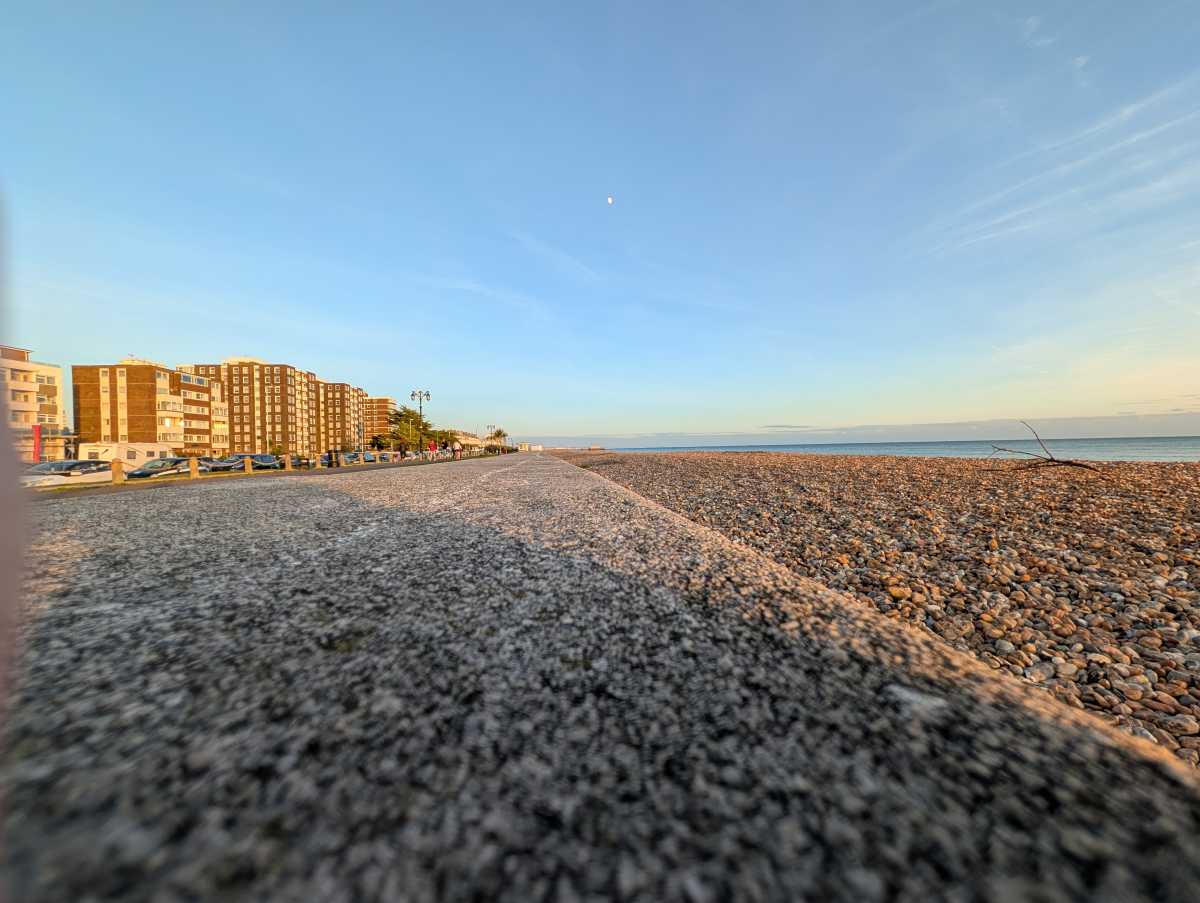
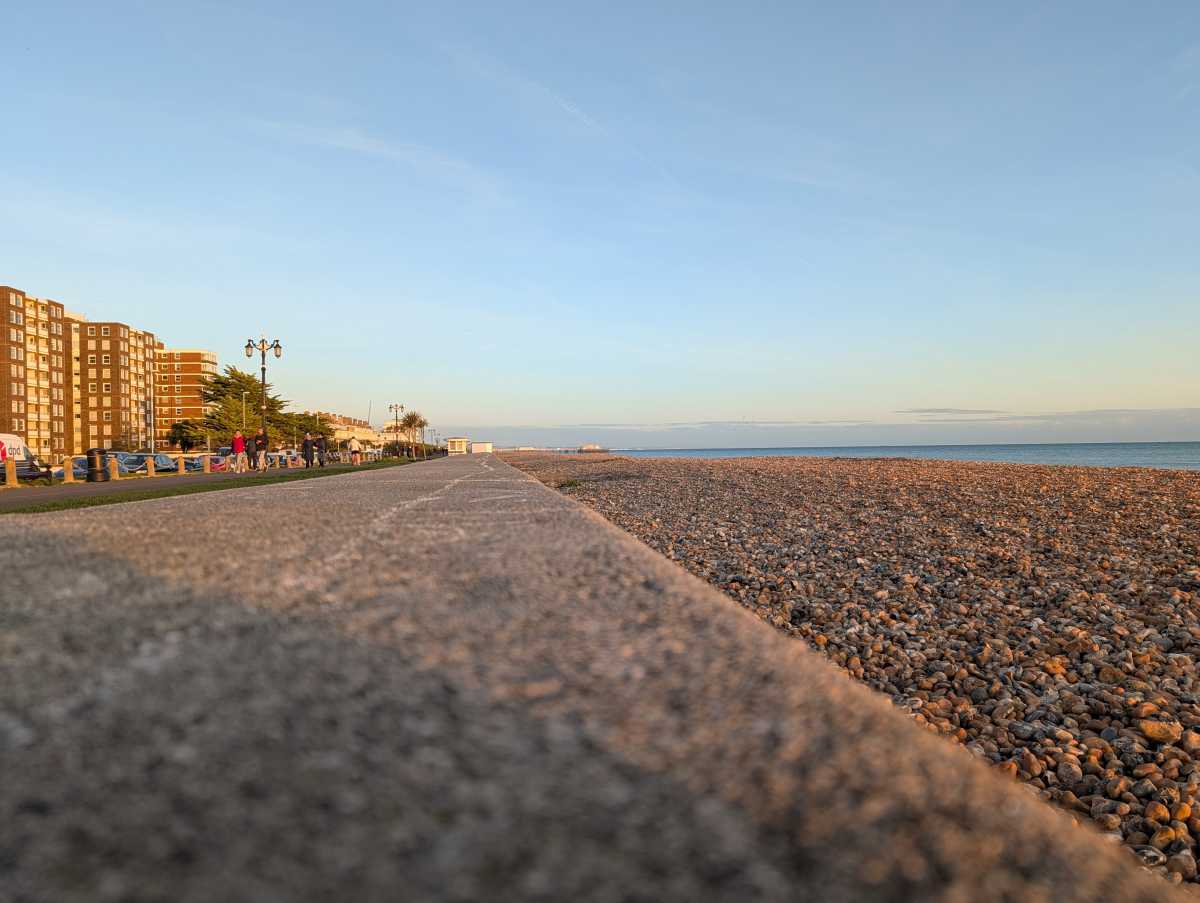






Pro Res Zoom automatically kicks in at 30x and above, but you have the option to see these zoom shots without the generative AI within the phone’s gallery after capture, and the below 100x example shows just how much of the original image is ‘real’.
As such, with the Pixel, it’s a matter of whether you can reconcile using this generative crutch. If not, you can disable Pro Res Zoom, at which point the phone’s zoom range caps out at 30x again, just like its predecessor.


By comparison, the iPhone 17 Pro’s camera is naturally more authentic in its shots, and offers notably better consistency in terms of colour, contrast, white balance and dynamic range. Its ultra-wide sensor also demonstrates better lens correction than the Pixel’s equivalent sensor.
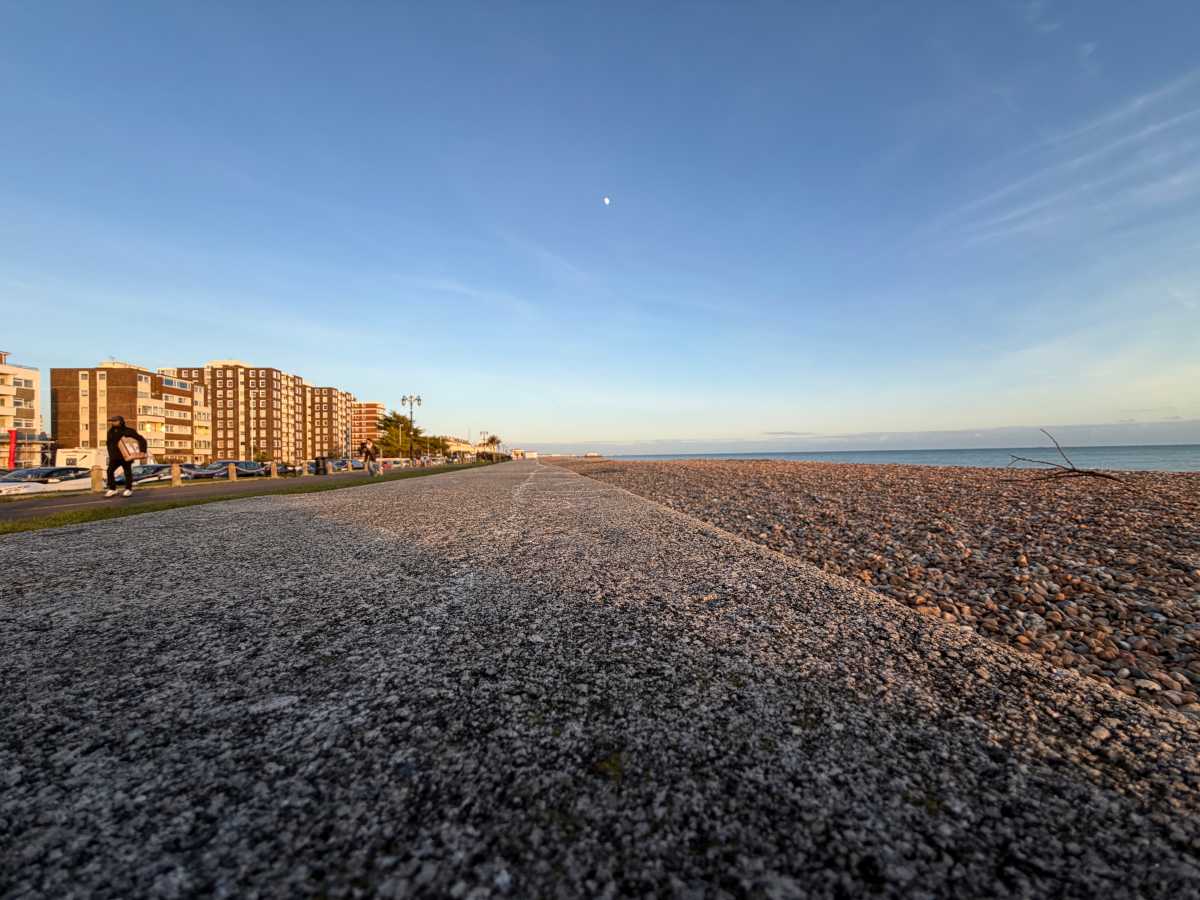





Although more authentic and accurate than the Pixel, you do have to decide whether the iPhone’s significantly shorter focal range and lack of zoom detail are compromises you’re willing to accept, especially if you frequently take telephoto shots. It also struggles with holding focus, and shots from that new telephoto sensor come with considerably more noise than the others for some reason.


Low Light
Drop the lights down, and – with any phone camera – detail and colour accuracy are the photographic attributes most likely to suffer first.
In the case of the Pixel 10 Pro (like its predecessor), its preference for magenta-leaning colour science dresses the whole shot in a dreamy violet hue, that, although appealing and eliciting the idea of shooting at dusk, is inaccurate. The second shot below is the result of flipping to the phone’s dedicated Night Sight mode, with a longer exposure resulting in yet sharper and brighter details.


By comparison, the iPhone 17 Pro nails the white balance, in spite of the dim shooting conditions. What’s more, despite falling short of the Pixel’s centre-frame detail, it actually delivers better retention in the overall scene, particularly when comparing Night Sight to Apple’s Night Mode result (the second image below).


The Pixel does have a low-light party piece, however, in the form of Astrophotography mode. This captures near-enough a 4.5-minute exposure that lets you snap pictures of astral bodies; something not possible on an iPhone.
Portrait Mode
Shooting with each phone’s main sensor with Portrait Mode enabled separates the subject from the background by adding artificial bokeh (background blur) to the scene. The aim is to emulate the high-quality bokeh that comes from quality lenses on dedicated cameras.
By default, both phones also default to their 2x zoom when Portrait Mode is first enabled (the equivalent of around 48mm, similar to the human eye’s FoV, and intended to create more natural-looking results). The iPhone offers up more versatility in this mode, supporting the feature at 1x, 2x and 4x, while the Pixel can only snap in Portrait Mode between 1x and 2x.
Both phones also let you adjust the virtual aperture (which affects the degree of artificial background blur), both at capture and after the fact. These samples were taken using each phone’s default bokeh settings.


While not as evident in these sample shots, one of the most prevalent issues I’ve encountered with the Pixel’s portrait mode is edge detection; sometimes struggling to render a clean separation between the subject and background, especially when the background is patterned or busy. This leads to undesired elements of the background left unblurred when they should be, or the edges of your subject overtly blurred when they shouldn’t be.
While that issue doesn’t readily rear its head in the above shot, Google’s algorithm clearly worked overtime to brighten the face and also colour correct beyond what is actually appropriate for the scene.
By comparison, the iPhone’s interpretation offers more true-to-life colours and more natural, professional-looking fall-off, while also retaining pleasingly authentic and clear definition between the subject and the background.
While, as always, not as sharp as the Pixel 10 Pro’s shot, the iPhone serves up a more refined and appealing portrait result overall.
Selfies
While the Pixel uses the same selfie snapper hardware as its predecessor, the entire iPhone 17 range (plus the iPhone Air) has received an innovative new front camera upgrade that rivals are sure to ape going forward.
The 17 Pro features a new square 24Mp sensor (which takes 18Mp resolution stills). The main advantage is that you don’t have to turn your phone to take full-resolution landscape stills whilst the phone is in a portrait orientation, and vice versa.
Apple’s Centre Stage feature means the 17 Pro can also automatically reframe selfies at capture, based on how many faces it detects in-frame. It’s an obvious solution which maximises selfie quality, and it’s honestly a surprise no other phone maker has attempted such an upgrade before.


Sticking with the 17 Pro, selfies offer up good dynamic range, pleasing, accurate colours and natural skin tones. At both phones’ widest settings, the iPhone fits more in-frame compared to the Pixel, too.
But the Pixel’s more stylised look is advantageous here, with the use of a seemingly narrower colour space and dynamic range, creating a flatter, but more complementary (albeit less true-to-life) rendition of the subject. Over-aggressive post-processing once again gives the shot an overtly sharp look, however.
While the iPhone technically takes the better-quality selfie of these two, personal preference means I favour the look of the Pixel’s shot in this instance.
Video
Both of these phones offer rich video capture, but the iPhone’s legendary dependability is on show in spades. Comparing 4K 60fps footage, the 17 Pro showcases superior stabilisation, faster exposure and autofocus adjustment, and a more elegant transition between its various rear sensors when zooming whilst recording.
Footage from the Pixel 10 Pro adopts the same odd colour science as its stills, along with weaker dynamic range and a more heavily processed appearance. Although only slight, it also doesn’t suppress wind noise as effectively as the iPhone.
However, the microphones do capture fuller sound, with a little more bass rendered in speech compared to the iPhone’s video.
Britta O’Boyle
While footage straight from the camera might place the Pixel behind the iPhone, if you’re willing to upload footage to Google’s cloud, the phone’s Video Boost feature goes some way to iron out some of the faux pas mentioned above, while also unlocking more advanced video options, like 8K 30fps recording.
In contrast, Apple views the iPhone as a video production tool and, as such, it has features that complement this approach. The aforementioned GenLock is a professional-grade feature that allows you to accurately synchronise multiple cameras at capture, something you won’t currently find anywhere else in the smartphone space.
The 17 Pro also natively includes support of Apple LOG 2 format, ACES for colour grading, and allows for up to 4K 120fps capture, with Dolby Vision too.
Verdict
While there are some technical advantages to the Pixel’s photographic setup, namely its detail capture, AI-backed zoom functionality and Night Sight abilities, the iPhone 17 Pro generally produces more appealing shots across a wider range of scenarios.
Provided you’re willing to sacrifice Google’s superior zoom and detail work, Apple’s latest and greatest iPhone delivers otherwise superior colour and dynamic range with its results, along with more dependable white balance and cleaner-looking footage when shooting video.
Nonetheless, both handsets are up there with some of the very best camera phones you can buy, offering pleasing images across a wide variety of scenarios.
Choose the Pixel 10 Pro for:
- Zoom photography
- Macro shooting
- AI photo/video enhancement
Choose the iPhone 17 Pro for:
- Everyday shooting
- Portraits and selfies
- Video capture
Related articles
- Google Pixel 10 Pro XL review
- Samsung Galaxy S26: Everything you need to know
- Best phones: Our experts pick the top 10 Android & iPhone models
- I took 200 photos on the Pixel 9 Pro and Galaxy S25 Ultra to find the best camera phone
The iPhone 17 Pro used in this feature was supplied by Vodafone UK. Check out the latest Vodafone iPhone 17 Pro deals.