




At a glance
Expert’s Rating
Pros
- Great colours and finishes
- Strong dust and water protection
- Solid display
- Good main camera performance
Cons
- Curved display not great for gamers
- Some performance issues
- Only 3 years of updates
- Moto AI doesn’t add much
Our Verdict
The Motorola Edge 60 Fusion offers good value for money, with a great display and unique finishes. The battery life and charging are great and the camera is generally good. But Moto AI doesn’t really add much to the experience.

Price When Reviewed
This value will show the geolocated pricing text for product undefined
Best Pricing Today
Price When Reviewed
Not available in the US
Best Prices Today: Motorola Edge 60 Fusion

Motorola has produced a run of great devices recently, from a Razr family that offers options and distinction in the folding phone market, through to a range of Edge models that offer great value for money and some unique design features.
Key to the Motorola offering has been the software experience that’s about as close to a Pixel as you’ll get without buying a Pixel. While other manufacturers offering devices at this price are trying to fully own the software experience, Motorola has been offering a (mostly) bloat-free experience that’s close to stock Android.
But with a wide range of phones, you’d be forgiven for not really knowing what’s what in the Motorola line-up. The Motorola Edge 60 Fusion replaces the Motorola Edge 50 Fusion, and is the cheapest option in the Edge family, which is all about a premium experience.
As such it sits above the Moto G and Moto E models, but below the Edge 60, Edge 60 Pro and Edge 60 Neo.
I’ve been testing the Edge 60 Fusion for a couple of weeks to see what this phone actually offers.
Design & Build
- Pantone colours with vegan leather finish
- Plastic frame
- IP68 and IP69 water and dust resistance
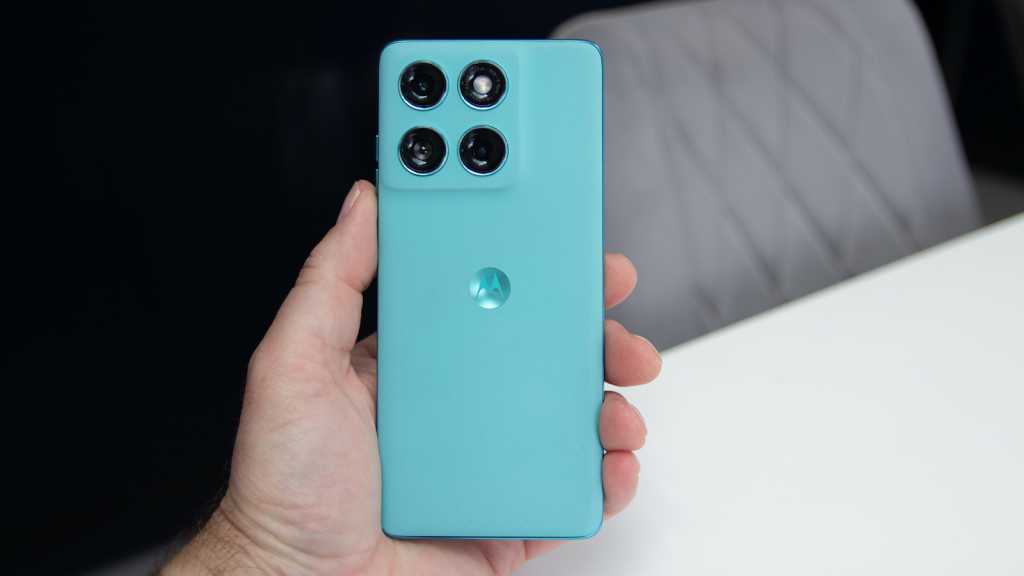
Motorola’s design pairs something unique with something that’s a little outdated in smartphone design terms. On the one hand, the Edge 60 Fusion’s rear cover (here in the Pantone Amazonite colour with a vegan leather finish) is bold, interesting and surprisingly premium for a £300 phone.
This phone looks a lot better than the cheap plastic rivals you might consider as an alternative
Motorola’s continuing partnership with Pantone results in some great colours and I love the brightness of the finish. As such, this is a phone that doesn’t want to be put in a case, as that would ruin the whole effect.
The faux leather feels premium, provides plenty of grip and stays mercifully fingerprint-free, so this phone looks a lot better than the cheap plastic rivals you might consider as an alternative.
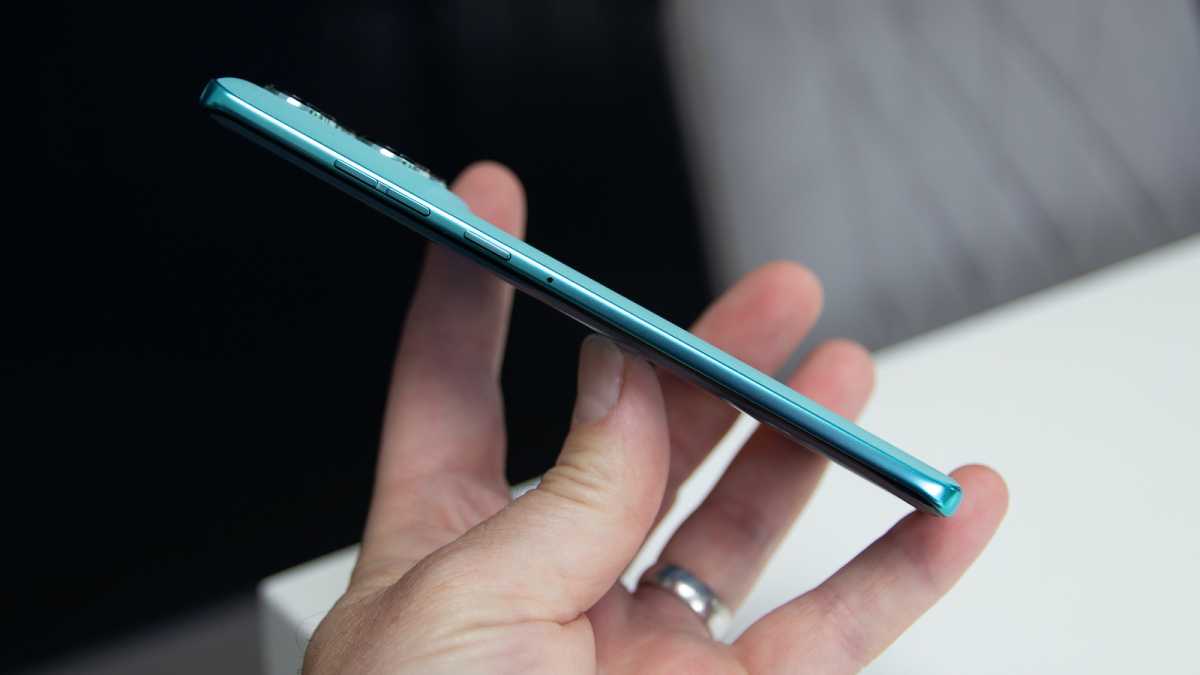
At the same time, the Edge 60 Fusion still features a curved edge design. This sees the screen curving at the edges, the frame narrowed and a more rounded profile than you find on many phones these days.
Chris Hall / Foundry
On one hand this makes the phone really easy to grip, unlike the squared edges you’ll find on just about every other device, but at the same time, it’s essentially the same design that Samsung was using about a decade ago.
As befits this phone’s position as an affordable device, the frame is plastic and the screen gets Gorilla Glass 7i protection. The phone weighs 178g and is 7.95mm thick, so it’s fairly thin.
Rounding out the design side of things is IP68 and IP69 water and dust protection. Not all manufacturers offer IP69 protection, but it means that this phone will withstand not just a dunking in water, but exposure to high pressure water jets too. While that might sound a little abstract, it just signals a higher standard of protection.
Screen & Speakers
- 6.67-inch pOLED display
- Stereo speakers
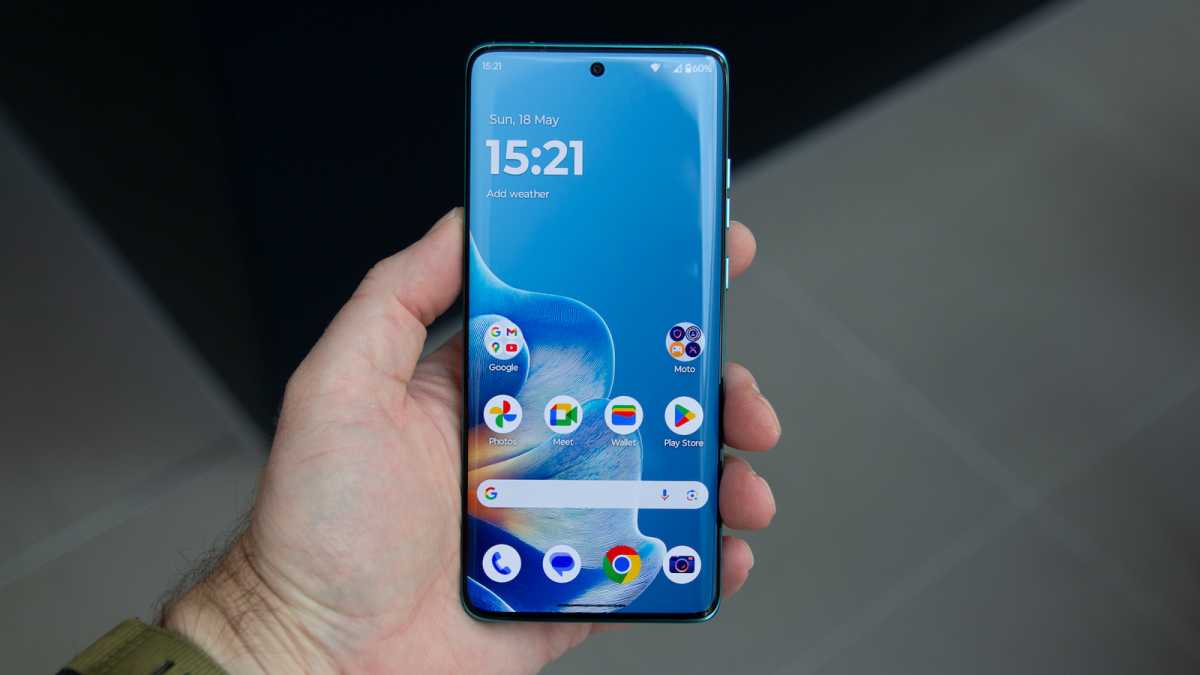
One thing that Motorola has done well over the past couple of years is displays. This 6.67-inch pOLED display has the same feel to it that I got from the Edge 50 Fusion. It’s bright, vibrant and wonderfully smooth, thanks to the 120Hz refresh rate support. The Edge 50 Fusion offered 144Hz, but the loss doesn’t feel significant.
This display has the detail to rival that of a flagship phone
Out of the box I found that the display was on Vivid mode, which gives a nice saturation to your content. Some might find that a little too rich, but there are options for Natural and Radiant too. You can fine-tune the colour temperature for each mode in the settings to get the look you want. But it’s worth noting that you get “Pantone Validated” colours from this display, although I’m not sure what that’s supposed to mean.
It’s a 2712 x 1220 pixel resolution, which gives you 446ppi, so this display has the detail to rival that of a flagship phone. It’s also brighter than many flagship devices, with 4500 nits peak brightness. This enables two things: first, it can ramp up the brightness in full sunlight to deal with reflections (which does send the colour balance on the display slightly out of whack, but at least you can still see it) and it also means there’s great potential for HDR.
Chris Hall / Foundry
While HDR10+ support is listed, I didn’t find any HDR10+ content, although that might not be a bad thing: the HDR10+ content I’ve watching from Netflix recently has been far more muted than previously.
HDR also comes out in images, with Google Photos a great place to see photos pop, using this high peak brightnesses to bring out that HDR effect. On the Motorola Edge 60 Fusion this didn’t seem to happen. Despite being brighter than the Pixel 9 Pro XL, it didn’t look as good when viewing photos on the display.
That suggests to me that, at this point in time, the potential of that 4500 nits isn’t really being used. The other issue I have with the display comes down to design. While the curved edges look good and aid grip, touch sensitivity on those edges isn’t great, which reduces the potency of this phone for gaming. It’s just not as effective as a flat screen.
The speakers are pretty good though, with plenty of volume, and I found the turning them up while hammering Call of Duty Mobile made things nice and immersive.
Specs & Performance
- MediaTek Dimensity 7300 chipset
- 8GB of RAM
- 256GB of storage + 1TB microSD
Sitting at the heart of the Edge 60 Fusion is the MediaTek Dimensity 7300. This is a mid-range platform that plays its part in keeping that price down, while being generally equivalent to something like the Snapdragon 7 series. In fact, the previous version of this phone had the Snapdragon 7s Gen 2.
On paper there’s a slight step-up in performance, but in my testing I didn’t find much improvement and, when gaming, I found it wasn’t quite as smooth as I was expecting.
Gaming performance did seem to stutter at times – even when connected to Wi-Fi
One persistent issue I experienced was connectivity: the Edge 60 Fusion struggled to connect to my home Wi-Fi at times, when other devices were completely fine. This was most noticeable when gaming, because I’d find that I was no longer connected.
Gaming performance did seem to stutter at times – even when connected to Wi-Fi – and that combined with the curved edges on the display makes it hard to recommend this phone if you want to be competitive online. It’s fine for casual gaming, but not if you’re a hardcore CoD fan.
There’s only one version available, with 8GB RAM and 256GB storage, although that might differ from region to region. There’s also support for up to 1TB microSD card expansion.
The Edge 60 Fusion is typical of this level of device. Day-to-day interactions are perfectly smooth: skipping between social media and emails presents no problems, but once you start to do more demanding things, you’ll hit the limitations of what the phone offers.
Motorola 60 Edge fusion benchmarks
Cameras
- 50Mp f/1.8 main
- 13Mp f/2.2 ultrawide
- 32Mp f/2.2 selfie
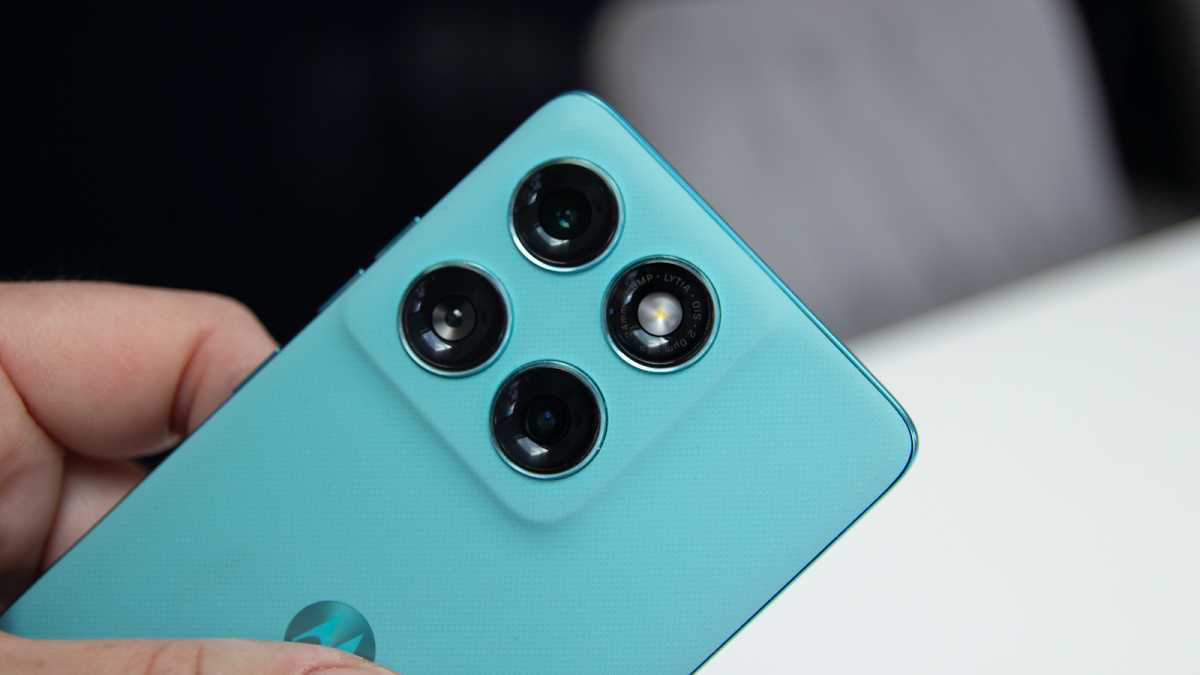
You might think that the camera has seen something of an upgrade from that last version of this phone. Previously, there were only two lenses on the back, but now there appear to be four. It’s a bit of a trick, making the Edge 60 Fusion look almost identical to the Edge 60 Pro, a phone that’s specced quite a bit higher.
Chris Hall / Foundry
One of those rear camera elements is the flash, that’s obvious enough, but the third is a “3-in-1 light sensor”. Have you ever asked yourself why flagship models never seem to have these sensors? Perhaps because they’re not needed.
The main camera on the Edge 60 Fusion is impressive
It’s hard to tell what this light sensor does. I took a series of photos across the cameras with the light sensor covered and uncovered and couldn’t see any difference, so I suspect it’s mostly just there to look nice.
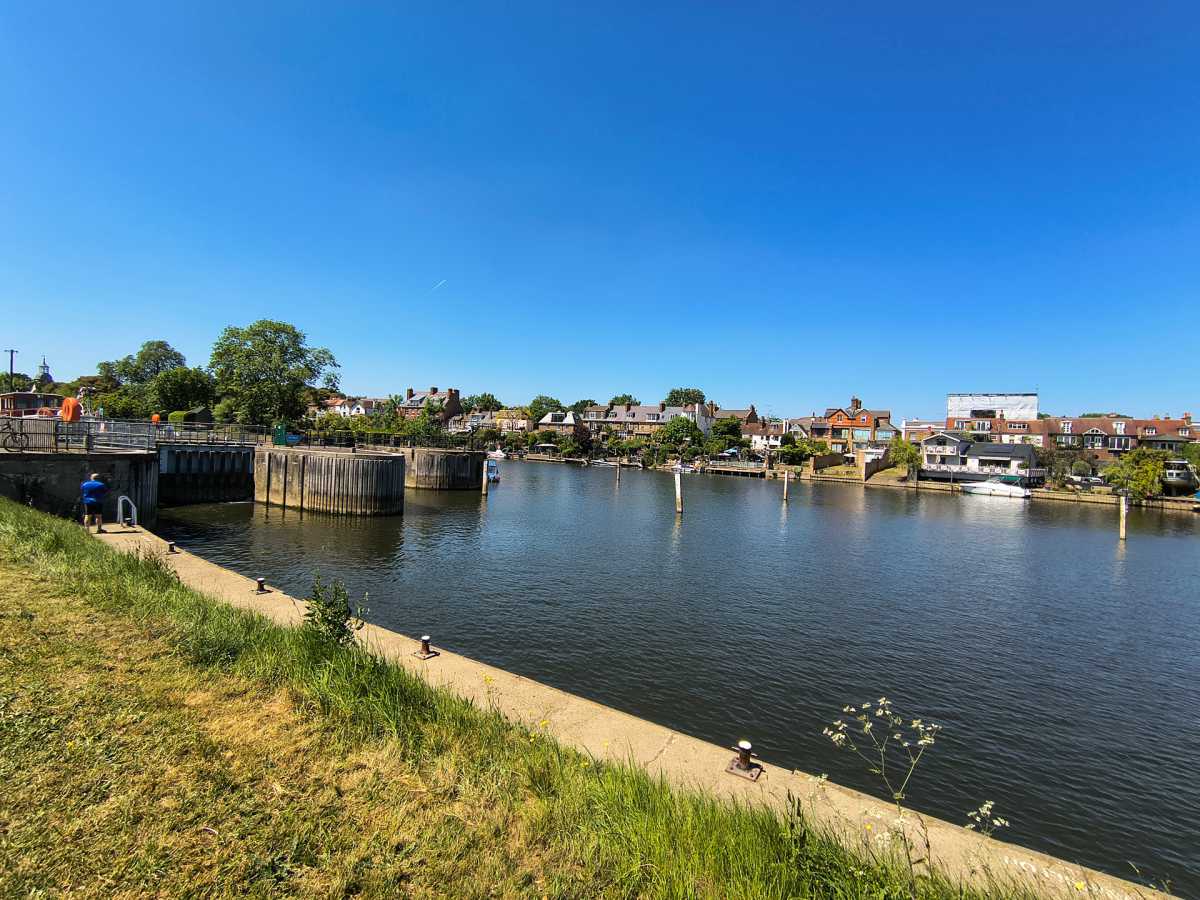
The main camera on the Edge 60 Fusion is impressive, producing nice, bright images. There’s a slight colour difference between the ultrawide and main cameras, but not to a worrying degree. I tested it alongside the Pixel 9a and found that it generally resulted in brighter images, although shadowy areas can sometimes be ramped up a little higher than they should be.







The front camera offers good quality selfies too, with a portrait mode that I found accurate enough when detecting edges.
There’s no optical zoom here, with the main camera offering 2x zoom in the viewfinder and then up to 10x digital zoom. At the far end, results aren’t good, so it’s best avoided.



Battery Life & Charging
- 5200mAh
- 68W wired charging
- No wireless charging
The battery performance of the Edge 60 Fusion is solid. I found it to last through the day regularly without issue. Even on a long day travelling where I was hotspotting a lot of the time, I found that the Edge 60 Fusion still managed to supply me with a connection through the entire day.
That’s thanks to the 5200mAh battery, which is large by any measure, larger than many flagship phones. When it comes to charging, you also have the benefit of 68W support. This isn’t the fastest that Motorola offers – the Edge 60 Pro offers 90W charging – but it means you can get this phone recharged in no time at all.
There’s no charger in the box, but connecting it to an existing 90W charger, I found that I could get the phone from 0 to over 60% in 30 minutes. Motorola highlights that you can get a day of use from a 15-minute charge. It might have to be a day of light use, but it’s still great to have fast charging in a phone at this level.
Software & Apps
- Android 15
- Moto AI features
- 3 years OS updates, 4 years security patches
Motorola has offered a reasonable alternative to Pixel over the last couple of years, with a clean Android experience. The Edge 60 Fusion launches on Android 15, but is only in line for three OS updates so it’ll stop at Android 18 in 2028. You’ll get four years of security updates.
This is still a fairly clean Android experience, but there are some preinstalled apps that Motorola dumps in
This is a little behind the curve: Samsung offers six years of updates on the Galaxy A36 5G for example, while the Pixel 9a gets seven years, although admittedly both phones are more expensive than the Motorola.
Back to the software and this is still a fairly clean Android experience, but there are some preinstalled apps that Motorola dumps in. There’s a handful of games here and even though you’re asked if you want to install certain apps during setup (which you can decline to do), you’ll still end up with some junk. Fortunately, you can uninstall it all.
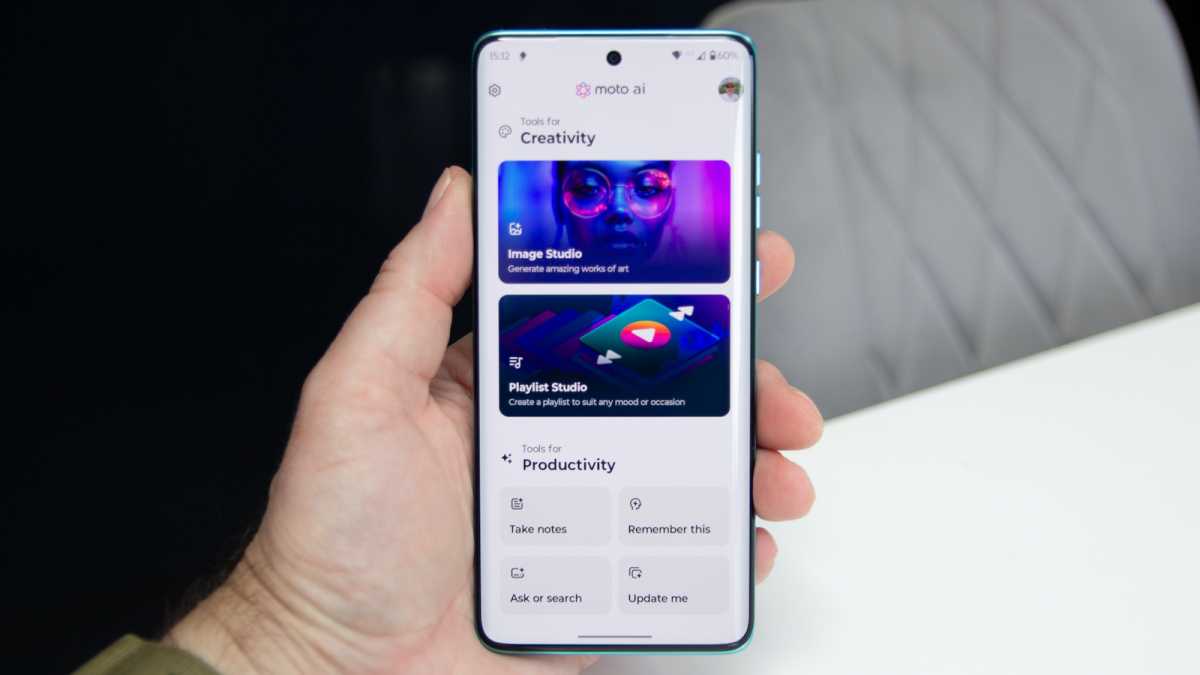
There’s a new addition for 2025, which has formed the focus of what Motorola is pushing in the Edge 60 Fusion (and other devices). That’s Moto AI: yes, Motorola is now offering its own AI features on top of those you get from Google. So you can also access Gemini, and get photo editing skills through Google Photos, and integration into Google apps.
While the look and feel of the Motorola Edge 60 Fusion is still very much like Android, you can see how Motorola is trying to take ownership through Moto AI.
Chris Hall / Foundry
To access Moto AI you’ll need to sign into a Moto account, which you’ll regularly be prompted to do. That will give you access to a range of features designed to help you save and recall information, analyse screenshots or web pages, answer questions on the fly, or summarise your notifications. This is powered by Perplexity AI and exists as another layer in your phone.
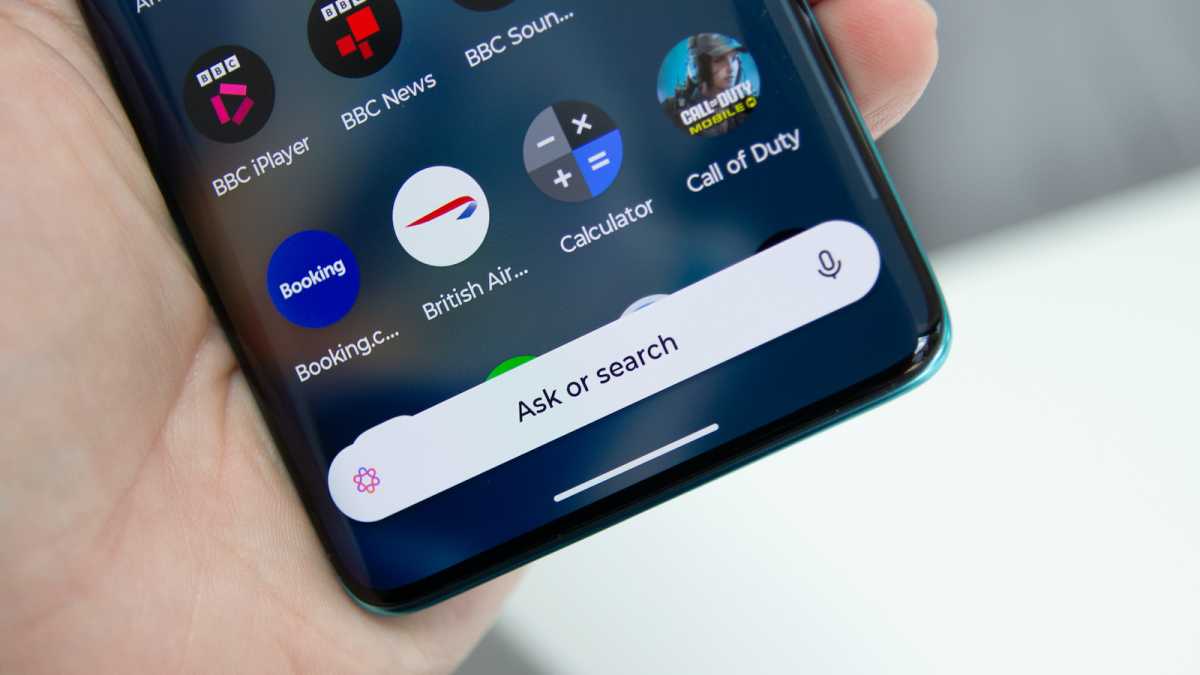
That includes integration into the apps tray, where the search bar for apps also offers AI queries. New tabs are added to the apps tray as well.
Chris Hall / Foundry
This includes a newsfeed, which is powered by Taboola and immediately served my up a collection of stories about cats, a machete attack and someone urinating into a salmon fish farm.
It feels a little forced and intrusive, but fortunately you can turn it off in the settings. Equally, if you don’t like AI search in the apps tray, you can turn that off too. If you don’t log in at all you can avoid all of Moto AI, while gestures (like double pressing on the power button) can be switched to something more useful, such as launching the camera.
Price & Availability
The Motorola Edge 60 Fusion launched at £299.99 and in the UK is only available with 8GB RAM and 256GB storage. It’s available direct from Motorola and Amazon, where it’s currently on sale for £228.99. It’s not officially available in the US.
The Samsung Galaxy A36 5G is a natural rival to this device, while the Nothing Phone (3a) sits in a similar position but is a little more expensive. See our round-up of the best budget phones for our top recommendations.
Should you buy the Motorola Edge 60 Fusion?
The Motorola Edge 60 Fusion offers good value for money. It’s noteworthy for its unique colours and quality finishes, high level of water protection and the great display on the front, which has plenty of performance and vibrancy.
The main camera is a good performer, the battery life is strong and charging is faster than average. But I’m not convinced by Motorola’s AI features and I prefer the cleaner Android experience you’ll get if you turn it off. The main camera is pretty good and the day-to-day experience is smooth enough, but once you push the hardware, it will start to struggle.
Those wanting a phone for gaming should look elsewhere, but if you’re after a good all-rounder, the Motorola Edge 60 Fusion could be all the phone you need.
Specs
- 6.67-inch, 120Hz Super HD AMOLED main display
- MediaTek Dimensity 7300
- 8GB RAM
- 256GB storage
- 50Mp, f/1.8 main camera with OIS
- 13Mp, f/2.2 ultrawide camera
- 32Mp, f/2.2 selfie camera
- 5200mAh battery
- 68W wired charging
- Stereo speakers
- IP69 water and dust resistance
- Gorilla Glass 7i
- 5G
- Bluetooth 5.4
- 161 x 73 x 7.95mm
- 178g
- Android 15