
At a glance
Expert’s Rating
Pros
- Stunning compact design
- Impressive cameras
- Decent battery life
- Long software support
Cons
- Software and AI bugs
- Slow charging speeds
- Limited upgrades
Our Verdict
Samsung’s Galaxy S26 is the company’s most refined compact flagship to date, but one that’s only a small jump up from its predecessor. Iterative rather than transformative, it is a phone that does almost everything well and very little brilliantly.
Price When Reviewed
This value will show the geolocated pricing text for product undefined
Best Pricing Today
Best Prices Today: Samsung Galaxy S26


The smallest sibling in Samsung’s newest S-family, the S26, is an interesting phone. On the hardware side, it feels like Samsung has taken this device as far as it can go. On the software side, it feels as if it is still finding its feet.
Very little differentiates it from the Galaxy S25 that came before, with more iterative updates than a total overhaul. Samsung has given this new phone the same screen as its predecessor, but with slightly greater resolution and better brightness. It also has a little more processing power (for a higher price) and a longer-lasting battery.
But under the hood, Samsung has thrown a lot of artificial intelligence (AI) features at almost everything — whether that’s with its own Bixby assistant, Google Gemini, or an upcoming partnership with Perplexity. Some of this works decently, but most of it is unpolished, and it’s the biggest block to what this device could be.
Ultimately, the S26 is a solid flagship phone, but also one that’s playing it safe. It would be nice to see Samsung push the boat out further, and not tie some of its most interesting features – like the Privacy Display found on the Galaxy S26 Ultra – to its highest price-tagged devices.

Adam Smith / Foundry
Design & Build
- Sleek aluminium body
- Lighter and sturdier
- IP68 dust and water resistant
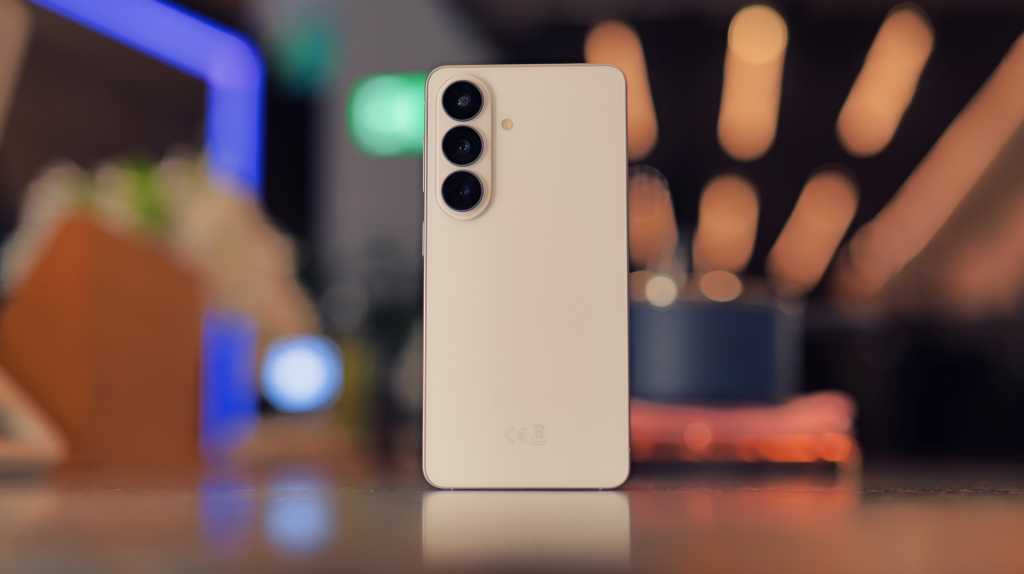
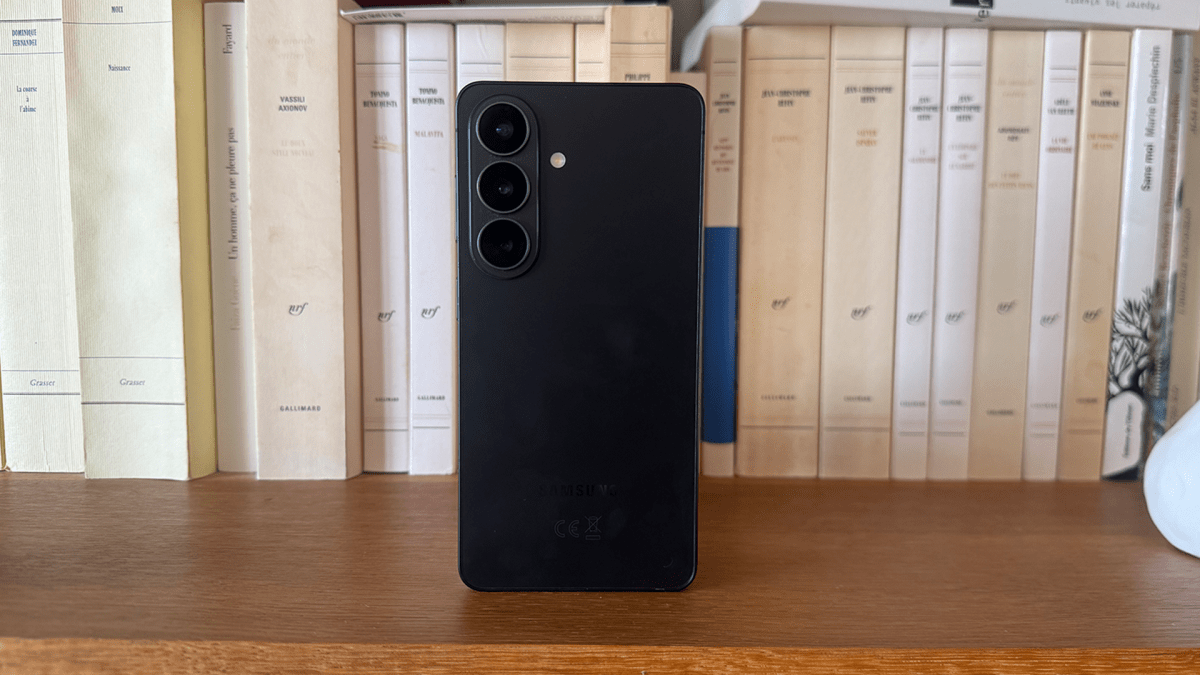
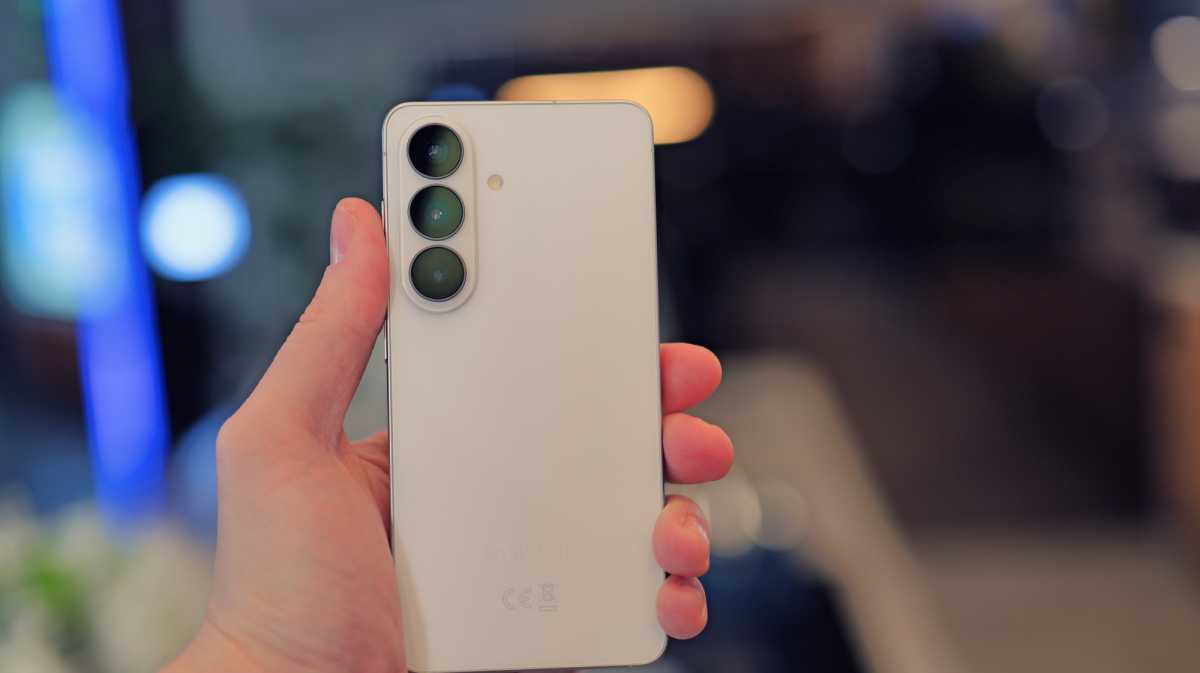
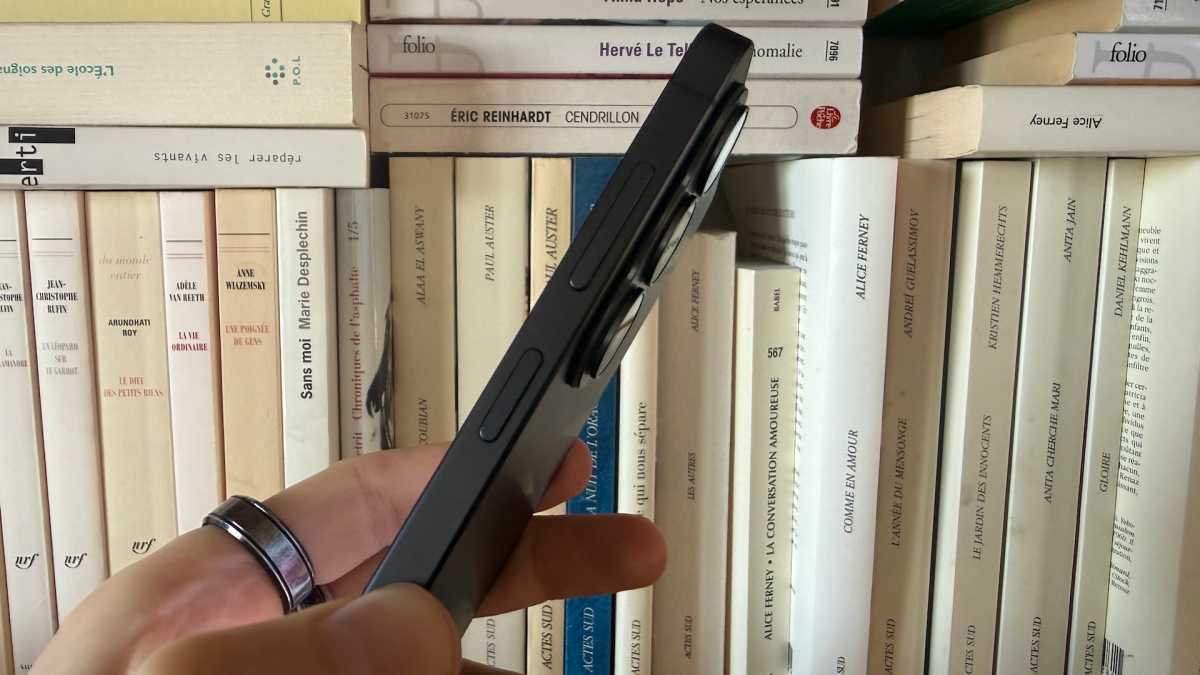
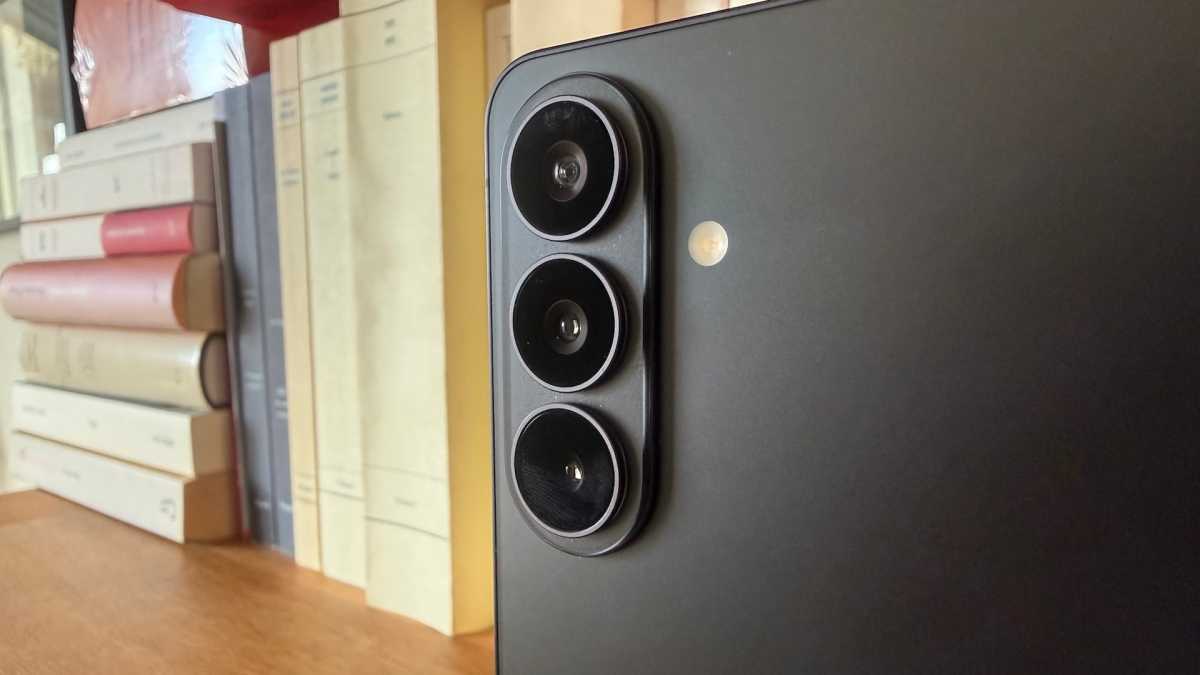
Samsung’s Galaxy S26 is, if nothing else, an absolutely gorgeous phone to hold and use. The black aluminium body – also available in Cobalt Violet, White, Sky Blue, Silver Shadow, and Pink Gold (the last two Samsung.com exclusives) – looks supremely sleek, and the cameras, layered on a vertical, oval, island, are well positioned.
That also makes it look a little more sophisticated, in my eyes, than its Ultra brother, which has two more lenses strangely stuck out the side.

Luke Baker
At 167g, it weighs a little less than the iPhone 17 and Google Pixel 10, but in a way that belies a kind of futurism rather than flimsiness. IP68 dust and water resistance means that this phone should survive most weather it’ll face; I brought it out during a hailstorm to rapidly find a train station, and it remained unfazed.
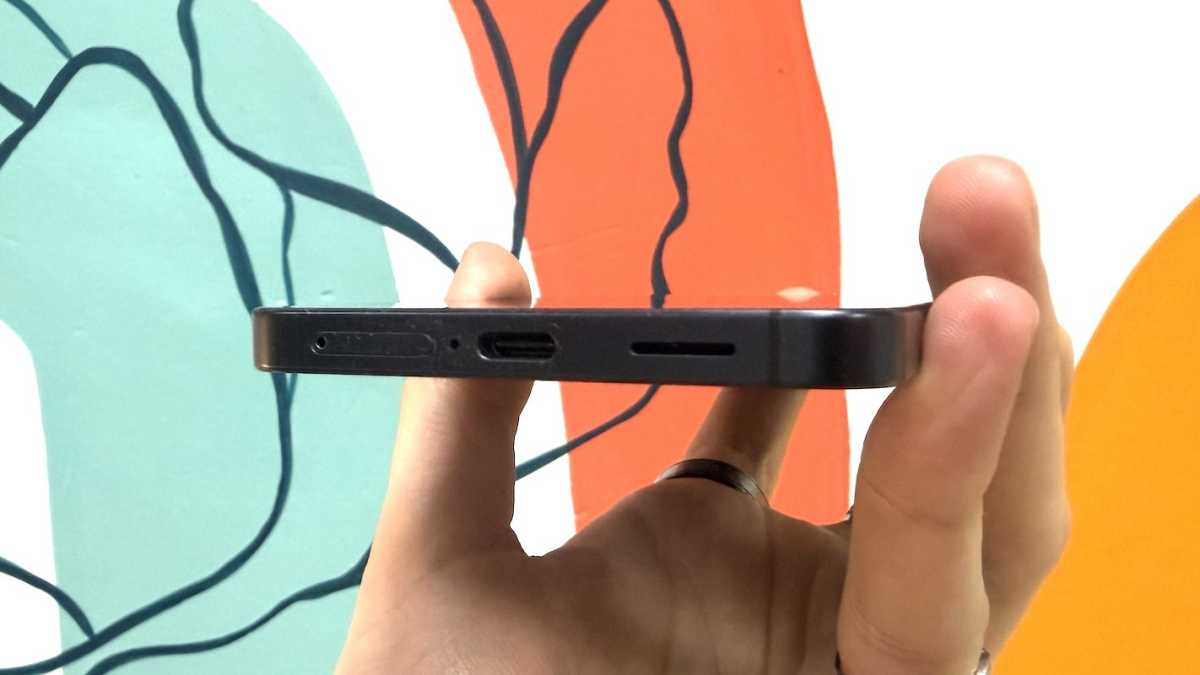
On the right are the expected volume buttons and a camera button-come-assistant summoner, and there’s a USB-C port at the bottom.
Screen & Speakers
- Bright, smooth 120Hz display
- Blue hues
- Strong audio output
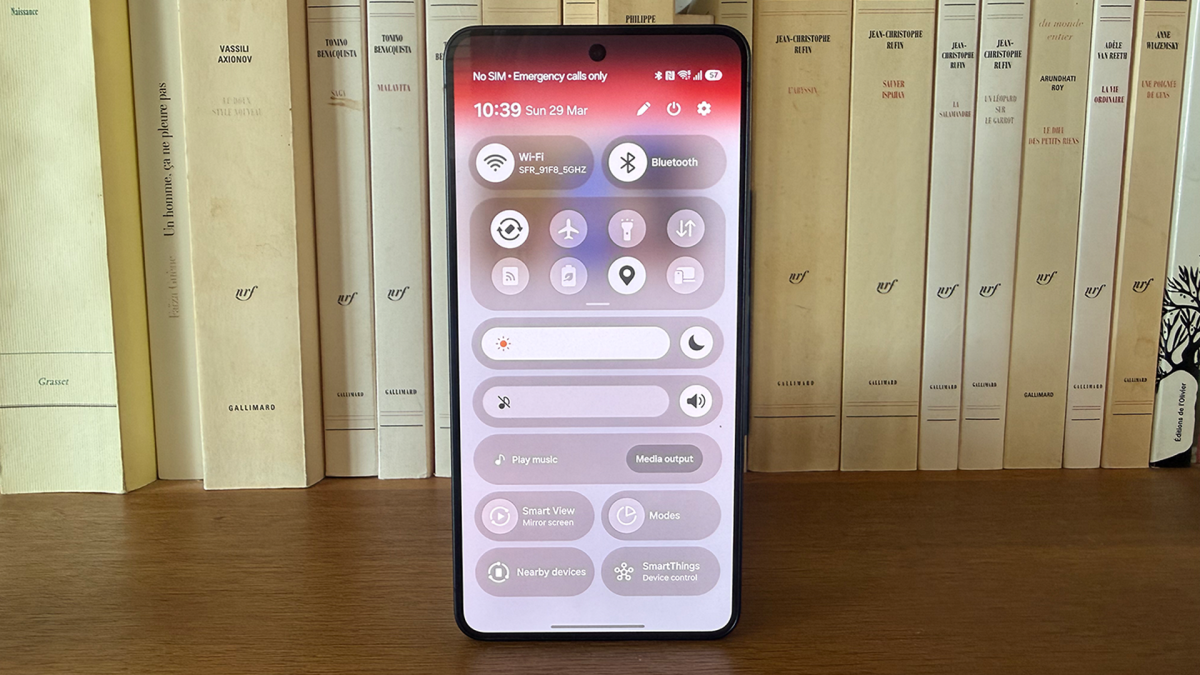
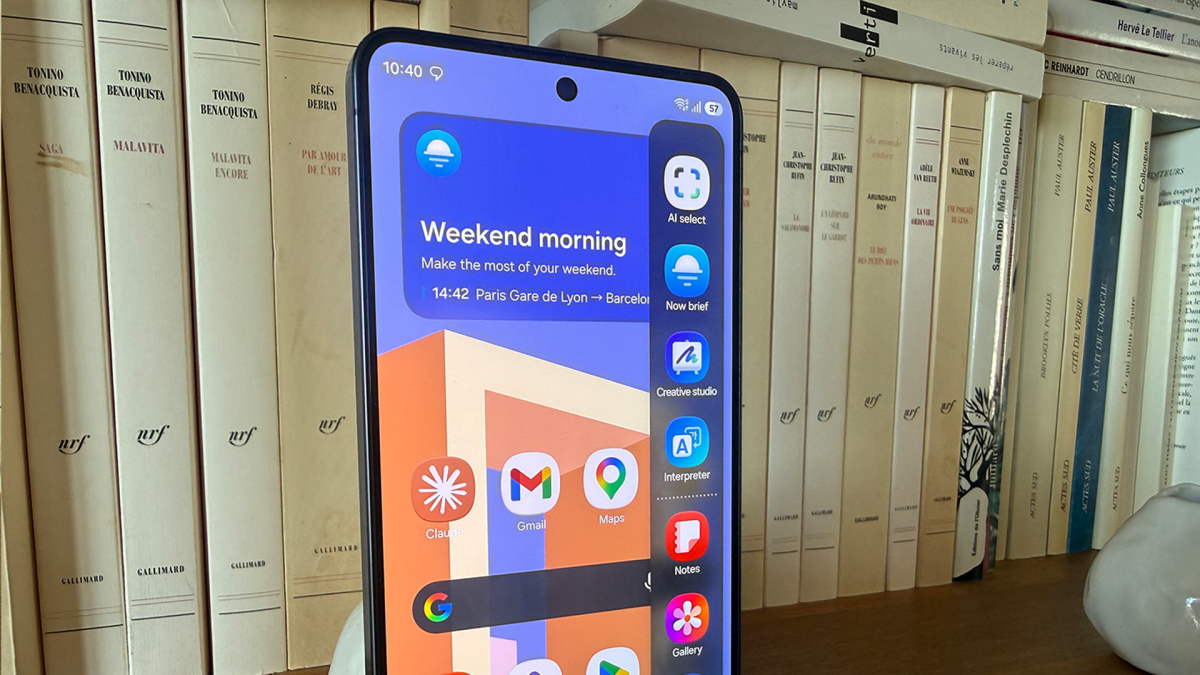
The Galaxy S26’s screen is slightly larger than the Galaxy S25, touting 6.3-inch instead of 6.2, but with the same FHD+ (2,340 by 1,080) resolution. Maximum brightness now reaches 2600 nits, which was helpful under the sun.
Adam Smith / Foundry
With the 120Hz refresh rate, scrolling is impressively smooth, and on the whole, the S26 performs relatively well. Compared to other high-priced phones, it does have a bluer colour balance – watching the second series of Ted, the brief asides in a prison setting come across colder, as do Ted and his friend John Bennett’s nighttime talks in their bunk bed – and while some might prefer that, I feel it makes videos less exciting.
There is a good level of detail, capturing the scratches of a vandalised school table or the curls of Ted’s fur nicely. Switching to Blade (1998), there is also a decent attempt at the delicate balance of light during the opening club scene, where ethereal, white rays illuminate vampires’ eyes and teeth. But there is still more to be done to eke out the detail afforded to the Pro-level iPhone, and side-by-side, Samsung is a little disappointing.
Adam Smith / Foundry
When it comes to sound quality, the S26 does better. Dialogue and other midrange frequencies come across strong and even at the highest volume, where lesser devices strain.
High-pitched strings and other light percussion instruments, triangles or cymbals, also shine and while the small speakers cannot capture the deep bass of tracks like Love Lockdown – few smartphones really could – the S26 makes a valiant effort.
Specs & Performance
- Split Snapdragon/Exynos strategy
- 12GB RAM
- 256GB storage as standard
Samsung offers 12GB of RAM and the storage is now 256GB as standard on the S26, the latter being double that of its predecessor.
Adam Smith / Foundry
With regards to the processor, Samsung has split it between the US and Europe; the former gets the Snapdragon 8 Elite Gen 5 for Galaxy, while the latter (including my device) has the in-house Exynos 2600.
While the S26 lacks the advanced cooling system Samsung introduced on the Ultra this year, I did not notice any heat when I was using it.
The device works fine with games like Genshin Impact or Dead Cells, at the maximum specs, and gives no trouble switching between apps in everyday use – as you would expect from a flagship phone which costs this much.
Samsung Galaxy S26 benchmarks
Cameras
- Excellent night photography
- Strong zoom, weak close-up
- AI editing unreliable
The S26 has a 50Mp main camera, a 12Mp ultrawide, and a 10Mp telephoto, while on the front is a 12Mp sensor with an f/2.2 aperture.
While a step down from the Ultra (200Mp main camera, 50Mp ultrawide, and 50Mp 5x zoom telephoto), it is still an impressive device. The neon lights of the Moulin Rouge come across clean and crisp in the night, where other devices leave it murky, and its handling of colour is truly commendable.
Adam Smith / Foundry
The string of lights from the windmill, which other phones only capture as blobs of yellow light, are captured in all their colours – despite the distance. The zoom capability here is really quite good; in the daytime, it is able to scale the sides of the Notre Dame and capture the gargoyles with ease.
There are other areas where it could be improved, though. Close up, the S26 struggles to capture little details, like the smattering of pollen on the petals of a flower, or the brushstrokes on an oil painting, which lets it down.
Samsung has also given the S26 a new video setting – Horizontal Lock – which stabilises video to a much better degree, making it easier to capture footage when moving around. Moving and shaking the phone around did not bother it at all.
The mode is a little fiddly to turn on, as it requires going to the Camera app’s video tab, then the in-app settings, and then enabling it (every time you switch to video), but it is quite a neat addition.
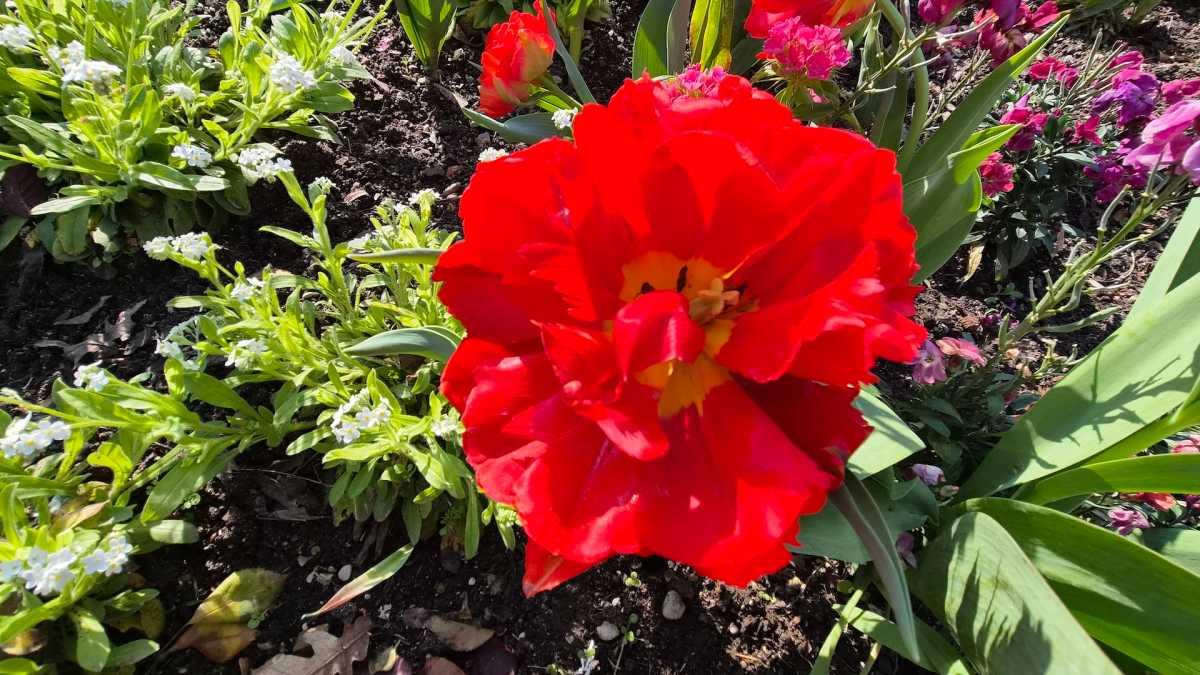

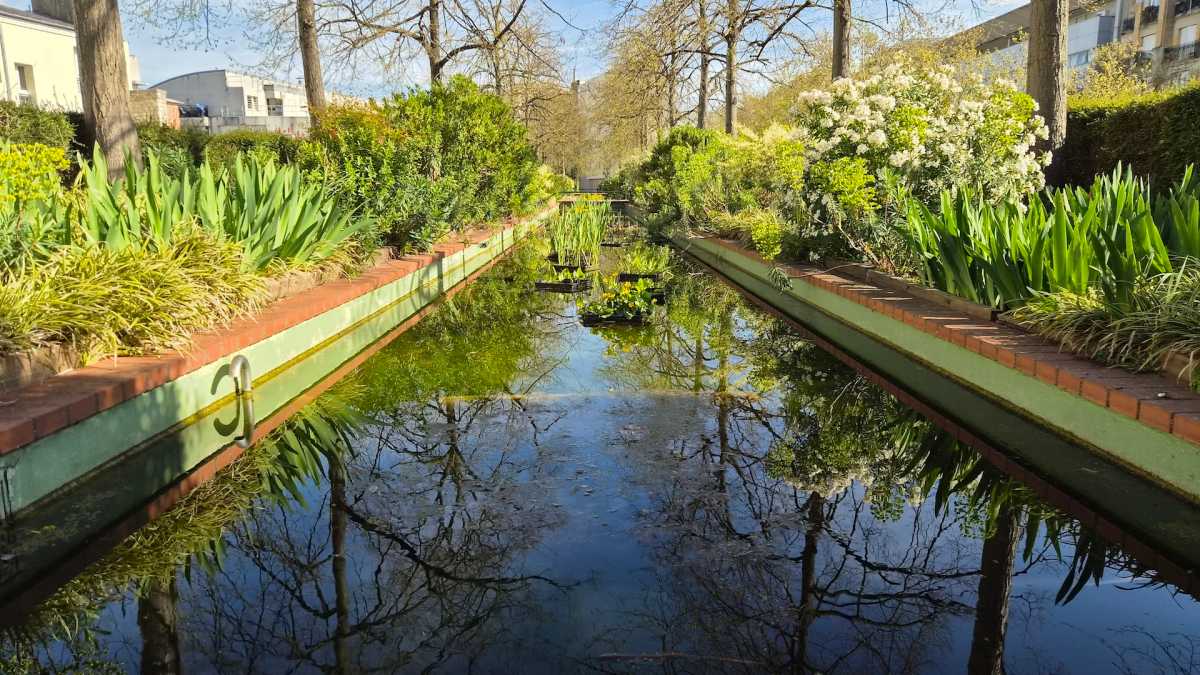





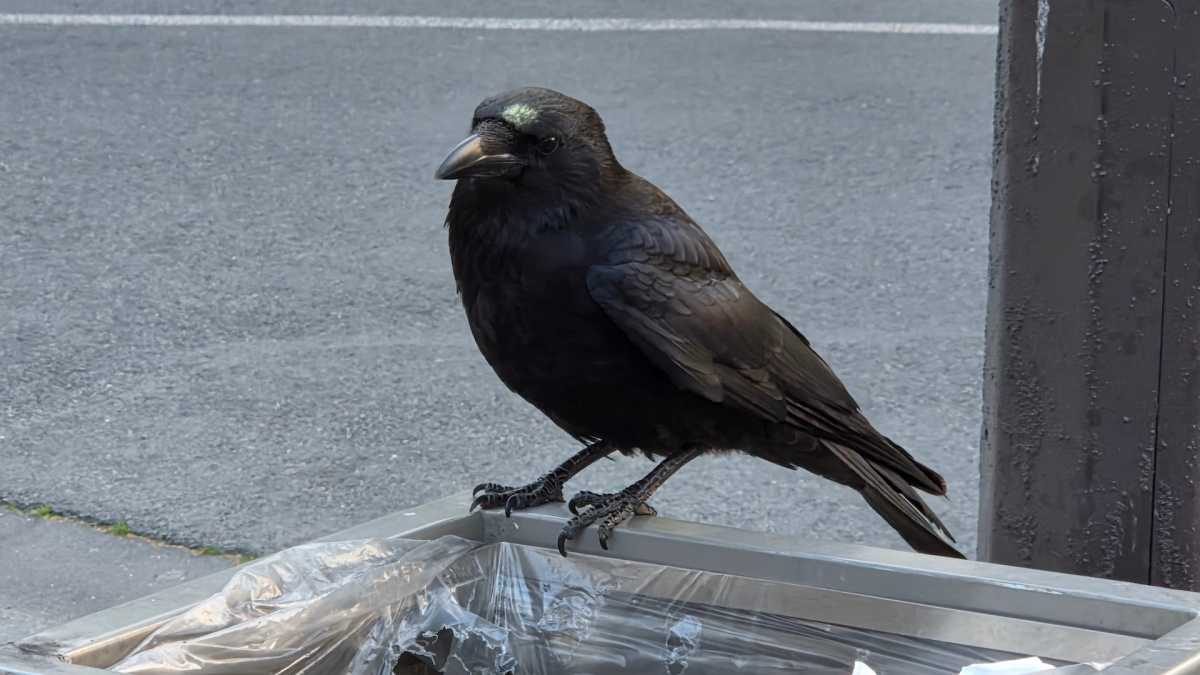

In the editing suite, Samsung has also added an influx of AI features, including the ability to use text-based prompts to edit photos.
These work decently for some edits. Prompting it to make the image darker worked quite well, and the AI eraser is quite effective, although there were still some artefacts around areas that it found difficult to duplicate, such as around brickwork.
For more creative work, it’s surprisingly bad. Drawing a circle around a crow, and asking Samsung’s AI to “make the bird bigger” resulted in a Frankenstein-like creation; another attempt was better, but changed the bird breed completely.
Battery Life & Charging
- Lasts close to three days
- Charging speeds below flagship level
- Magnetic wireless charging needs a compatible case
Samsung has given the S26 a bump in battery for a total of 4300mAh, compared to 4000mAh on the S25 (though this is well under average for 2026).
Still, it lasts well and during my testing, it lasted nearly three days before I needed to recharge it, with no slack on the scrolling, texting, and photo-taking that I put it through.
In our PCMark battery test, the S26 recored a middling result of 14 hours and 56 minutes.
When it comes to charging, however, that’s less flattering. There’s no improvement (unlike the Ultra), so it’s stuck at 25W wired and 15W wireless.
Using an older 65W OnePlus Warp Charger – since there’s no plug in the box, you’re reliant on whatever you already own – the phone scraped to just 5% in fifteen minutes and 11% in thirty, indicating that you need the right kind of charger, too.
With a MacBook charger, the S26 got to 18% in 15 minutes and 35% in 30 minutes.
Adam Smith / Foundry
Samsung has also declined to give the S26 decent wireless charging, as while it is “Qi2 Ready,” it does not have the magnets built into the device.
This means that if you want to snap the phone to a magnetic charger, you can, but only with a compatible case.
Software & Apps
- Android 16
- AI features hit and miss
- UI issues remain
The Samsung Galaxy S26 Ultra runs One UI 8.5, over Android 16.
Now Brief is the most visible feature – sitting right at the top of the phone. Rather than waiting for you to search or type, it analyses what’s on your screen and surfaces relevant suggestions before you even ask.
Adam Smith / Foundry
In theory this sounds useful. In practice it’s fine: an unobtrusive icon appears based on what’s happening on screen, suggesting things like sharing contact numbers or flagging calendar times while you’re dealing with work emails, which works fine but is not the transformative feature one would hope. For example, tapping the calendar link to an event, and then opening the map, takes you to a miniature version of Google Maps’ functionality, not the actual app.
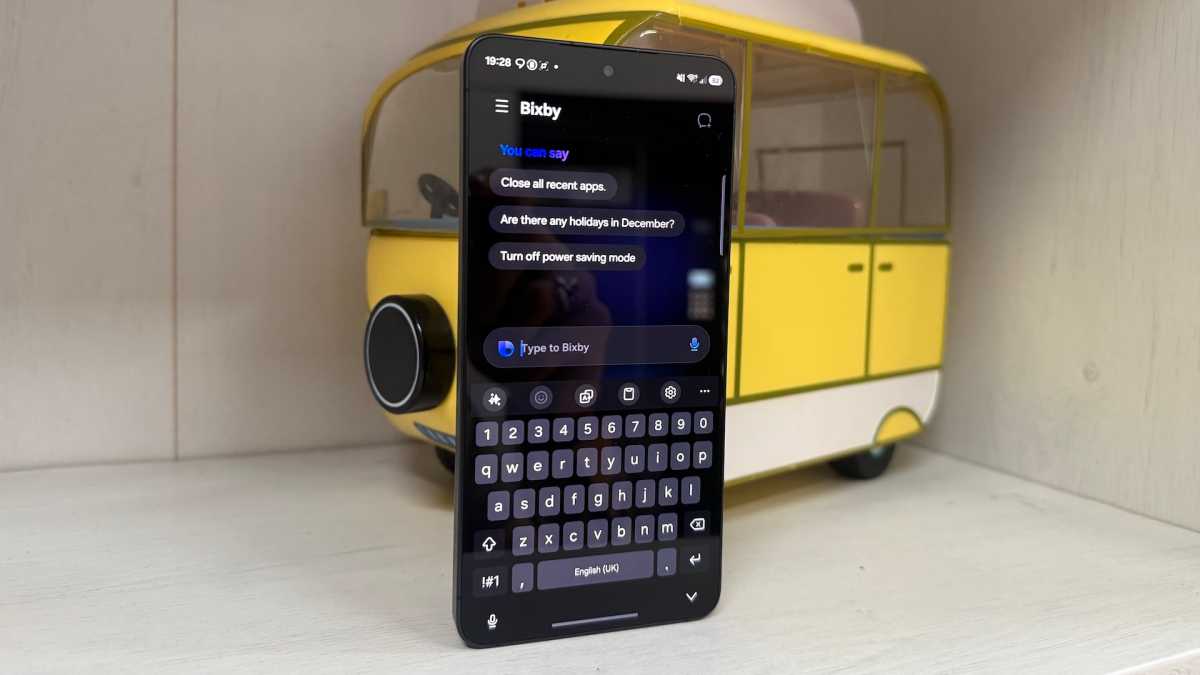
Bixby is also present – and theoretically upgraded. It has a redesigned interface and improved natural language understanding courtesy of Perplexity integration. It can now navigate relevant system settings rather than just describing where they are, which is useful, but I would prefer it in the Settings app – plus, Gemini can do this as well, toggling things like Do Not Disturb, so it’s hard to see why anyone would choose Bixby.
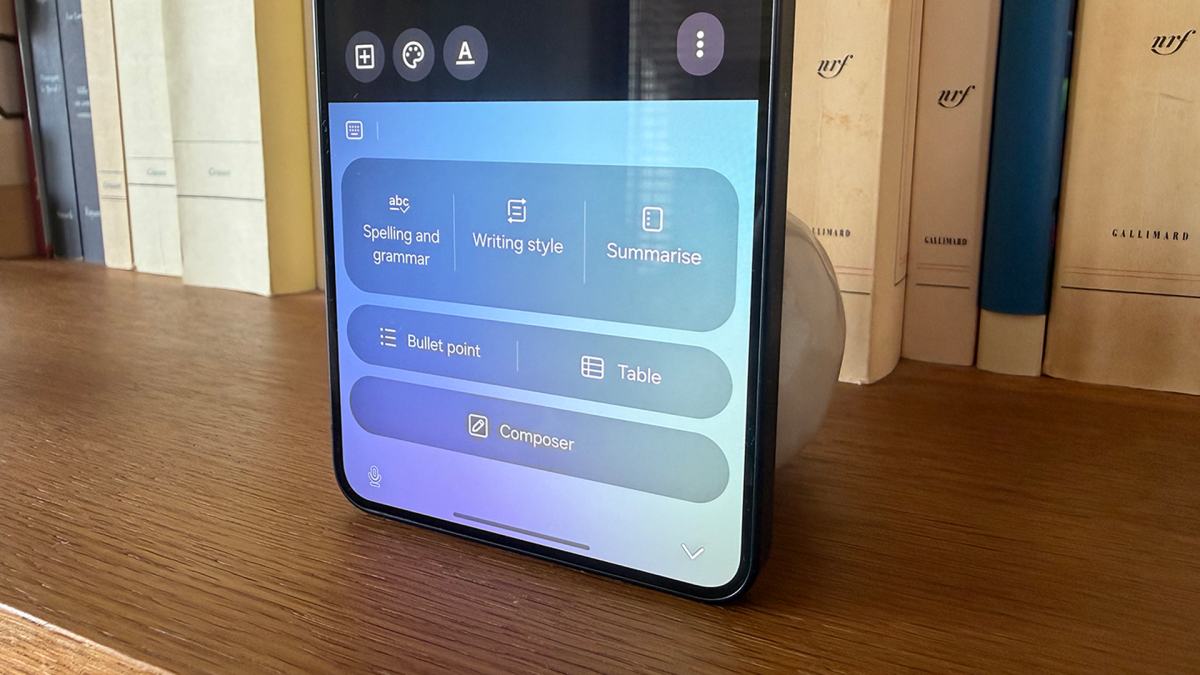
There is also Now Nudge, for predictive messaging, which will bring up suggested actions based on what’s on your screen – such as setting a reminder or suggesting photos to send based on a message you’ve received from a friend. This doesn’t work with everything, however, as there were no recommended messages when using the all-in-one app Beeper, although it does have built-in AI summation, writing, and bullet point tools.
Adam Smith / Foundry
Outside of the AI stuff, Samsung’s software was not super. Searching for a basic app through Samsung’s own UI search produces a baffling procession of results – related Google apps, a calendar meeting from years ago, various settings options, widget suggestions – before eventually surfacing the Play Store.
It’s the kind of friction you’d forgive on a budget device, but at £800-plus, it just feels like Samsung still hasn’t put this phone in the hands of ordinary people and watched what happens.
On the plus side, you get class-leading software support (matching the likes of Google Pixel) with seven years of OS and security updates.
Price & Availability
The Galaxy S26 base model comes with 256GB of storage and 12GB of RAM for £879/$899/€999, while the 512GB model costs £1,049/$1,099/€1199. It has the same RAM configuration, but there’s room for a considerably larger camera roll.
You can buy it directly from Samsung (where the store has two exclusive colourways) or plenty of third-party retailers, including Amazon, Currys and, in the US, BestBuy.
This makes it more expensive than the iPhone 17, and the same as the Google Pixel 10 and Xiaomi 17 (in 256GB sizes) – a high price for people likely aiming to save money and avoid the larger price tag of the superior S26 Ultra.
Check out our guide to the best phones available right now.
Should you buy the Samsung Galaxy S26?
The Samsung Galaxy S26 is a reliably excellent phone dressed in a genuinely beautiful body. Its night photography is particularly impressive; the display – while not class-leading – is more than capable for everyday use; and the Horizontal Lock video mode is one of those features that sounds gimmicky until you use it.
With a few more refinements, the lower-end device could really be something that blows users away. Unfortunately, Samsung just isn’t quite there yet – so while there might not be a reason for anyone to take the leap from last year’s phone, those moving from an S23 or older will feel the improvements in battery life, camera performance, and processing power.
Specs
- One UI 8.5
- Android 16
- 6.3-inch, 1080 x 2340, 120Hz refresh rate
- Ultrasonic under-display fingerprint scanner
- Qualcomm Snapdragon 8 Elite Gen 5 for Galaxy (US) / Exynos 2600 (Europe)
- 12GB RAM
- 256GB storage
- 50MP f/1.8 main sensor
- 12MP ultrawide
- 10MP 3x telephoto
- 12MP selfie camera
- Up to 8K @ 30fps rear video
- Stereo speakers
- Dual-SIM + eSIM
- Wi-Fi 7
- Bluetooth 5.4
- NFC
- USB-C 3.2
- 4300mAh battery
- 25W wired charging
- 15W wireless charging
- 149.6 x 71.7 x 7.2mm
- IP68 certified
- 167g
- Colours: Black, Cobalt Violet, Sky Blue, White, Pink Gold, Silver Shadow