
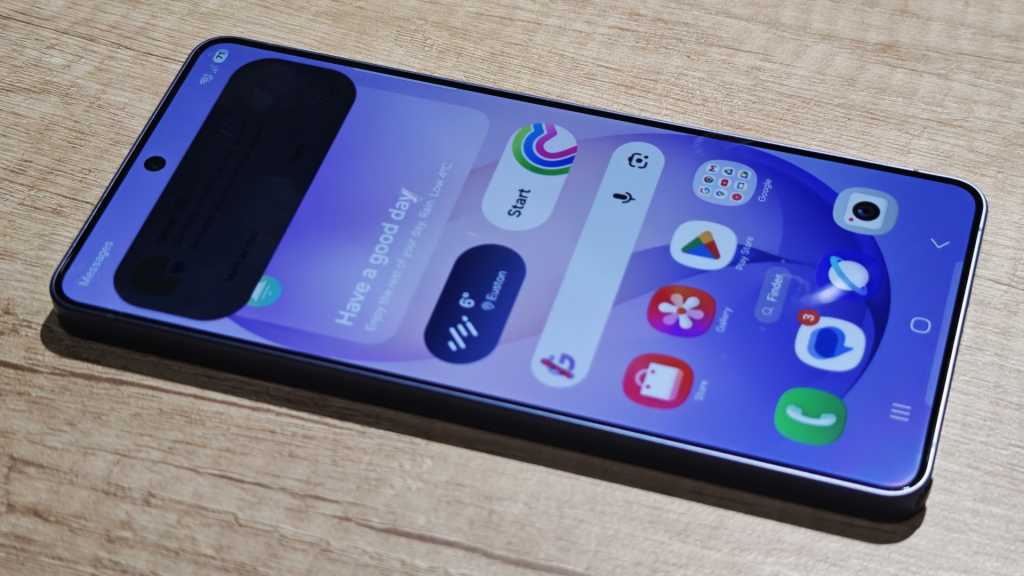
Once people began to get their hands on the Galaxy S26 Ultra with its world-first Privacy Display, some users spotted screen clarity issues when using the new tech. Tech Advisor reached out to Samsung for comment and the South Korean giant has now officially responded.
To rewind and recap, the Privacy Display is an innovative and useful feature, but testing out in the wild led a number of users and prominent phone experts to express some dissatisfaction (unrelated to Samsung’s ongoing use of an 8-bit screen, not 10-bit like so many rivals).
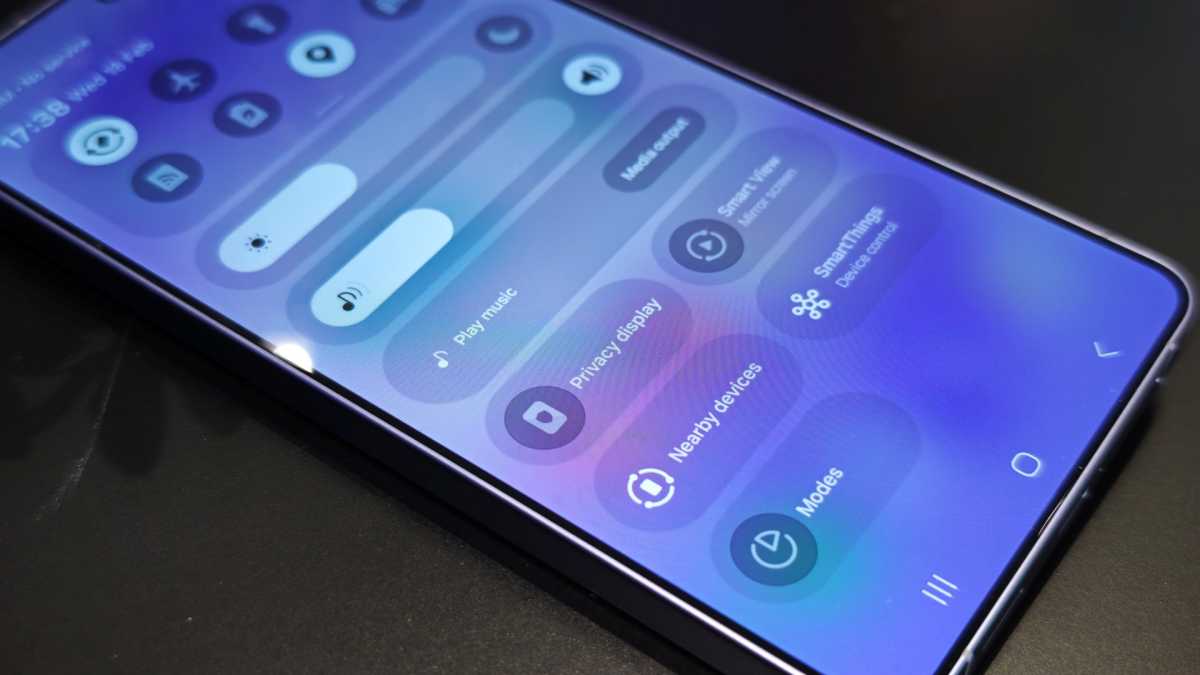
We already knew that switching on the feature led to a drop in brightness, but many, including Ice Universe and Tarun Vats, started calling Samsung out for much worse problems. Mainly, that on-screen text looked less sharp than on the S25 Ultra, even without the privacy display switched on, leading to eye discomfort when reading.

Chris Martin / Foundry
Samsung didn’t reply when I first wrote about these issues, but has now sent me an official statement, which starts by saying: “Some close-up photos of the display may show a grid-like pattern due to moiré, a common effect that can occur depending on camera angle, distance, and focus when photographing a screen.”
Sure, that’s possible and a known issue when photographing most screens, but that’s not what pundits are complaining about here, so we can move on.
Pixels for privacy
The statement goes on to say: “Galaxy S26 Ultra has the same display resolution as Galaxy S25 Ultra. To optimize the Privacy Display, we made adjustments to sub-pixel rendering, which can make text edges look slightly different in enlarged photos.”
We knew that resolution was the same, but Samsung does admit that the edges of text can appear “different”, which we can essentially translate to ‘worse’ – but only if looked at closely in a photo.
That adjustment to the sub-pixel rendering seems to be the fundamental way in which the privacy display works, and the main cause of this issue. It essentially contains two types of pixels – narrow and wide – with the latter being dimmed, or even switched off, to create the privacy effect.

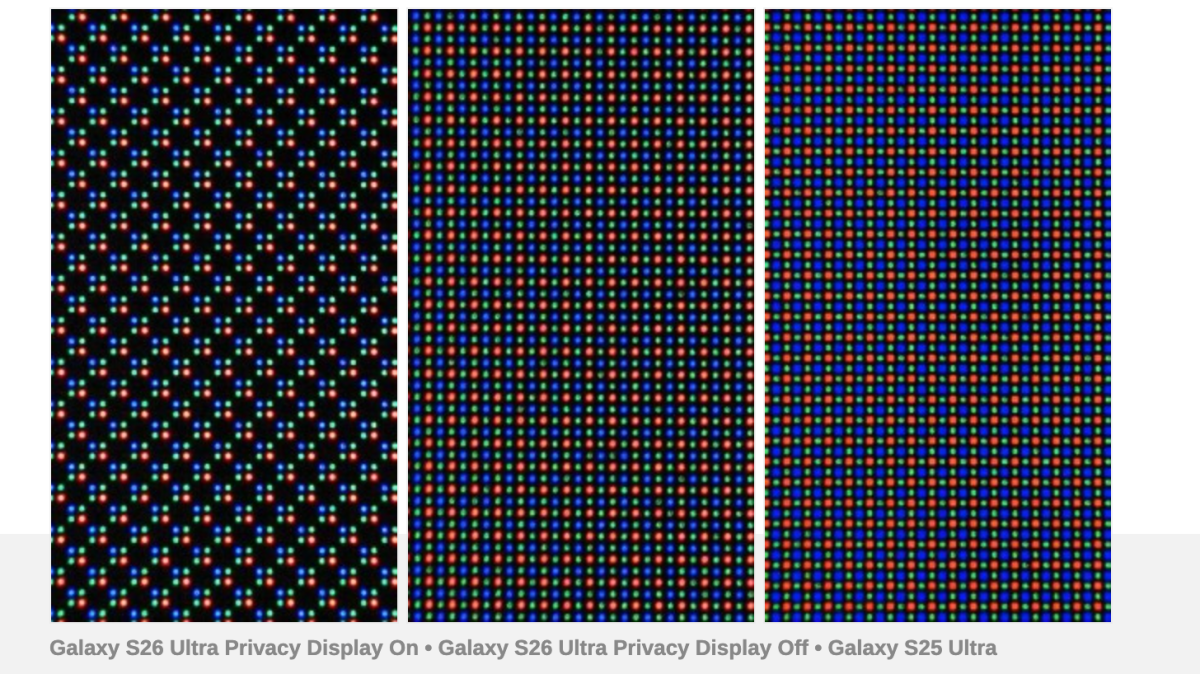
GSMA
Meanwhile, the narrow ones stay lit, so the person viewing straight on can still see what’s on the display. Testing from the likes of GSMA (above) and MKBHD using microscopes shows that the pixel density is heavily compromised in order to achieve the effect, but this is with the feature switched on and neither complains of any eye strain – off or on.
In fact, GSMA goes as far as to say: “When the feature is turned off completely, the visual experience is not compromised at all, even if we compare the screen to the S25 Ultra’s.”
Not a ‘one size fits all’ problem
The final part of Samsung’s statement to Tech Advisor simply says: “This change does not affect viewing comfort.”
It begs the question as to what the likes of Ice Universe are seeing with the privacy display switched off. Do they have defective units, or is there another problem?
It’s hard to come to any kind of firm conclusion, especially as it’s possible that people will experience the technology differently. It’s similar to the way that some people experience nausea when viewing 3D content, while others are completely unaffected.
Chris Martin / Foundry
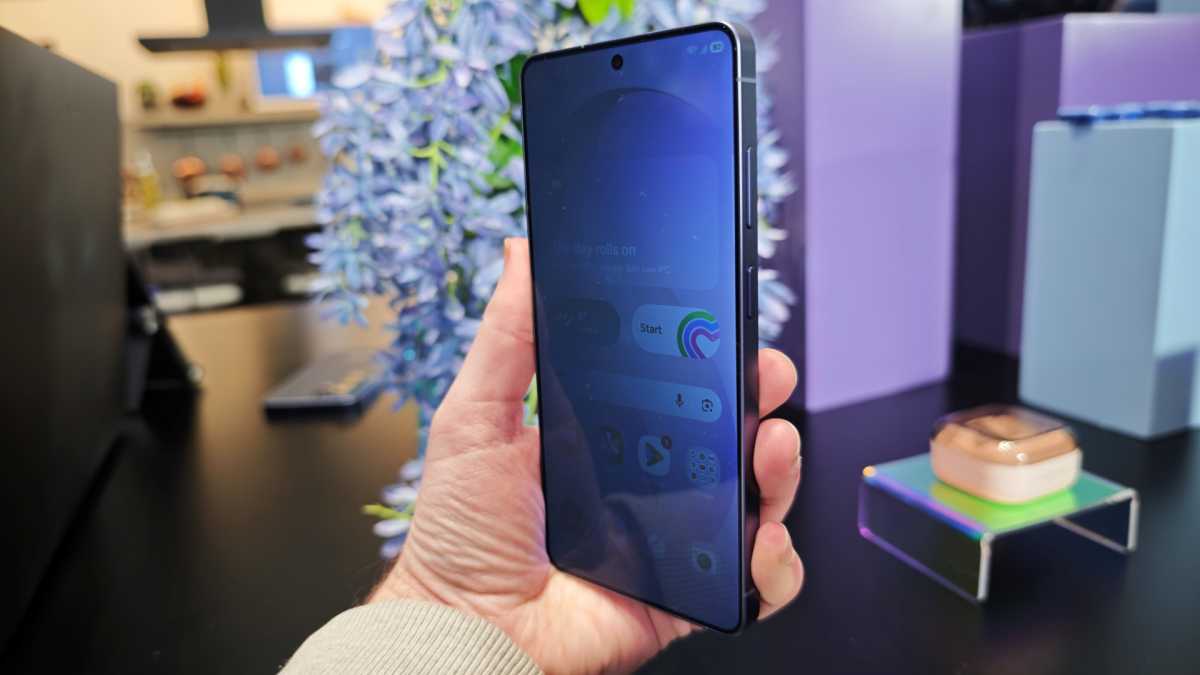
Many phone buyers may notice no difference at all. In fact, our own reviewer has seen nothing amiss with the display so far in testing beyond the known drop in brightness.
But here’s a reminder that the S26 Ultra comes out of the box in 1080p resolution, rather than the full 1440p, so the resolution difference after switching privacy on may be less noticeable.
What we can say for sure is that the privacy display has its downsides in order to work, but that was inevitable given the nature of the tech.
If you’re unsure about it, try it in a store before buying. And if you decide to go ahead, but do find that you experience nausea or eye strain that you can’t adjust to over time, return the phone and replace it with a recommended alternative.