




Last week, I was in Chengdu, China, for the Oppo Find X9 Ultra launch. Until I got some tips from a fellow traveller, I didn’t realise I’d need a dedicated set of apps to survive the trip. And I’m not talking about the likes of Google Translate or an airline app either.

Most of these apps cover scenarios I hadn’t even considered. As a regular traveller, I usually just lean on the likes of Google Maps and Monzo. That would have gone badly wrong, but fortunately, I got some good advice ahead of time, so I was prepared.
In turn, I’m sharing these three apps, all of which proved invaluable in helping me to navigate, pay for things and stay connected in China.
Amap
I use Google Maps almost every day of my life for one reason or another. I’m not sure what I’d do without it and it’s something I use even more when I’m travelling – either for navigation or to save spots I want to visit in advance.
However, despite the fact it might appear perfectly acceptable for travelling in China, it’s actually far from accurate and could leave you in a spot of bother.
Instead, download Amap, and you’ll be just fine.
Chris Martin / Foundy
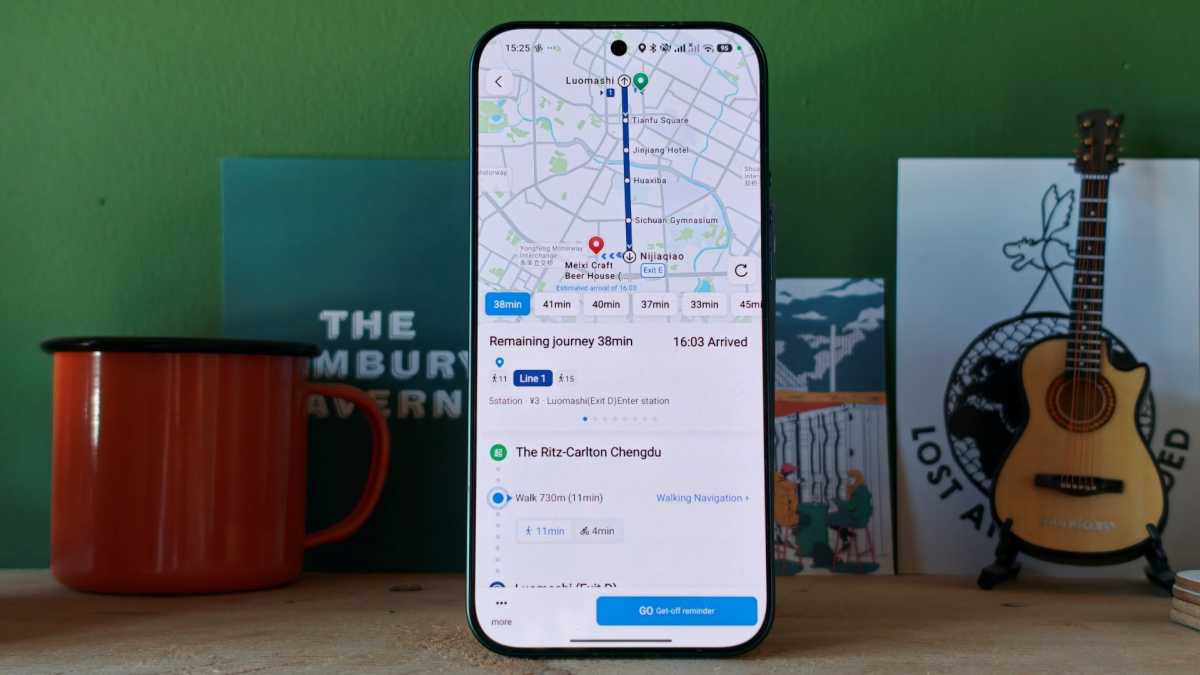
Granted, it’s not the best mapping app ever made, but you can still search for and ‘star’ places for reference. More importantly, its roads and locations are accurate.
I found it particularly useful for getting public transport in Chengdu. Amap was able to guide me to the station entrance with live GPS location and give me detailed information about which line I needed, the number of stops and even which exit I needed.
I didn’t get even a tiny bit lost, which I didn’t think would be possible.
Download Amap for Android or iPhone
Alipay
Having used Monzo since it was called Mondo and I had a beta card, I rely almost completely on the app and debit card when travelling. It’s widely accepted and the app has handy features – to simplify sorting out expenses on your return, for example.
Although I was able to use it a couple of times in China, there were plenty of times that it simply wasn’t an option. If you’re heading to China, you need to get Alipay.
It’s relatively easy to set up – I added my Monzo card to it – and you can do this before your flight even departs.
Chris Martin / Foundy
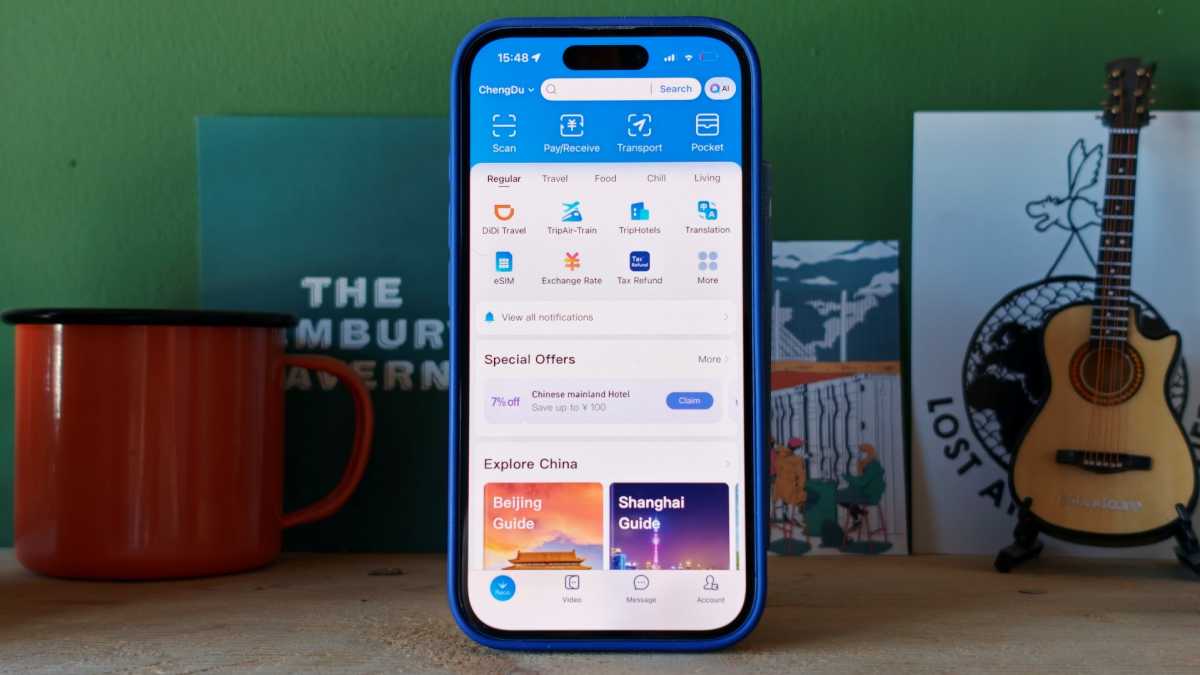
Once in China, it works in a variety of ways, using QR codes and barcodes. Either you scan one in front of you with your phone’s camera and then complete the payment on the app, or scan your code using the vendor’s scanner.
It can be used anywhere from a convenience store to a self-service vending machine. It’s a bit unusual for non-locals at first, but after a couple of transactions, you’ll get the hang of it. Plus, it can do a lot of other tasks (though I didn’t use any), including ordering you a taxi, food and more.
Note: I had an issue getting Alipay working on my current Android phone (last minute at the airport), but it worked fine on iPhone.
Download Alipay for Android or iPhone.
Nomad eSIM
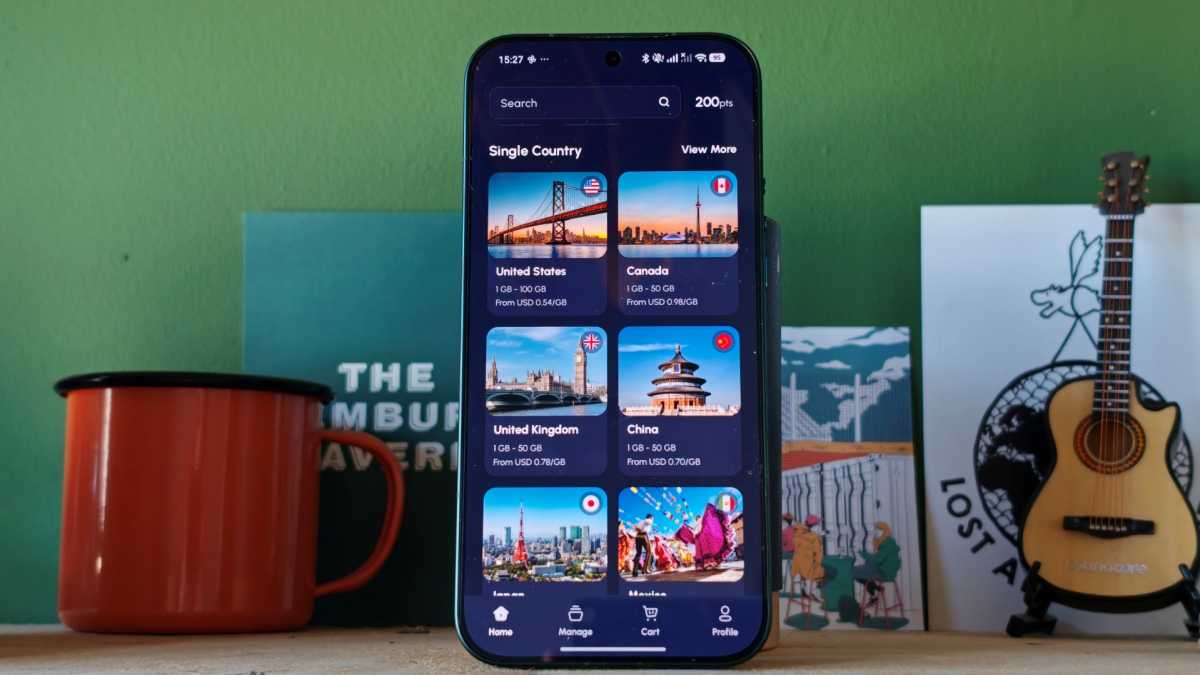
I don’t know if you’ve noticed but roaming is a nightmare these days. So, now I always travel with an eSIM. Of course, it doesn’t have to be Nomad, but this is my go-to brand.
The app is simple and easy to use. The big advantage of an eSIM for me is that you can get it all set up, installed and ready to go before you leave your house.
You really just need to decide how much data you’ll need but even that’s nothing to fret about, as you can top up if you run out. Plus, when you’re travelling, you can use the app to keep an eye on your usage.
Chris Martin / Foundy
Nomad worked flawlessly and with good speeds for me in China, from the moment I touched down in Chengdu. I was able to access all my usual services like Gmail while there, which wasn’t possible, along with plenty of other sites, using hotel Wi-Fi due to China’s firewall.
Almost all phones have eSIM now and you needn’t do anything like take your usual SIM card out of your phone or anything like that. It really is a digital boon.
Download Nomad eSIM on Android or iPhone.
This article was written after a trip hosted by Oppo. The brand has not sought to influence our coverage, nor have they seen any articles in advance of publication.