




At a glance
Expert’s Rating
Pros
- Iconic Nothing design
- Great display
- Ad-free Nothing OS user experience
- Excellent cameras for the price
Cons
- Larger, heavier, less durable than rivals
- Minimal performance gains
- Software support could be longer
- Loses Glyph Fill Light in camera
Our Verdict
Another superb all-round mid-ranger from Nothing, the Phone (4a) delivers for its price, with its design, user experience and camera upgrades being particular highlights. Battery performance was surprisingly good too, but durability and raw horsepower hold it back from being best-in-class. I wish the Glyph Bar had more to offer, as well.

Price When Reviewed
This value will show the geolocated pricing text for product undefined
Best Pricing Today
Price When Reviewed
From $349
Best Prices Today: Nothing Phone (4a)

While it’s the flagship phones that most fans look to as the guiding light in a company’s lineup, it’s often the mid-range entries that really carry the most weight and shift the most units. Last year’s award-winning Nothing Phone (3a) series proved a huge success for the brand, as some of the most refined and well-balanced entries in their class, whilst still being unapologetically Nothing.
Fast-forward to the start of 2026, and Nothing CEO Carl Pei used his opening address to not only proclaim that the company is now ready to move into “phase two,” but that we won’t be seeing another Nothing flagship this year, placing even more importance on the success of the company’s next mid-range offerings.
Cue the Nothing Phone (4a), the brand’s new baseline mid-ranger and a device that serves to not only continue the success established by the previous generations of A-series phones, but marks the first entry to launch in this new era for Nothing.
The question is, does the Phone (4a) best showcase where Nothing claims it’s headed, or does it spend too much time simply iterating on the past?
Design & Build
- New Essential Key placement and Glyph Bar
- Tougher Gorilla Glass 7i
- New colourways
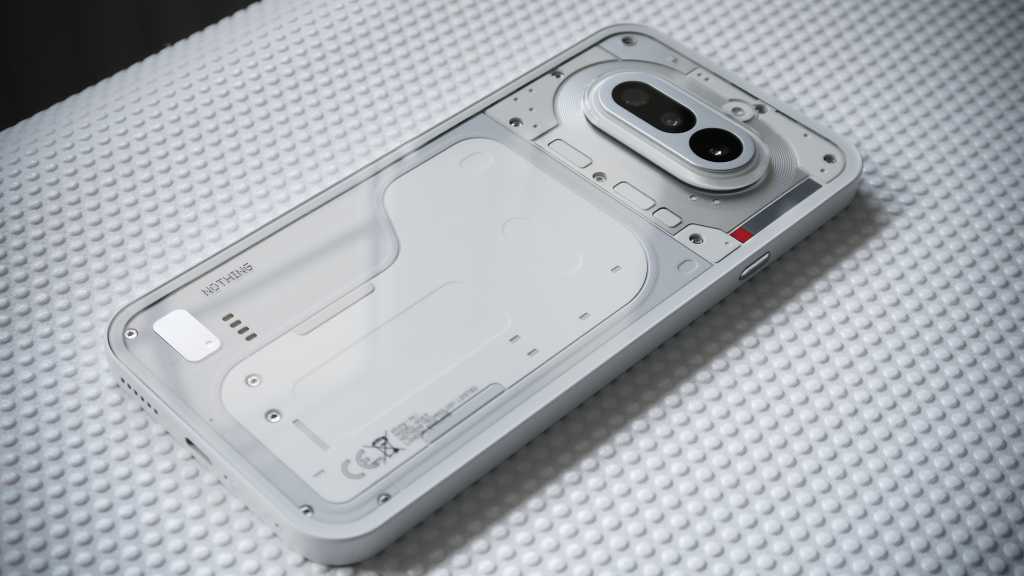
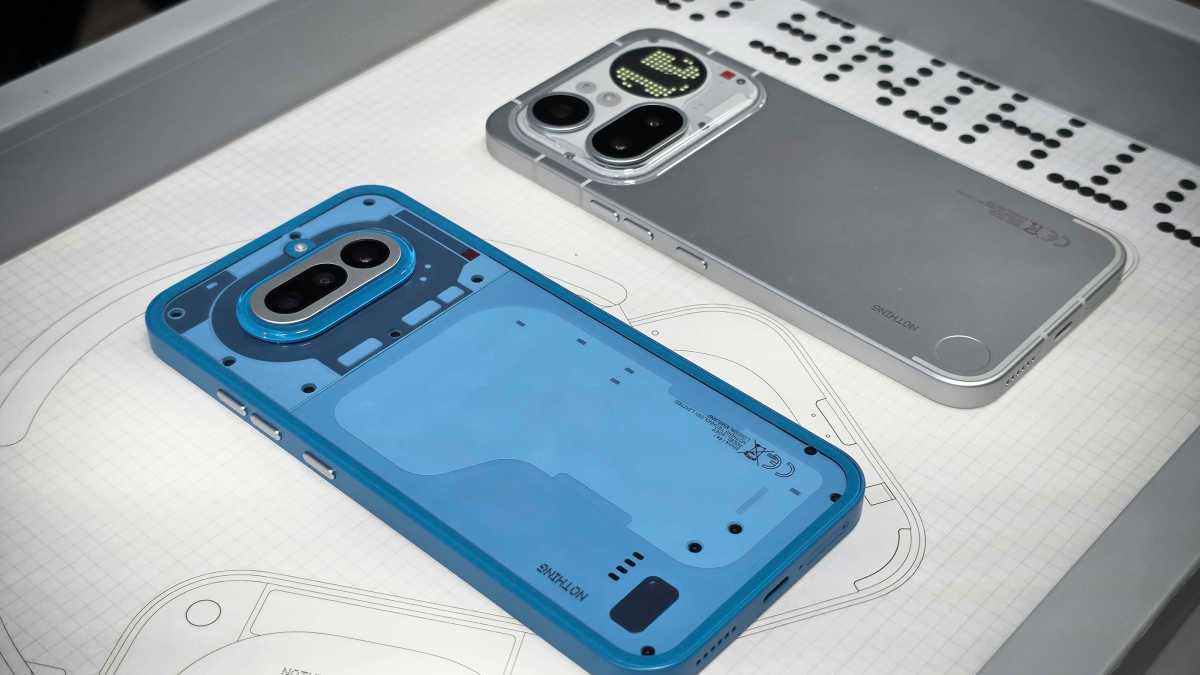
Visually, the Phone (4a) continues the design narrative first established with 2024’s Phone (2a), most apparent with the horizontal rear camera bar that – like last year’s model – plays host to a trio of rear sensors.
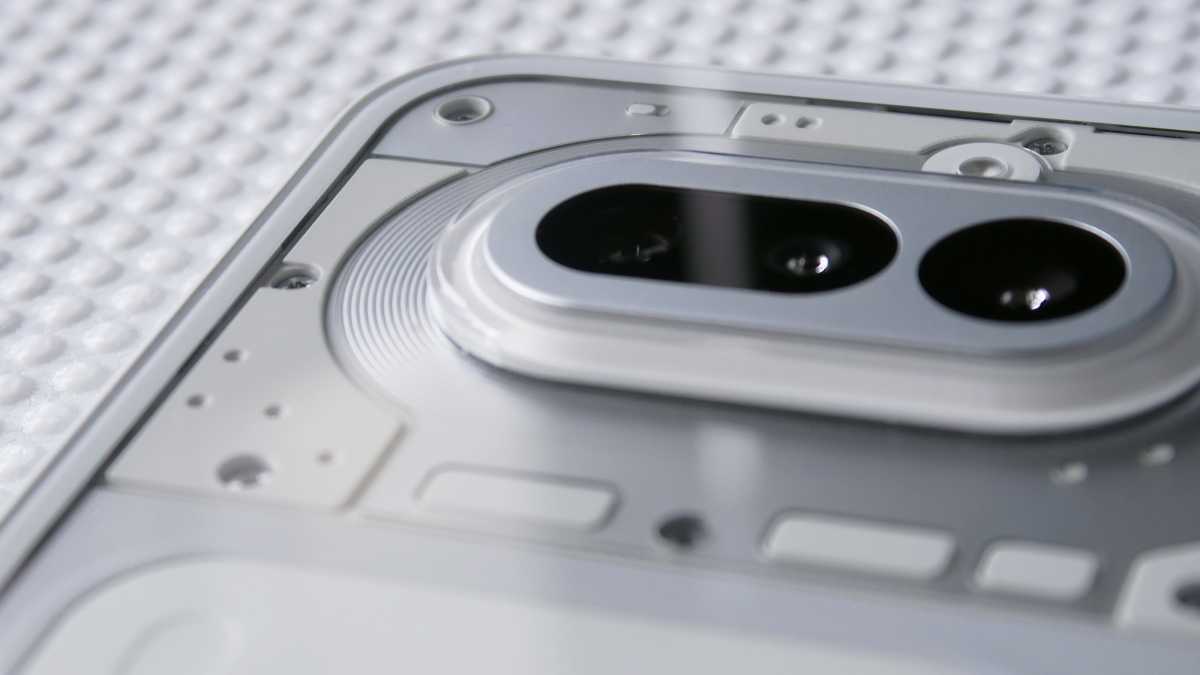
The biggest visual shift is the camera module’s migration upward, now accented by a pill-shaped aluminium element that resembles a running track, rather than the circular arrangement that defined the look of the Phone (3a)’s rear.
The Glyph Bar is more a reimagining of the existing Glyph Lights
But this change is more than a cosmetic reworking around a new key shape. The Phone (4a) also marks the end of Nothing’s Glyph Light configuration, as we’ve known it since the original Nothing Phone (1), here replaced by the new Glyph Bar.
I would have assumed Nothing’s next A-series phones were going to go all-in on the circular Glyph Matrix introduced on its latest flagship – the Phone (3) – but that appears to have only been reserved for the (4a) Pro. The (4a)’s Glyph Bar is more a reimagining of the established Glyph Lights; packing a similar degree of information density into a smaller, linear array.
A single bar of six white LEDs (plus a red recording light LED – a trait lifted directly from Nothing’s flagship) can pulse or animate just as the Phone (3a)’s Glyph Lights did. I wouldn’t say it’s inherently better or worse than the previous implementation, just… different.

Foundry | Alex Walker-Todd
The only notable new functionality it brings is support for Live Notifications, (built on top of Android 16’s native Live Updates feature), giving you a glanceable progress bar when paired with real-time activities on supported apps, like Uber, Google Calendar, Zomato, Just Eat, and Google Maps, however, I never found an app experience that actually used this feature in my time testing the phone. Nothing says more compatible apps are coming down the pipeline, though, which might aid its utility.
The Glyph Bar is more understated and unassuming on the Phone (4a)’s distinctive transparent back, but on the other hand, it’s up to 40% brighter than Phone (3a)’s Glyph Lights, making incoming notifications easier to spot when your phone is across the room, face down.
As for Live Notifications via the Glyph Bar, whilst it’s appreciated that Nothing has taken the time to integrate its bespoke hardware with a native part of the latest major Android release, I question just how much of an advantage this implementation offers over Live Updates, as they appear on the Always-On Displays of other supported Android 16 phones.

Foundry | Alex Walker-Todd
The Phone (3a) Series gave us our first taste of Nothing’s Essential Space, and with it the Essential Key. The main problem with this new button, however, was placement; perhaps overestimating how essential users might actually find the Essential Key. As such, its location and design were too close to the power button, set low on the right side of the phone’s frame.
Phone (4a) Series addresses this by moving the metal volume up/down keys to the right side of the frame, above the power key, and relegating the Essential Key to the upper portion of the left side of the phone instead. Right-handed users, in particular, will likely appreciate this change, and in practice, the Essential Key remains easily accessible, whilst running far less of a risk of being activated accidentally.
Elsewhere, the Phone (4a), of course, sports the brand’s signature transparent-backed design, with toughened Panda Glass protecting various surface finishes and forms, which add interest over the swathes of flat, uniform designs otherwise out there. Some elements are genuinely functional too, like the metal-covered speaker unit in the bottom left, which is a nice touch.
There’s also a new pink model
A small but welcome upgrade that the Phone (4a) offers over every other entry in Nothing’s portfolio to date is a larger choice of colourways than ever before. What’s more, there’s no regional exclusivity this time, as was the case with last year’s India-only blue Phone (3a) Lite, and the Rakuten Mobile red version in Japan.
Just like the Phone (3a), the (4a) comes in black, white and blue, but there’s also a new pink option (reminiscent of raspberry yogurt), which I think has the biggest potential to turn heads. It sports the same degree of textural and tonal colour variation as the other models, granting the design a pleasing amount of depth and interest, and I’m always for more choices of finish; especially when – like this – it’s done so tastefully, while remaining true to Nothing’s design DNA.
In the months I’ve lived with the Phone (4a), cosmetically it’s held up perfectly well. The glass back is still scuff-free, and despite tougher Gorilla Glass 7i on the front, only the pre-fitted plastic screen protector has shown any sign of wear (something Nothing phones are more prone to than most, as the Glyph Interface actively requires that you place your phone face-down, in order for it to function).




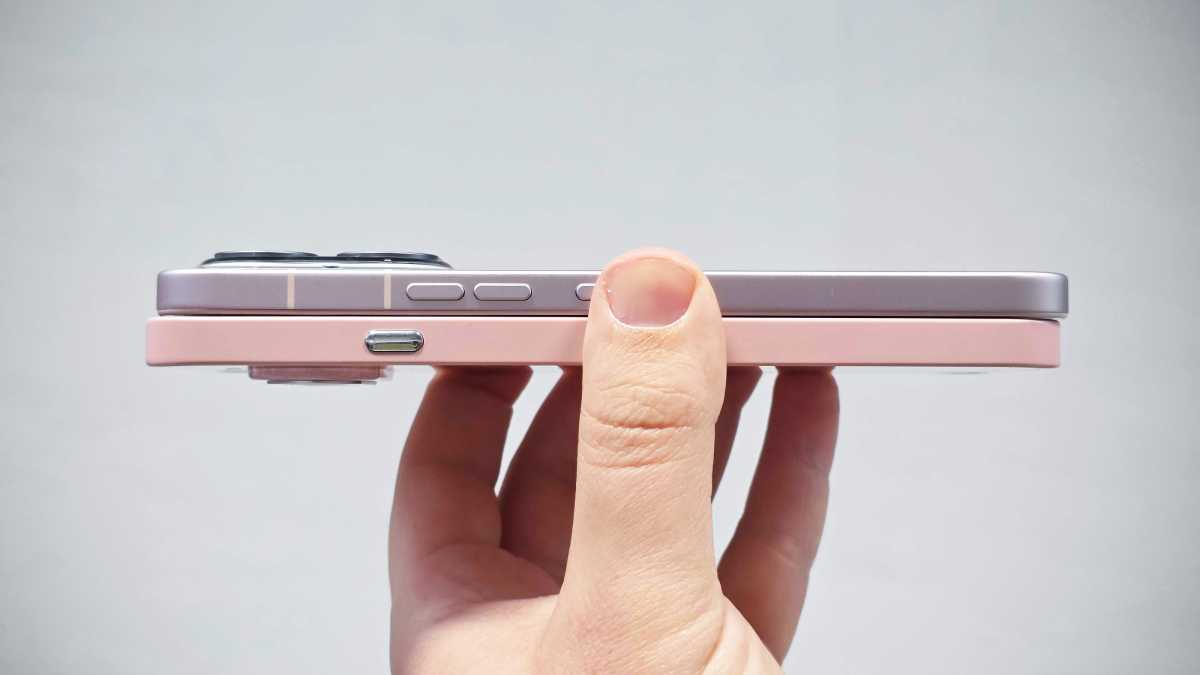
Like its predecessor, the Phone (4a) uses a polycarbonate outer frame, which in this instance feels great and repels scuffs and scrapes well, with only bigger impacts likely to take chunks out of the material. The only real drawback is that – compared to its most like-minded rivals – the Phone (4a)’s form is generally a little thicker and heavier, something the thinner metal-bodied form of the pricier Phone (4a) Pro looks to address.
The same IP64-certified dust and water resistance as its predecessor, while still impressive for a transparent-backed phone, feels like it’s starting to lag behind competitors from the likes of OnePlus, Xiaomi and beyond, who all now offer mid-rangers with once flagship-exclusive IP68 and even IP69-certified protection.
Nothing does now state that its latest phone is tested to withstand being submerged in up to 25cm of water, for up to 20 minutes, though.
Screen & Speakers
- 6.78-inch AMOLED display
- In-display optical fingerprint sensor
- Stereo speakers
Although the Phone (4a) is only marginally larger than its predecessor, it’s significantly sharper, thanks to a boost from Full HD+ to a 1.5K resolution, granting it one of the clearest screens in its class, set within pleasingly uniform bezels too.
While still relying on LTPS technology means it can’t shift its refresh rate as dynamically (or as power efficiently) as most flagship phone screens, you’re treated to super-smooth 120Hz visuals most of the time, from swiping around the UI to almost all of Nothing’s first-party apps (as well as a number of popular third-party apps too).
improvements across all the core facets of the (4a)’s display warrant even more kudos

Foundry | Alex Walker-Todd
Nothing’s engineers have also upped the ante on touch-response rate, boosting from 480- to 2,500Hz when gaming (its predecessor topped out at 1,000Hz), which means your inputs register that much quicker; ideal for first-person shooters, for example.
The most meaningful technical upgrade, however, comes with brightness. A new 4500-nit peak (up from 3000nits) may not be best-in-class, but it’s still excellent for enjoying HDR content, and even brighter than the top iPhone, Pixel and Samsung flagships right now. It’s the raised panel-wide 1600-nit brightness ceiling that makes for a more tangible upgrade in the day-to-day, granting even better visibility outdoors, against bright sunlight.
The Phone (3a) series already delivered a respectable viewing experience, but the improvements across all the core facets of the (4a)’s display warrant even more kudos. It only really falls short of Xiaomi’s recent Redmi Note 15 Pro and Pro+ rivals, both of which offer better colour depth (12-bit, instead of 10-bit) and Dolby Vision support, for around the same money.
Foundry | Alex Walker-Todd
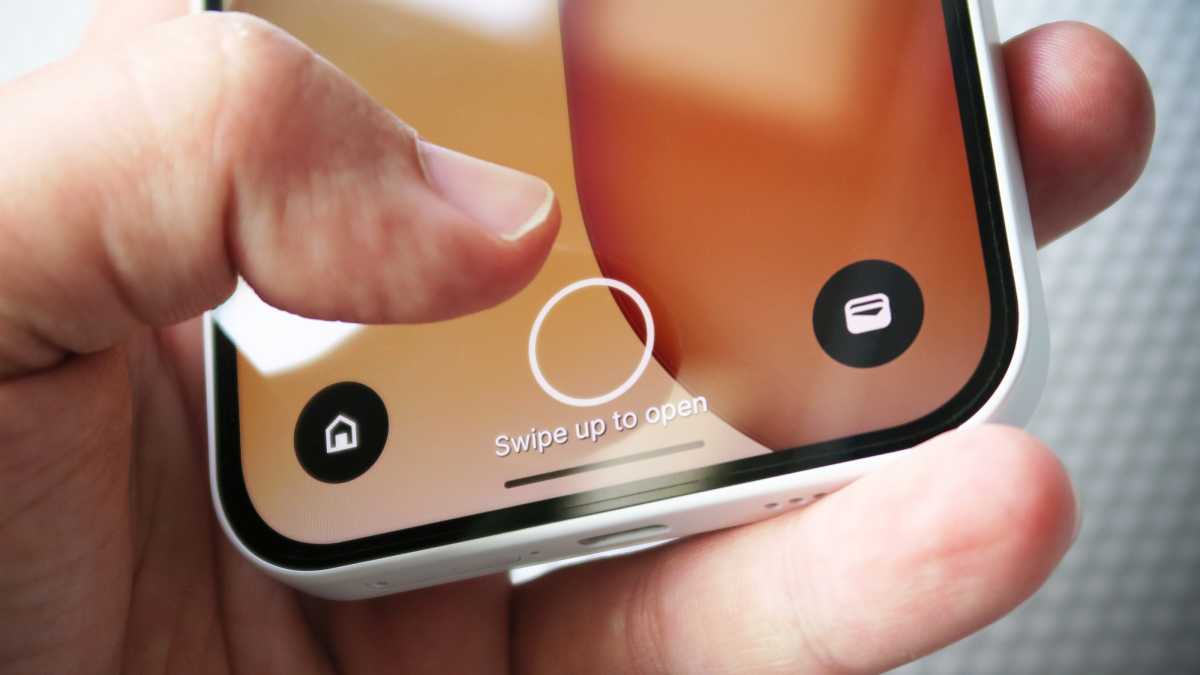
I’d also have loved the – admittedly reliable and responsive – in-display fingerprint sensor to sit a little higher from the bottom bezel; however, the optical tech (in place of smaller, more advanced, pricier ultrasonic technology) means space behind the display is pretty limited, forcing most phones to sit these sensors as low as possible.
As for audio output, the Phone (4a) gets decently loud and, most importantly, doesn’t suffer from distortion, even at maximum volume. Even greater output would still be appreciated, though. Though mids and highs offer depth and clarity (plus pleasant stereo separation), bass response is decidedly weak.
Specs & Performance
- Qualcomm Snapdragon 7s Gen 4 SoC
- First A-series phone with faster UFS 3.1 storage
- LPDDR4X RAM, USB 2.0
Although performance is seldom at the top of Nothing’s list, the timely Snapdragon 7s Gen 4 is well-equipped to handle daily use and even high-fidelity gaming, without issue.
On paper, there aren’t huge gains to be had over the Phone (3a) Series’ 7s Gen 3 silicon, but gamers in particular will welcome a cited 10% boost to GPU performance, especially when playing demanding titles, like BGMI and CoD: Mobile.
faster app load times, less UI lag, faster file transfers, better thermal management and less battery drain; so wins all around

Foundry | Alex Walker-Todd
In fact, alongside that increased touch response rate, Nothing has tuned performance in select games – like the two above – meaning 120fps gameplay is on the table for Battlegrounds Mobile India, and up to 90fps gameplay in Call of Duty. No word yet on which other games will benefit from such optimisations.
In testing, the Phone (4a) had no qualms delivering 30-minute sessions in Call of Duty: Mobile at a rock-solid 90fps, paired with that instant touch response rate. The only time performance dipped was when swimming in water, at which point frame rate appeared to cap at 60, at least until I was back on dry land.
In fact, the only noticeable performance dips came from opening high-intensity apps, like the above games and the Camera app. Everything else felt fast, fluid and consistently responsive; something some similarly-specced rivals more readily struggled to deliver (here’s looking at you, Xiaomi).
Nothing Phone (4a) benchmarks
The more significant hardware change between generations is the move from UFS 2.2 to UFS 3.1 storage. It was one of the weaker elements of the last generation of A-series phones, so much so that Nothing reps pre-emptively wrote an article on their forums, justifying the choice.
This means sequential read speeds that are almost 2.5x faster, and sequential write speeds almost 5x faster than the storage on the Phone (3a).
That also has a positive knock-on effect with the phone’s RAM Booster feature, meaning even faster multitasking and the like, if you decide to reallocate up to 8GB of the phone’s storage as additional memory (meaning up to 20GB of RAM total, on the higher-specced variant of this phone).
The real-world benefits this more advanced storage brings to the table include faster app load times, less UI lag, faster file transfers, better thermal management and less battery drain; so wins all around. The (4a) also comes with 8 or 12GB of LPDDR4X RAM (I tested the top 12/256GB version in this review), while the Pro model boasts faster and more power-efficient LPDDR5X RAM.
As great as the Phone (4a)’s display is for enjoying media, like practically every other mid-ranger, the phone’s USB port can still only pull through USB 2.0 speeds, meaning large local file transfers (like high-res movies) should be done with consideration.
Cameras
- 50Mp main and telephoto, 8Mp ultrawide, 32Mp front
- First non-flagship phone with a tetraprism pericope telephoto zoom
- Up to 4K/30fps video
From the outside, the Phone (4a)’s camera system looks just like the one on the back of the Phone (3a); a bar of snappers, with two clustered to the left and a lone third sensor on the right. Behind the scenes, it uses the same main, ultrawide and front-facing sensors as the Phone (3a), but there’s one stark difference.
Despite the familiar hardware layout, with both last year’s and this year’s phones in hand, it’s clear that one sensor is significantly larger: the telephoto sensor. The magic of it all is that it isn’t bulkier, but just sports a bigger lens. Why? Because the Phone (4a) is the first non-flagship phone to adopt a tetraprism periscopic telephoto camera (an upgrade that the Pro also possesses).
a major telephoto upgrade
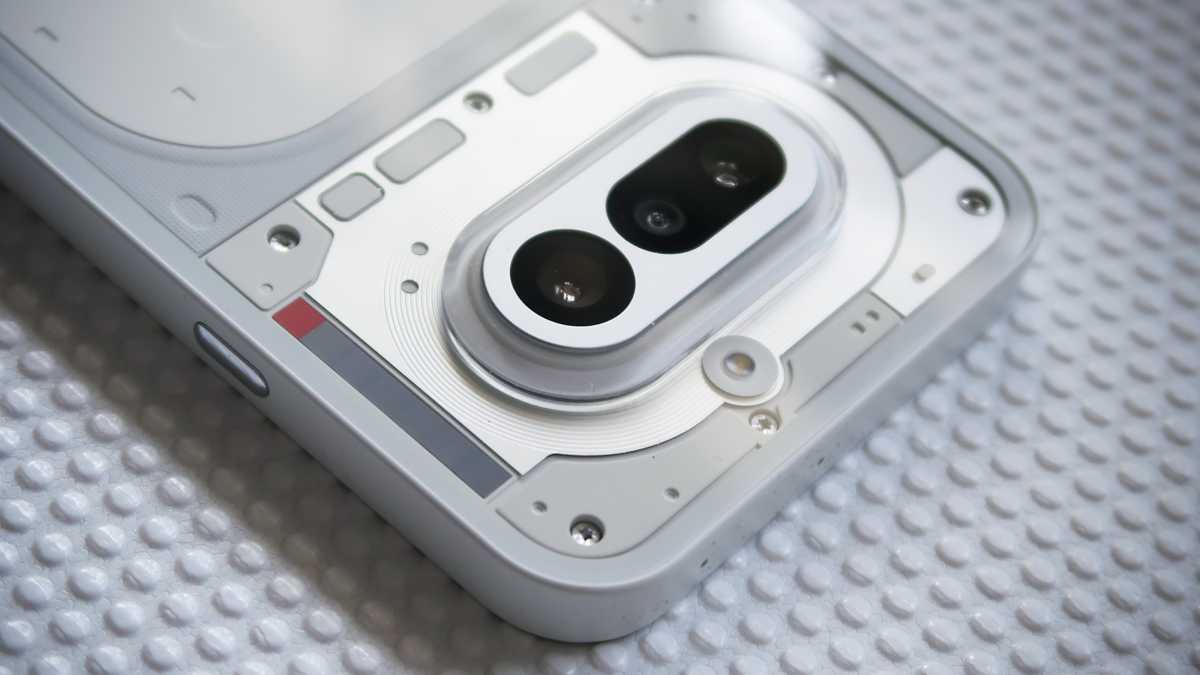

Using the same dual-prism folded optical technique found on the likes of the iPhone 17 Pro and Oppo Find X9 Pro, Nothing has given the Phone (4a) a major telephoto upgrade, whilst still keeping the module 32% smaller than the equivalent conventional L-shaped periscopic telephoto, found on last year’s Nothing Phone (3a) Pro.
Better yet, the sensor used is the same as the one found on the company’s top Phone (3), and grants the (4a) far greater camera versatility than either of its predecessors, with a 3.5x optical zoom, a 7x crop zoom, and up to a 70x Ultra Zoom (that’s further than Nothing’s flagship 60x limit).
In side-by-side testing, there’s a subtle shift in colour science across all of the Phone (4a)’s sensors, compared to its direct predecessor, with a tilt towards warmer tones, and more prominent magenta hues. It’s subtle in so much that you’re getting natural-looking shots either way, but it’s interesting to see Nothing’s True Lens Engine 4.0 make different decisions this time around, despite near-identicial imaging hardware underneath.
The Phone (4a) also manages to capture detail and motion with less processing and sharpening than the Phone (3a), with defined, but more natural-looking edges around subjects. Flip on Portrait Mode and I noticed significantly better edge detection too, meaning cleaner separation of subject from background, while the default artificial bokeh seems a little heavy-handed (but can, thankfully, be dialled back manually).






I only wish Nothing’s camera experience let you adjust the degree of artificial bokeh both at and after capture, as you get on iPhones and Samsung’s Galaxy phones. As it stands, you can only increase or decrease the background blur effect around a subject before you hit the shutter button. Head to the gallery and that is baked into the image, with no way to dial it up or down retroactively.
Selfies adopt more vibrant colours and contrast in comparison to the Phone (3a)’s front-facing shots. The results also seem to suggest a shift in how dynamic range is processed, with less specularity against the same ambient lighting conditions, something I actually wish Nothing brought back to the (4a)’s camera experience.
In low light, the (4a) uses slightly more sharpening, without looking over-processed, and offers better detail retention throughout the whole frame. That’s compared to its predecessor’s superior centre-frame detail, but notable image quality fall-off, towards the edge in dimly-lit scenarios.
While most of the camera quality improvements appear to be subtle, almost hair-splittingly so, the difference in telephoto performance is night and day. You get significantly better colours and contrast, with far less noise in the darker areas of shots. It’s also much easier to freeze motion in zoomed shots, even with a slower shutter speed.
It feels like the final piece of the puzzle that brings true parity to the A-series camera experience, meaning you can expect better consistency and higher quality throughout the phone’s focal range. If you do tend to favour zoom shots or longer portrait photography, image quality does start to break down at around 20x zoom, where the processing can no longer convincingly retain image quality, but that’s not an issue exclusive to Nothing’s mid-range.
You once again get up to 4K at 30fps recording, and video is delivered with impressive stability when shooting handheld. Side-by-side with comparable footage from the Phone (3a), Nothing looks to have improved contrast and colour rendition, as well as audio capture; with more dynamic-sounding voices, boasting more prominent bass.


Zooming in while recording is still an Achilles’ Heel for the video experience, with immediate quality drop-off, represented by noise and artifacting, even in bright shooting conditions. It also is unclear why Presets can’t be applied to video when shooting above 1080p at 30fps.
Speaking of Presets, another interesting feature introduced with last year’s Nothing mid-rangers is the ability to create your own custom photo and video filters. Enhanced in Nothing OS 4.1, you can now tune specific attributes – like contrast, warmth and grain – all on-device, and as before, Presets can be saved and shared for other Nothing users to apply to their photos as well (at or after capture).
Alongside being another interesting way for Nothing to engage with its fan base and promote collaboration between users, it proves to be a more powerful first-party solution than, say, Samsung’s custom filters or Honor’s new Magic Colour mode; both of which use AI to automatically match image characteristics from one image to apply to another.
Nothing has even thrown in a trio of new in-house Presets on the Phone (4a) Series, with my personal favourite being the warmth that the new Cine Amber dresses footage with.
Battery Life & Charging
- 5080mAh battery (global) | 5400mAh (India)
- 50W wired charging
- 50% charge in 22 minutes
Unlike Honor’s tariff excuses, Nothing’s clear about the regional differences with battery capacity on the Phone (4a), and they’re wholly based on customer need. Whichever version you have access to in your market, you’re getting a larger cell than its predecessor, with the Indian variant boasting a significantly bigger 5400mAh power pack, to better account for the higher mobile gaming demands of users there.
In real-world testing, my 5080mAh battery-toting Phone (4a) outlasted pricer and larger-celled mid-rangers – like the OnePlus Nord 5 and Xiaomi 15T Pro – delivering 8.75 hours of screen-on time per charge. That equates to about a day and a half of confident use, and potentially two days if you’re careful. Pretty respectable.

Foundry | Alex Walker-Todd
The (4a) otherwise offers familiar 50W wired charging and PD 2.0 charging support, with Nothing claiming a full day’s charge (60%, by their accounts) in just 30 minutes. Nothing doesn’t include an in-box charger with its phones, but with a compatible adapter, my Phone (4a) actually surpassed 66% charge in that target 30-minute window, and hit a full 100% in less than an hour (Nothing quotes a full recharge time of 64 minutes).
If you want an official Nothing power adapter, their future-proofed 100W CMF GaN charger can refill the Phone (4a) at top speed, and costs £49/£39/€59.
Nothing also goes out of its way to say that the Phone (4a)’s battery uses impact-resistance “Safe Cell Technology,” and that it’s rated to retain 90% of its original capacity after 1,200 charge cycles; equivalent to about three years of charging.
Check out our rundown of the best battery life phones for alternatives.
Software & AI
- First phone running Nothing OS 4.1
- Essential Space gains cloud sync
- 3 years OS + 6 years security updates
Alongside design, user experience is easily one of Nothing’s defining characteristics, and the Phone (4a) is the first of the company’s phones to run the latest iteration – Nothing OS 4.1 – out the box.
Before diving in, after the hot water Lock Glimpse (an unprovenanced lock screen content service with baked-in ads) landed the company in late last year, Nothing has confirmed upfront that the service isn’t even installed on the Phone (4a) Series at all. As such, this ‘feature’ looks to remain exclusive to Nothing’s more affordable Lite models and its CMF phones, which those of you considering the (4a) will likely be happy about.
Visually, there’s little that sets Nothing OS 4.1 (running atop Android 16) apart from previous releases beyond tweaked icons, although you do now have the option to create depth-effect lock screens (where the clock elements fall behind segments of your wallpaper).
It’s a feature that’s become increasingly prevalent in recent years, popularised by iOS and since found on a myriad of competing Android-based user experiences: from ColorOS and OxygenOS, to Honor’s MagicOS and Xiaomi’s HyperOS 2, to name a few.

Foundry | Alex Walker-Todd
Nothing OS already has an excellent assortment of native widgets, plus community-made offerings too (dubbed ‘Essential Apps’), but with 4.1, there are a couple of noteworthy additions.
A trio of new Breathing Break widgets let you hop into guided breathing exercises, focused on calming, relaxation or focus. Tapping any of these new widgets activates a full-screen experience, each complete with its own unique visuals, audio and haptics (precise vibrations). As a mindfulness tool, it’s nice to have a baked-in solution, and one that caters to different scenarios, with next to zero setup required.
Nothing has also promised a Soundscape widget too, which looks as though it’ll mirror the likes of iOS’ Background Sounds accessibility feature, but how exactly the implementation will work, we won’t know until it’s added to the Phone (4a)’s experience via a software update down the road.
When adding widgets to your home screens, Nothing’s widget picker now better surfaces user-created ‘Essential Apps,’ reducing friction in terms of both browsing and downloading these fan-made creations. This tweak also reinforces the close relationship the brand has cultivated with its active creator community; something practically no other phone brand has been able to ape.

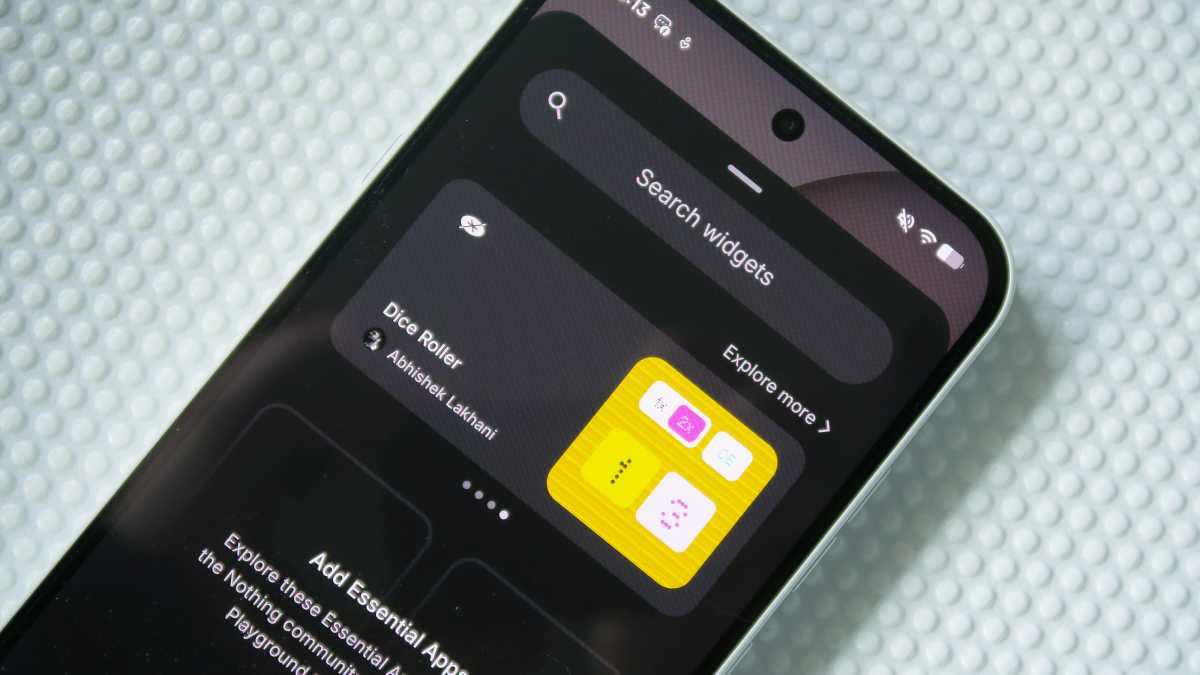
Using Nothing OS is otherwise a familiarly clean experience, with the brand’s signature minimalist aesthetic across menus, app icons and so on. It’s perhaps a little more on-rails versus the rival Chinese launchers mentioned earlier, but the default look and feel of the Phone (4a)’s software remains undeniably unique, easy to use, and free from bloat, clutter or over-complication.
Three years of OS updates and six years of security updates are serviceable for Phone (4a)’s price, but unquestionably lag behind the 7+7 years of support companies like Apple, Google and Samsung offer on their mid-rangers and up, which is a huge boon when considering long-term value for money.
Price & Availability
- More expensive than predecessor in UK & India
- Cheaper than predecessor in Europe
- Same RAM and storage options across all markets
Regardless of where Nothing is setting its sights in this new chapter, its products still have to find success – first and foremost – with the loyal fanbase the brand has already cultivated; predominantly across Europe and India, where the company’s phones are most readily available.
The Phone (4a) starts at £349/ €349/₹31,999 for the base 8GB RAM and 128GB storage configuration, marking a larger generational price hike this time around, at least in the UK and India. The increase will be felt by Indian consumers, in particular, where the (4a) arrives with a starting price that’s almost 30% higher than its predecessor’s.
The other models – 8/256GB and 12/256GB – cost £379 and £399, respectively. It’s worth noting that the Pink and Blue colours only come in the most expensive option.

Foundry | Alex Walker-Todd
Those keeping tabs on the wider tech industry may have anticipated such increases before the Phone (4a) was even made official, primarily as a result of the inflated cost of RAM – fueled by the ever-increasing demands of AI infrastructure. What’s more, Pei said as much back in mid-January, in an extended post on X, where the CEO stated, “pricing will inevitably also increase across our smartphone portfolio, particularly as we will upgrade some products launching this Q1 to UFS 3.1.”
It isn’t all doom and gloom, however, with that mention of faster and more power efficient UFS 3.1 storage highlighting one of the most welcome performance upgrades the Phone (4a) brings to the table, over the previous generation of A-series phones.
You can pick the Phone (4a) up in most markets, direct from Nothing’s own website, while in India, Flipkart is the main regional retailer.
Check out our recommendations for the best mid-range phones for the (4a)’s top rivals.
Should you buy the Nothing Phone (4a)?
The Nothing Phone (4a) is another offering from the company that’s greater than the sum of its parts. Nothing doesn’t always opt for the most powerful hardware available in a given product class, and part of the price comes as a result of their unique emphasis on hardware and software design, but perhaps more than any other phone maker out there, with Nothing, such an approach feels justified.
While I like the look of the Phone (4a), I’m not convinced its design effectively represents the start of a new era for the company. Instead, it’s refinement rather than a reinvention of its predecessor’s aesthetics. From a technical standpoint, the Phone (4a)’s durability credentials continue to fall behind that from similarly-priced competitors, and the Glyph Bar, while different, doesn’t add anything new to the experience.
Additions to the phone’s software feel considered and meaningful, with the only shortcoming being the promise of features that aren’t ready in time for launch. Besides that, Nothing’s willingness to engage with its community so directly has resulted in an increasingly rich user experience that’s ever-changing in a way competing offerings don’t.
The new telephoto camera is also an undeniable highlight, bringing parity to the photography experience and rendering the Phone (4a) one of the most versatile and confident camera phones in its class.
The Phone (4a) might lag behind rivals in some ways, but there are still plenty of reasons to choose it over them.
Specs
- Nothing OS 4.1 atop Android 16
- 6.78-inch, 20:9, 1224 x 2720, 120Hz LTPS AMOLED
- Optical in-display fingerprint sensor
- Qualcomm Snapdragon 7s Gen 4 chipset
- 8GB or 12GB RAM (LPDDR4X)
- 128GB or 256GB storage (UFS 3.1)
- Cameras:
- 50Mp 1/1.57-inch ƒ/1.88 Samsung GN9 main sensor w/ OIS
- 8Mp 1/4-inch ƒ/2.2 Sony IMX355 120º ultra-wide
- 50MP 1/2.75-inch ƒ/2.88 3.5x optical telephoto sensor w/ OIS
- 32Mp 1/3.42-inch ƒ/2.2 Samsung KD1 89º selfie camera
- Up to 4K @ 30fps video recording
- Stereo speakers
- Dual-SIM
- Wi-Fi 6, 802.11 a/b/g/n/ac/ax
- Bluetooth 5.4
- 5,080mAh battery (5,400mAh in India)
- 50W wired charging
- 163.95 x 77.57 x 8.55mm
- IP64 certified
- 204.5g
- Colours: White, black, blue, pink
Link do Autor