






Sony’s flagship Xperia 1 phones have earned a devoted fanbase of tech enthusiasts. They’re the only flagship devices still sporting microSD card slots, headphone jacks, and front-facing speakers – so it’s easy to see the appeal.

In recent years, though, the Xperia 1-series popularity has begun to wane. Sony’s cameras are falling behind the competition like Vivo and Oppo, and combined with a somewhat dated look and sky-high price tags, it seemed as though the brand was struggling to keep up. Now, Sony has lifted the lid on its 2026 flagship effort, the Xperia 1 VIII, and it’s looking to shake things up a bit.
A fresh lick of paint
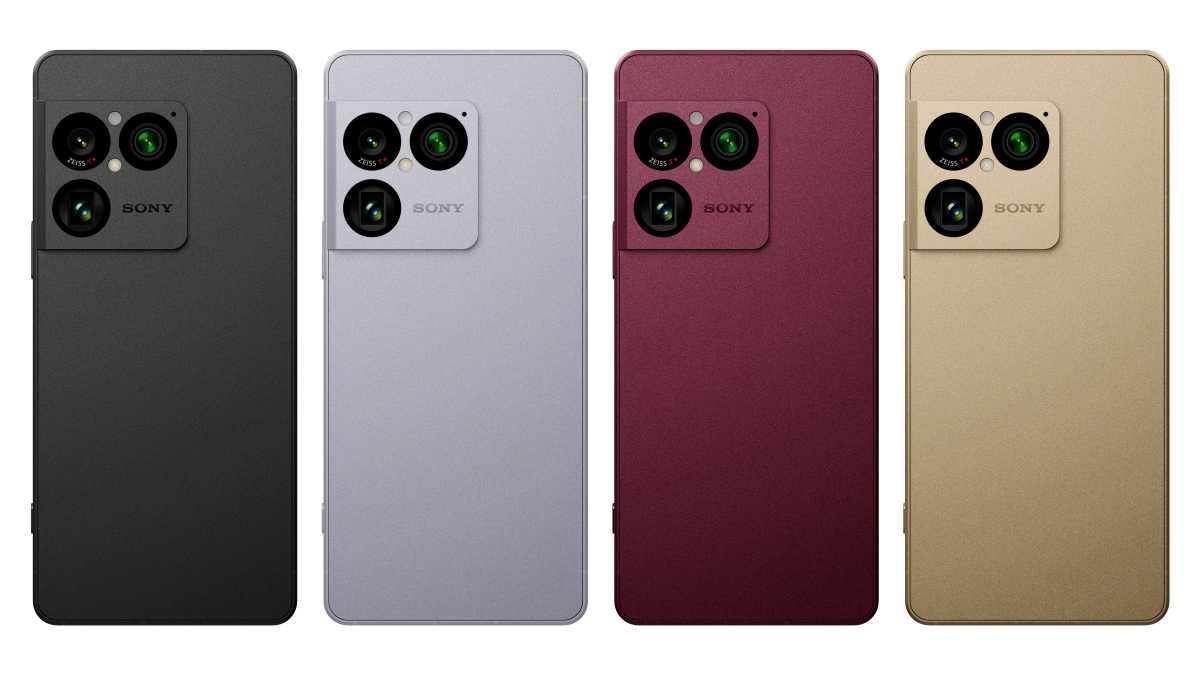
For starters, the Sony Xperia 1 VIII is the biggest design change we’ve seen from the brand in a while. The traffic-light style camera arrangement, similar to Samsung Galaxy handsets, has been changed to a square-shaped module towards the left side of the phone with an angled side sloping down the frame.
There’s also a new texture, inspired by rough stone, that Sony is calling ‘ORE’. For better or worse, it stands out from anything else on the market that’s for sure, and it reportedly makes the phone grippy, which is important if you plan to use it without a case.
Sony
The colour options have been livened up a bit, too. There’s the classic Graphite Black version, but it’s joined by the slightly flashier Iolite Silver, Garnet Red, and Native Gold options. All have the usual built-in shutter button, of course.
Sony has a translucent design case which features a built-in stand. It supports the phone in both landscape and portrait orientations, “providing comfortable provision for video viewing”.
Camera ups and downs
As with any Sony flagship, the cameras are a main focus. The biggest change this year is that Sony has ditched the 85-170mm optical zoom, in favour of a 70mm-equivalent prime with a much, much larger sensor.
The new telephoto has a 48Mp 1/1.58-inch sensor, rather than a tiny 1/3.5-inch 12Mp unit. This means it’ll be way better in low-light conditions and should create a more impressive natural bokeh than its predecessor, the Xperia 1 VII.
It’s not all good news, though. This new telephoto can’t match the super macro capabilities of the Xperia 1 VII. The minimum focus distance is a (still respectable) 15cm, rather than an astonishing 4cm. On the plus side, you don’t need to go into the dedicated macro mode to use this capability; it’ll just work, with full autofocus. So, in some respects, it could be seen as an upgrade.
Elsewhere, the phone has 16mm and 24mm equivalent ultrawide and main cameras with Sony claiming all three rear cameras can “deliver low-light performance comparable to that of a full-frame sensor in terms of noise reduction and dynamic range,allowing for clear imaging even in dark environments.”

Sony
Sony has also been hard at work optimising its camera software. It now combines multiple frames at a RAW sensor level, which should provide better dynamic range and noise reduction performance, as well as making portrait mode cutouts more convincing.
Interestingly, Sony placed a lot of emphasis on its new AI camera assistant. It’s somewhat of a departure, as the Xperia 1 devices tend to focus more on enthusiasts than casual users, but Sony hopes this new feature will help bridge the gap.
Essentially, when taking a photo, the AI camera assistant will analyse the scene and suggest things like switching lens, applying a filter, or enabling portrait mode. The idea is that photographic noobs can be prompted into taking more aesthetically pleasing shots. Of course, if you know what you’re doing, you can turn the feature off entirely.
How it will compete with the best camera phones, we’ll have to wait and see when we get a review sample.
More specs, release date & price
The phone also gets the cursory upgrade to the Snapdragon 8 Elite Gen 5 chip, and comes with 12GB of RAM and 256GB of storage as standard, which is still expandable with a microSD card. If you want 1TB of storage, this is limited to the Native Gold colourway.
Thankfully, the headphone socket and front-facing speakers are still present here, too.

Sony
What’s less exciting is the battery tech. You still only get a 5000mAh cell, although Sony claims it’ll last an hour longer than last year’s model during video playback. It still only charges at a measly 30W, too.
Another downside is that Sony is still only offering four years of OS updates (along with six years of security), which is a long way behind rivals such as Samsung and Google.
Another thing that hasn’t changed much is the pricing. The phone will start at £1,399 in the UK and €1,499 in Europe for the 256GB model, roughly matching the Xperia 1 VII and more expensive than the likes of the Xiaomi 17 Ultra.
Those wanting the 1TB Native Gold model will be looking at £1,849 or €1,999, which will be exclusive to the official Sony store. You can pre-order the phone from today ahead of its June release date and pre-orders will get a free pair of Sony WH-1000XM6 headphones.
It’s certainly not a bargain, but Sony continues to offer features that other brands lack. Whether or not these camera upgrades can justify the price remains to be seen so stay tuned for our full review.